
Why batch components, not full meals
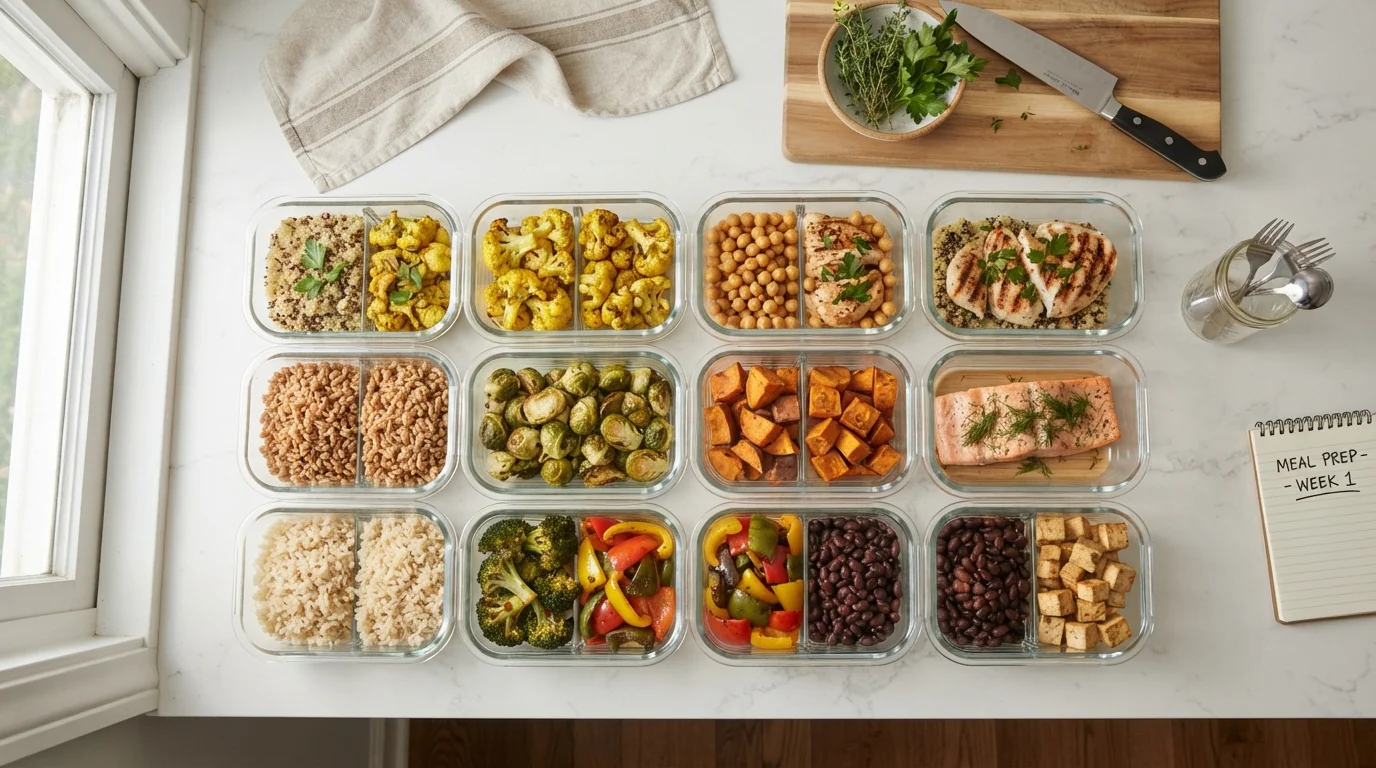
Most batch-cooking advice tells you to cook complete dishes, portion them into containers, and reheat them all week. That works, but it gets monotonous fast. A more flexible approach is to cook building blocks: a grain, a protein, two or three vegetables, and a sauce. From those components, weeknight meals assemble in minutes with actual variety.
A pot of cooked brown rice, for example, becomes a grain bowl on Monday, a stir-fry base on Wednesday, and a side with soup on Friday. See how to batch proteins like chicken, beans, and eggs for the same logic applied to affordable protein sources.
If you are newer to this approach, getting started with weekly meal prep covers the foundational habits before you tackle a full Sunday session.
Overlapping ingredients cut waste
When planning your Sunday cook list, look for one or two ingredients that appear across multiple components. Cabbage, for instance, works raw in a slaw, roasted as a side, and wilted into a grain bowl. Choosing ingredients this way means a partial head never goes to waste at the back of the fridge.
What you need before you start
A successful Sunday session depends on preparation done the day before. Check your pantry for shelf-stable staples: cooking oil, salt, dried spices, canned beans, and broth. These fill gaps without extra shopping. See which pantry staples are worth keeping stocked for a practical reference list.
Write a cook list, not a recipe list. Decide which components you will make, estimate oven and stovetop time for each, and sequence them so your oven is never idle. One batch of roasted vegetables can go in while a grain simmers on the stove and a protein braises in a second pot.
What you will need
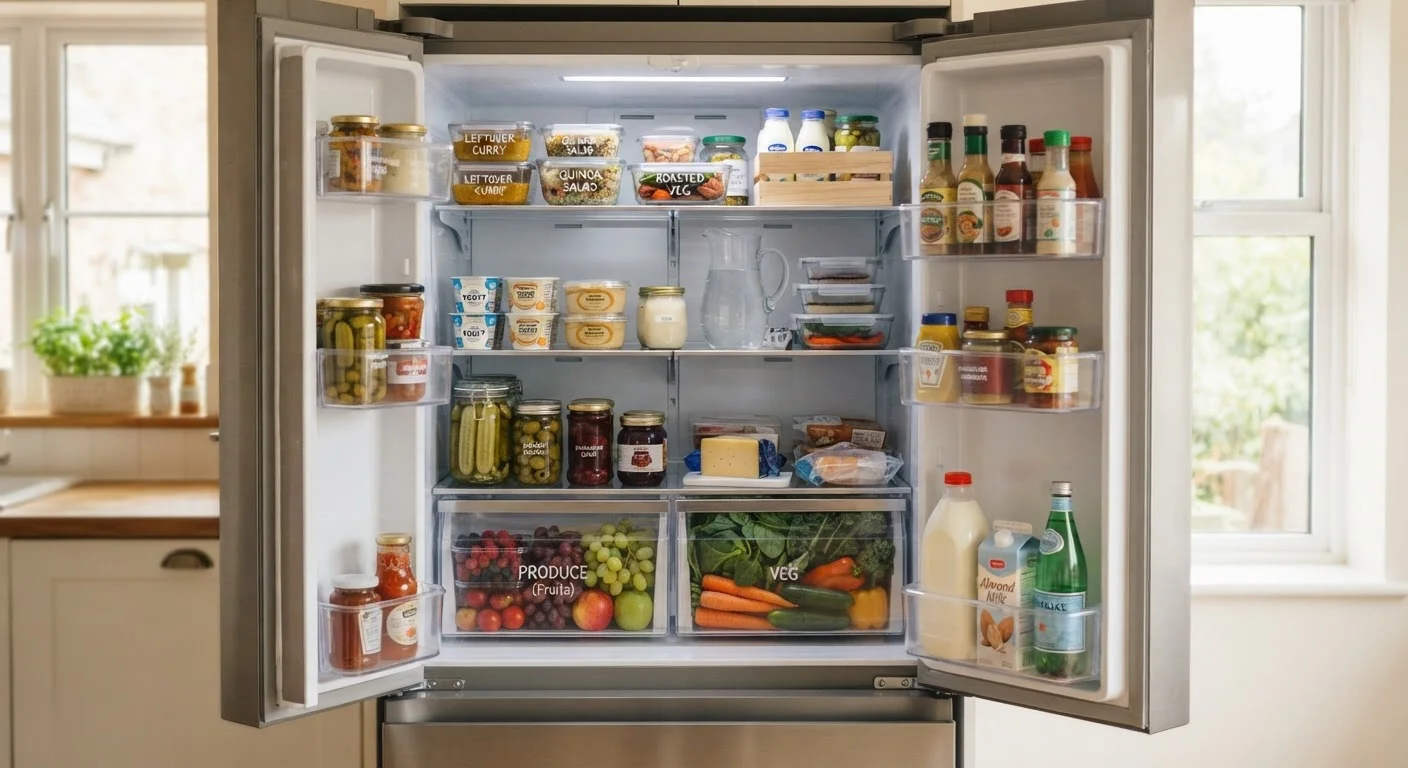
Before you cook, also think about storage. Airtight containers in uniform sizes stack better and seal more reliably than a mismatched collection. Label each container with the contents and the date you cooked it.
Large rimmed sheet pans
Roast vegetables and proteins in a single even layer for consistent browning.
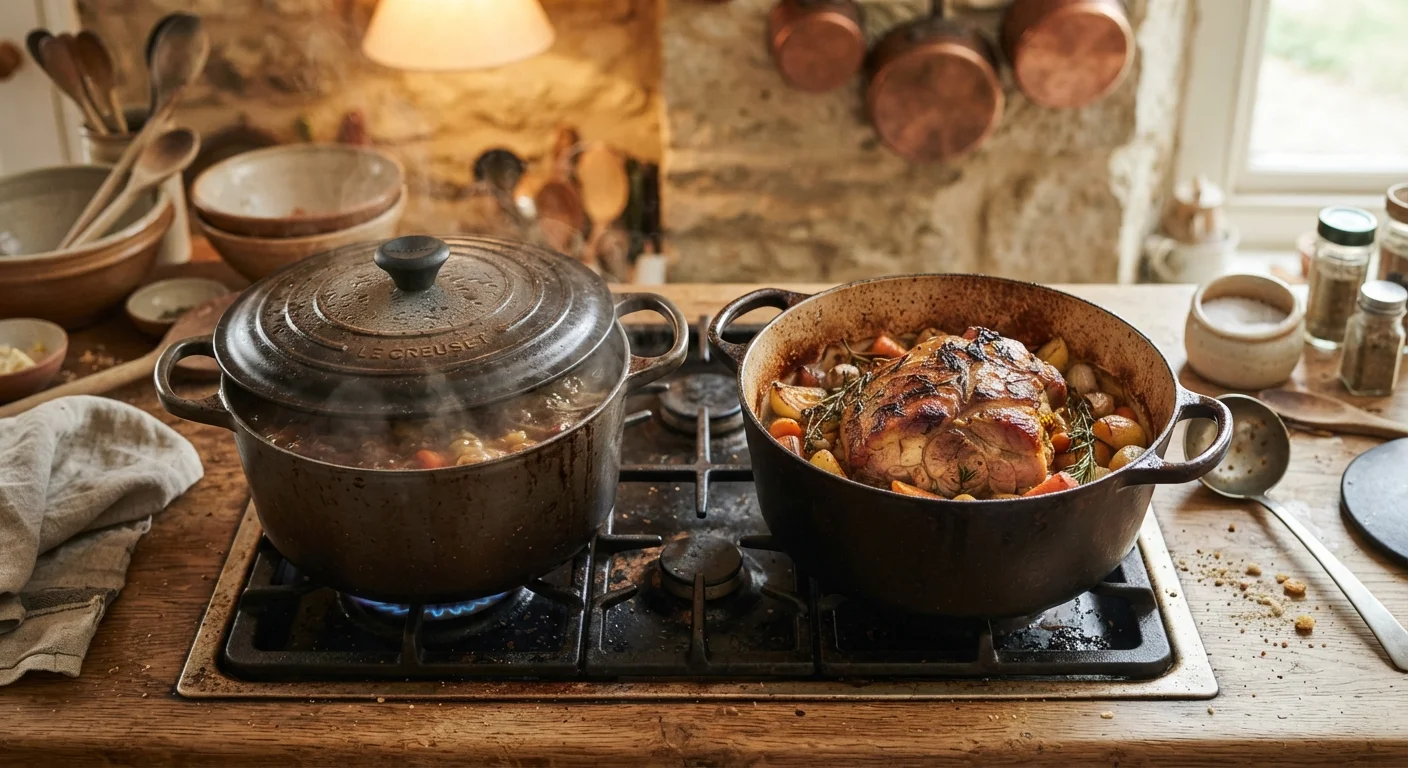
Heavy-bottomed pot or Dutch oven
Cook grains and braise proteins without scorching.
Airtight storage containers (glass or BPA-free plastic)
Store prepped components safely and keep them fresh for four to five days.
Kitchen scale
Portion proteins and grains consistently so each container holds a usable serving.
Masking tape and a permanent marker
Label each container with its contents and the date cooked.
Instant-read thermometer
Confirm proteins reach a safe internal temperature before storing.
The cooking session, step by step
Build your cook list the day before
Write down two proteins, one grain, and two vegetables you will cook on Sunday. Choose ingredients with overlapping uses: for example, roasted sweet potatoes work in grain bowls, tacos, and alongside eggs. Confirm you have everything on hand or write a focused shopping list for Saturday.
Sequence your oven and stove time
Write out a rough timeline: what goes in the oven first, what simmers on the stove at the same time, and what gets prepped last. A typical sequence starts with the protein that takes longest (a braised chicken thigh or a pot of beans), then adds roasting vegetables once the oven is at temperature, and finishes with a quick-cooking grain.
Season every component before it cooks
Salt your grain cooking water before it boils. Toss vegetables in oil and spices before they go on the pan. Apply a dry rub or marinade to proteins at least 15 minutes before cooking, or the night before if time allows. Seasoning at this stage means components taste good on their own and combine well with other ingredients later.
Cook everything in parallel, not in sequence
Use the oven and all available burners at once. While the grain simmers, vegetables roast and a protein braises. Check each item on its own timeline. Pull and set aside anything that finishes early rather than holding it in heat, which overcooks it.
Cool, portion, label, and refrigerate
Spread hot food in a single layer on a clean sheet pan or wide bowl to cool within 30 minutes. Once each component is no longer steaming, portion into containers, write the contents and the cook date on a label, and refrigerate. Most cooked grains and roasted vegetables hold well for four to five days. Cooked proteins should be eaten within three to four days.
Once cooking is done, cool everything before sealing containers. Hot food sealed immediately traps steam, which shortens storage life and makes textures soggy. Spread items on a sheet pan or wide bowl to cool faster. For more on why some cooked foods improve with time in the fridge, see why leftovers often taste better the next day.
Vegetable scraps from this session, such as onion skins, carrot ends, and herb stems, can go into a freezer bag for a future stock. See which vegetable scraps are worth saving for guidance on what to keep and what to skip.
Common problems and how to avoid them
Overcommitting is the most common reason people abandon batch cooking. Trying to cook ten different things in one afternoon leads to an exhausting session and a fridge so packed that items get buried and forgotten. Start with two proteins, one grain, and two vegetables. That is enough to build four or five distinct meals.
Bland results are a close second. Components cooked without seasoning taste flat no matter how well they reheat. Season every layer: the cooking water for grains, the oil for roasted vegetables, and the marinade or rub for proteins. common seasoning mistakes that make weeknight dinners flat covers exactly where this goes wrong and how to correct it.
If you have a family with picky eaters, batch components also make it easier to serve one meal with variations. strategies for serving one dinner without cooking twice applies directly to the component-based approach.
Making the most of what you cooked
A batch-cooked chicken can stretch across the week in ways that feel like separate meals. how to break down one chicken into four distinct meals shows exactly how to do this without repetition. Pair that with understanding when to braise versus roast cheaper cuts to get tender results from affordable proteins every time.
On nights when your prepped components run out, sheet pan dinners and recipes from quick weeknight recipe ideas fill the gap without derailing the week.