
What meal prep actually means for families
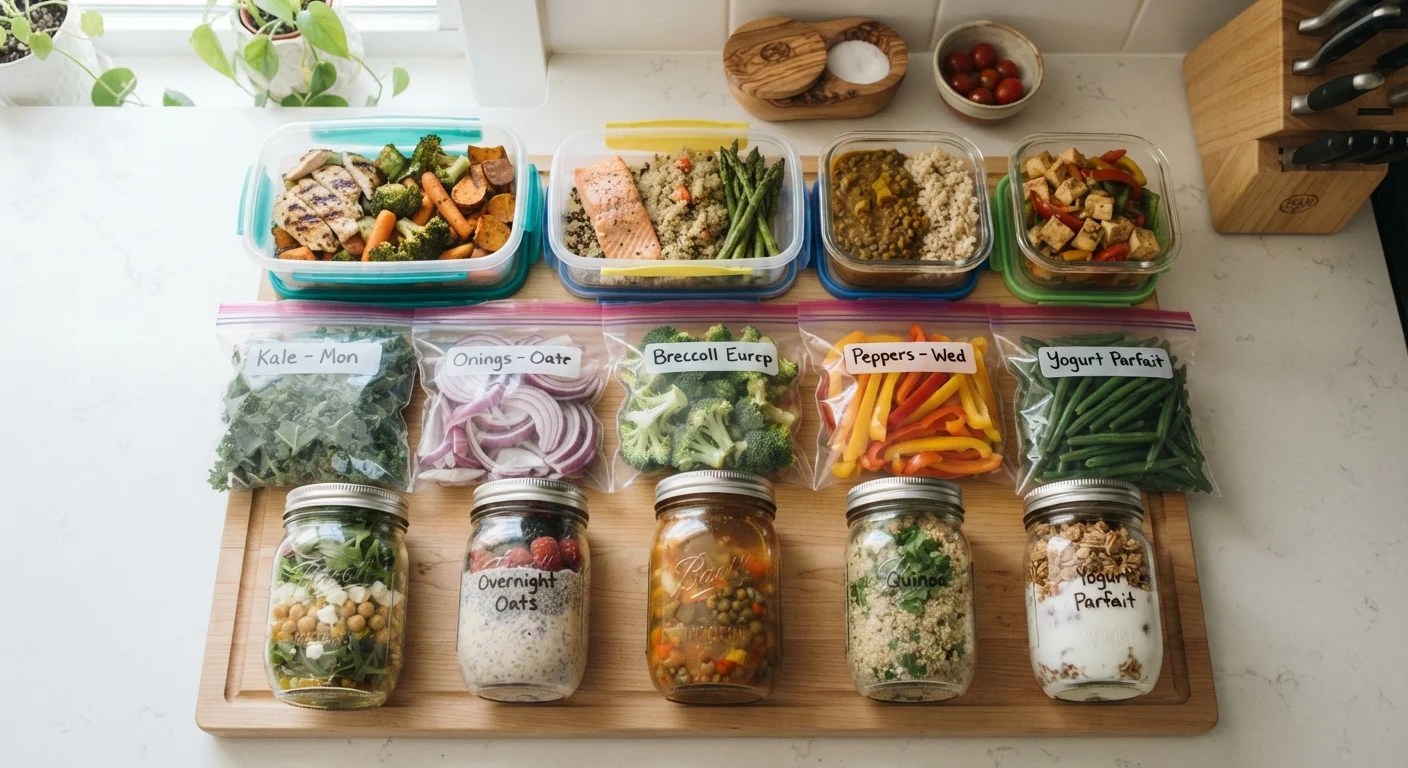
Meal prep is any work you do in advance to make weeknight cooking faster or easier. That can mean washing and chopping vegetables, cooking a pot of grains, marinating proteins, or fully assembling meals that just need reheating. None of those approaches is more correct than another; the right one depends on how much time your household has and how your family prefers to eat.
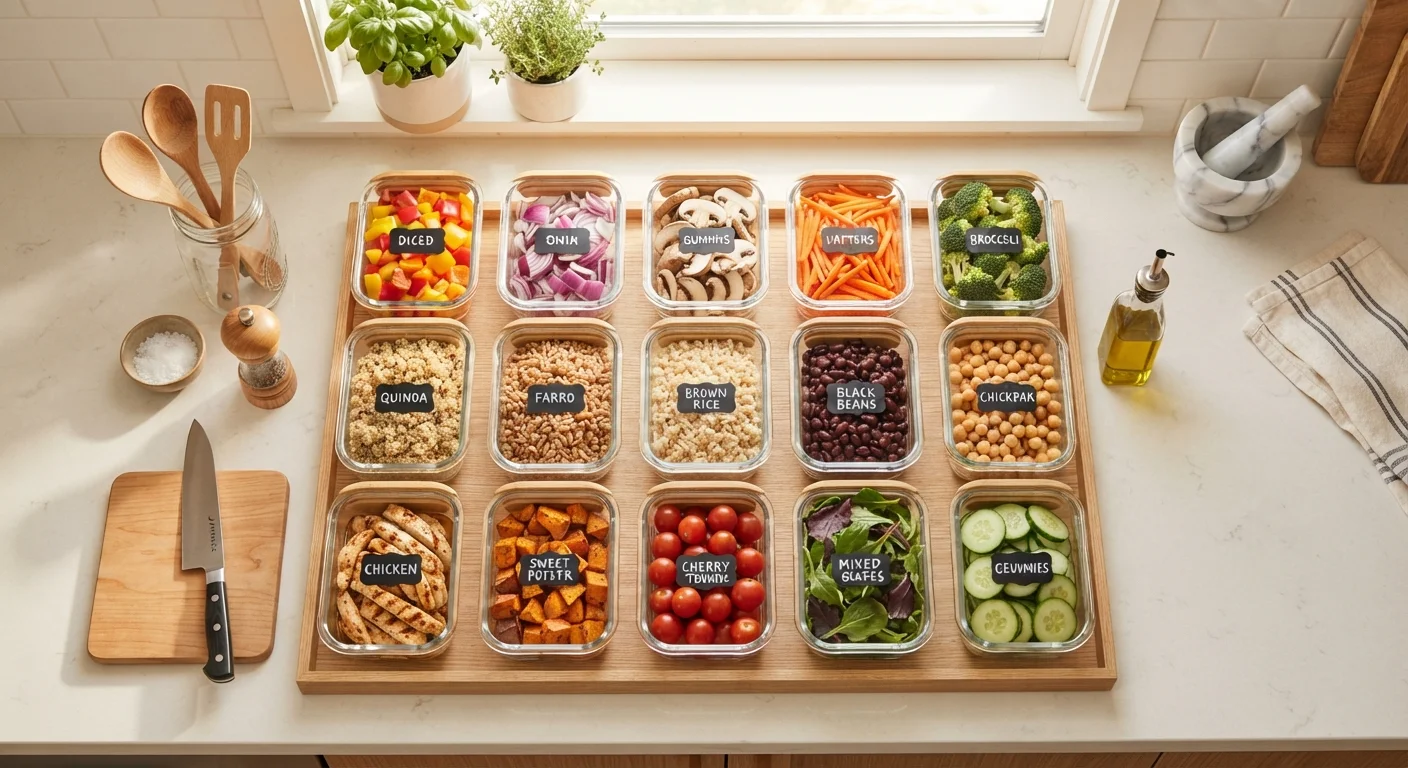
Many people assume meal prep means spending an entire Sunday producing twelve identical containers of the same dish. That image, while common online, is not the only model. Families with picky eaters or varying schedules often do better with component prep: cook the rice, roast the vegetables, and grill the chicken separately, then let each person assemble their own plate. This approach also makes it easier to keep meals from feeling repetitive.
If you have wondered whether meal prep is actually worth it, common meal prep misconceptions covered in a related article may be holding you back more than the work itself.
Component prep
Cooking individual ingredients separately, such as grains, proteins, and vegetables, so family members can assemble their own meals rather than eating one fixed dish.
Batch cooking
Preparing large quantities of one or more recipes in a single session so portions are ready to eat or reheat throughout the week.
Mise en place
A French culinary term meaning 'everything in its place.' In home cooking, it refers to measuring, chopping, and organizing ingredients before you begin cooking.
Pantry staples
Shelf-stable ingredients you keep on hand regularly, such as dried beans, canned tomatoes, and grains, that form the base of many different meals.
Meal rotation
Cycling through a set of familiar recipes on a regular schedule so shopping and prep become predictable and faster over time.
Choose a realistic starting point
The most common reason families stop meal prepping after one attempt is that they tried to do too much at once. A realistic first goal is covering two or three dinners, not every meal of the week. Pick dishes your family already eats, since this is not the time to experiment with unfamiliar recipes.
Think about which weeknights cause the most stress. If Tuesday and Thursday are consistently chaotic, start by prepping ingredients for those two dinners only. Once that feels routine, you can expand. Flexible meals work well here: a batch of seasoned ground beef can become tacos one night and a pasta sauce another. See building a flexible taco night for an example of how one protein can cover multiple meals.
Set a time limit for your first session. Ninety minutes is enough to wash and chop vegetables for four dinners, cook two cups of dried beans, and portion out a protein. Work within that window rather than letting prep expand into the whole afternoon.
Start with what your family already eats
Your first prep session will go smoother if every dish is already familiar. Save new recipes for after the routine feels comfortable. Familiar meals also mean less food waste, since your family is more likely to eat them.
Build a simple weekly plan
A meal plan does not need to be elaborate. Write down the dinners you want to make, check what ingredients you already have, and then build a grocery list from what is missing. This sequence, plan before you shop, is what prevents the impulse purchases and duplicate buys that inflate grocery bills.
Assign meals to specific days based on what is scheduled. Save longer-cooking dishes like a roast or a soup for days when someone is home earlier. Keep quick-assemble meals, grain bowls, wraps, or stir-fries, for the hardest evenings. For a structured approach to planning an entire week at once, the Sunday batch-cooking method walks through the process step by step.
Write the plan somewhere visible, a whiteboard, a notes app, or a paper on the fridge. Families that can see the week's dinners at a glance make fewer last-minute takeout decisions.
Stock a budget-friendly prep pantry
Certain staples make weekly prep significantly cheaper. Dried lentils and beans cost a fraction of canned versions and cook in bulk without much attention. Whole grains like brown rice, farro, and rolled oats are affordable per serving and store well. Canned tomatoes, low-sodium broth, and olive oil round out a base that supports dozens of different meals.
Build the pantry gradually rather than buying everything at once. Each week, add one or two staples you did not already have. Within a month, you will have the foundation in place without a large upfront cost. The healthy eating strategies section of this site covers how to use these staples nutritiously as well as economically.
Fresh produce is cheaper when you plan around what is currently affordable and plentiful rather than buying whatever a recipe calls for regardless of price. Seasonal vegetables are generally less expensive and taste better than out-of-season options shipped long distances.
Store and use what you prep
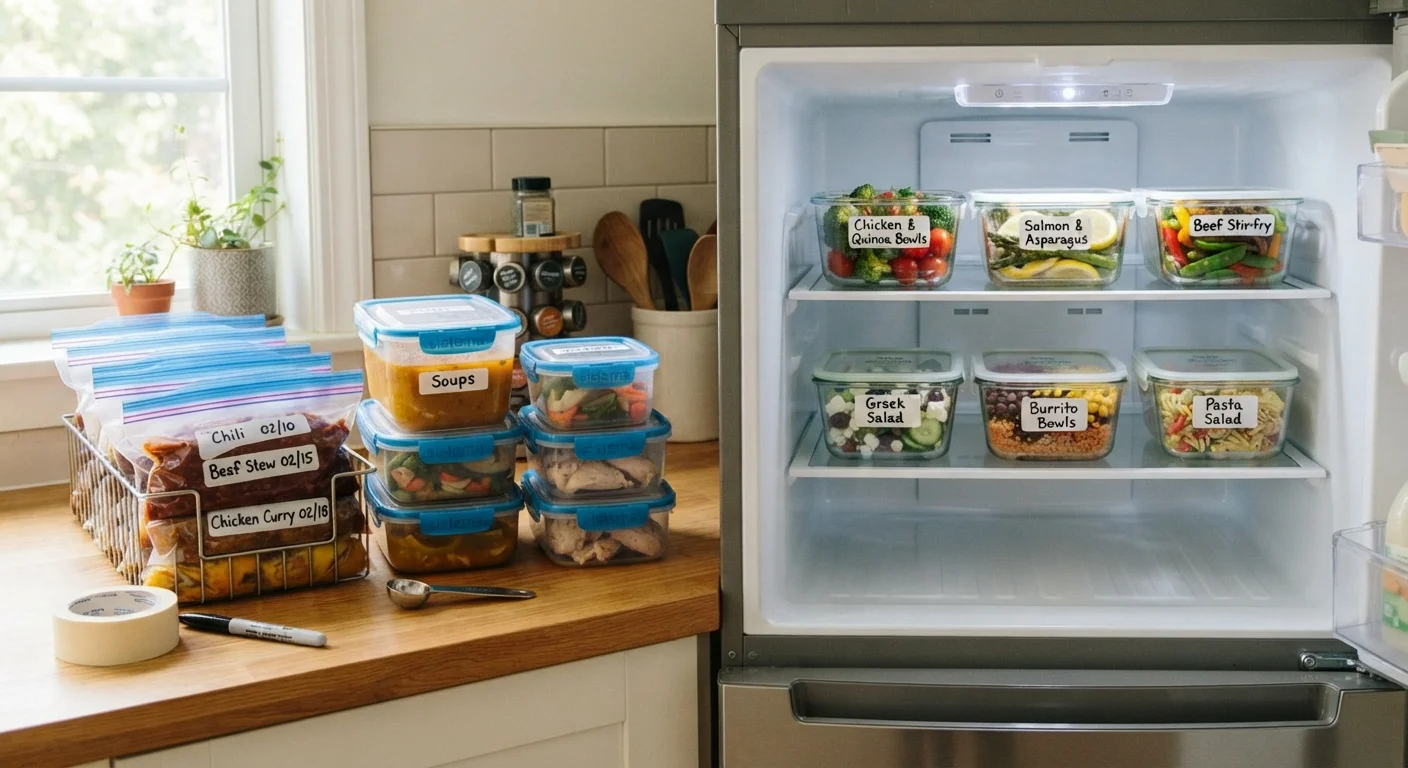
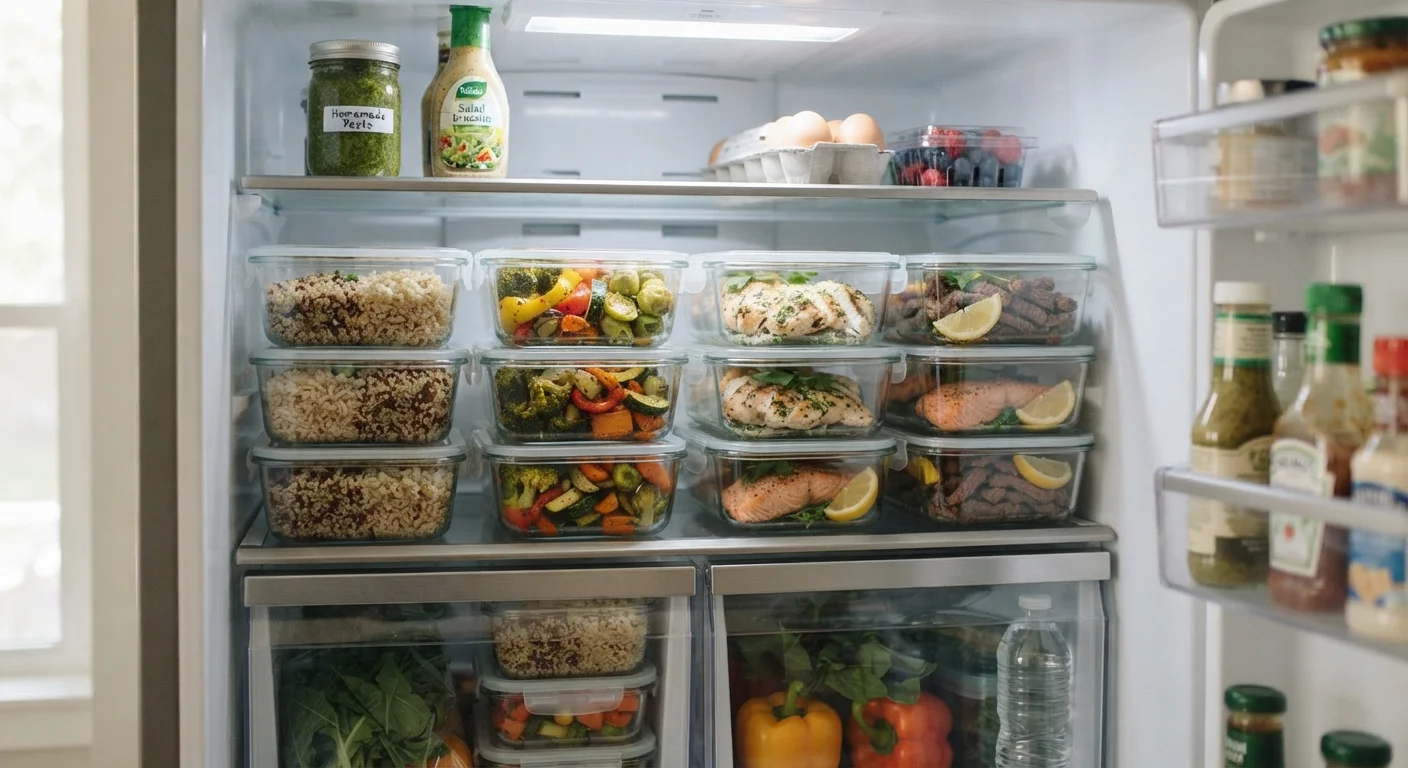
Airtight containers are the most practical storage tool for prepped food. Glass containers work well because they go from refrigerator to microwave without transferring food to another dish. Stackable containers save space. Labeling each container with the contents and the prep date removes any guesswork during the week.
Cooked grains and beans keep for four to five days in the refrigerator. Roasted vegetables last about the same length of time. Raw marinated proteins should be cooked within two days. If you prep on Sunday and the week runs long, freeze portions by Wednesday rather than letting them go to waste.
Before your first session, a readiness checklist can save time and prevent mid-prep surprises. The first meal prep day checklist covers what to have in place before you start. Consistent prep days, even short ones, build the habit faster than occasional marathon sessions.