
Why one whole chicken works harder than pre-cut parts
Buying a whole chicken typically costs less per pound than purchasing individual breasts, thighs, or drumsticks separately. Beyond the price difference, a whole bird gives you parts suited to different cooking methods: the breast for quick weeknight meals, the thighs and drumsticks for slower preparations, and the carcass for broth that would otherwise cost you a separate purchase.
The approach here assumes a standard 3.5- to 4-pound bird, which is enough to feed a family of four across four meals when paired with vegetables, grains, or legumes. If you want to see how this same logic applies to other affordable proteins, the protein batch cooking guide covers chicken alongside beans and eggs for broader weekly planning.
Before you start, gather everything listed below so the process runs without interruption.
What you will need
How the four meals are structured
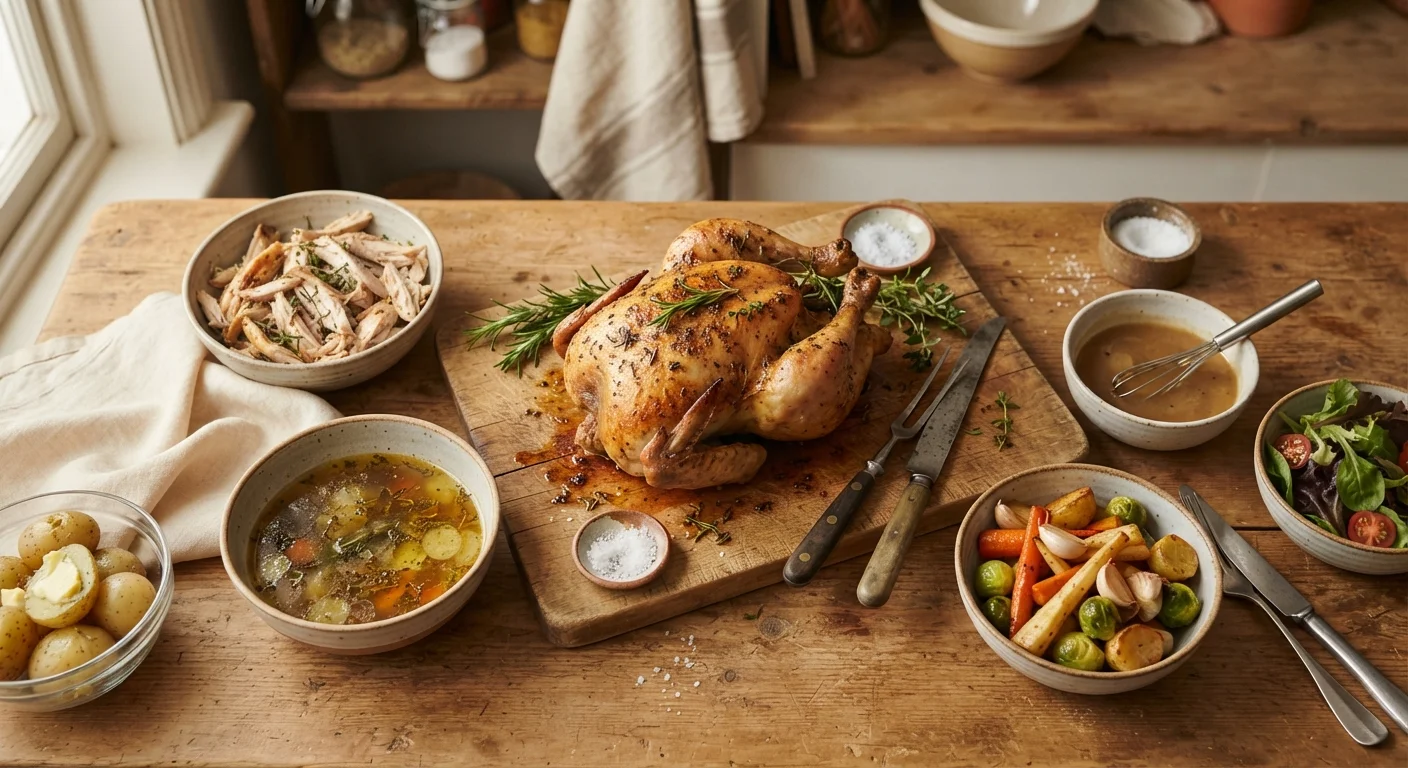
The chicken is broken into four distinct yields: the breast meat becomes one meal, the thighs and drumsticks become a second, shredded leftover meat becomes the third, and the simmered carcass produces broth for a fourth meal, typically a soup or rice dish. This is not a rigid formula. A family that prefers dark meat can swap portions. The structure is a template, not a rule.
You will cook the chicken in a single initial session, usually a full roast or a braised preparation, then portion and refrigerate what you do not use immediately. Each subsequent meal takes 15 to 30 minutes to finish because the foundational cooking is already done. This approach connects naturally to the idea covered in the Sunday batch cooking guide, which walks through planning an entire week from one session.
Plan your four meals before you cook
Deciding in advance which meal will use the breast meat, which will use the thighs, and which will rely on broth prevents overlap and keeps shopping simple. Write the four meal slots on a piece of paper before you start breaking down the chicken. This takes two minutes and eliminates mid-week decision fatigue.
For the breast-meat meal, a fast stir-fry is one of the most practical options when time is short midweek. The 30-minute chicken stir-fry guide shows how to build flavor quickly with pantry staples. Alternatively, sliced breast meat works well on a sheet pan with vegetables; see the sheet pan dinner guide for a method that minimizes cleanup.
Step-by-step: breaking down and cooking the chicken
Follow these steps in order during your initial cooking session. The goal is to cook the whole bird, yield usable portions for the first two meals, and set aside material for the third and fourth.
Break down the whole chicken
Place the raw chicken breast-side up on a clean cutting board. Using kitchen shears or a sharp chef's knife, remove the backbone by cutting along both sides of it. Set the backbone aside with the carcass scraps you will use for broth.
Separate the thighs and drumsticks from the body by cutting through the hip joint. Separate the breasts from the ribcage. You now have two breasts, two thighs, two drumsticks, and the carcass frame. Pat all pieces dry with paper towels.
Season and roast the whole batch
Season all pieces with salt, pepper, and any dried herbs or spices you prefer. Arrange the pieces on a rimmed baking sheet or roasting pan, skin-side up. Roast at 425 degrees F until the thickest part of each piece reaches an internal temperature of 165 degrees F: roughly 35 to 45 minutes for breasts and 40 to 50 minutes for thighs and drumsticks. Use a meat thermometer to confirm doneness.
Rest all pieces for 10 minutes before cutting. Reserve the pan drippings by pouring them into a small jar; they add flavor to sauces or broth.
Serve meal one and portion the rest
Serve one portion of the chicken, for example the drumsticks with a vegetable side, as your first meal. While the remaining pieces are still warm, pull or slice the breast meat from the bone and store it in a labeled airtight container. Place the reserved thighs in a separate container if you plan to use them in a different preparation than the breast meat.
Make the carcass broth
Place the carcass, backbone, and any skin scraps into a large pot. Add a halved onion, two celery stalks, one carrot, a few peppercorns, and enough cold water to cover everything by about two inches. Bring to a boil, then reduce to a gentle simmer. Cook uncovered for 1.5 to 2 hours.
Strain the broth through a fine-mesh sieve and discard the solids. Let it cool before transferring to containers. Skim the fat from the surface once it chills, or leave it for richer flavor depending on how you plan to use the broth.
Build meals three and four from your reserves
For meal three, use the shredded breast meat as a protein base. Warm it in a skillet with a small amount of the reserved pan drippings and any sauce or seasoning that fits your planned dish: salsa for tacos, soy and ginger for a rice bowl, or marinara for a pasta topping.
For meal four, bring the broth to a simmer in a medium pot. Add diced vegetables, cooked rice or noodles, and any remaining shredded meat. Season with salt and a squeeze of lemon juice before serving.
Storing and planning the remaining meals
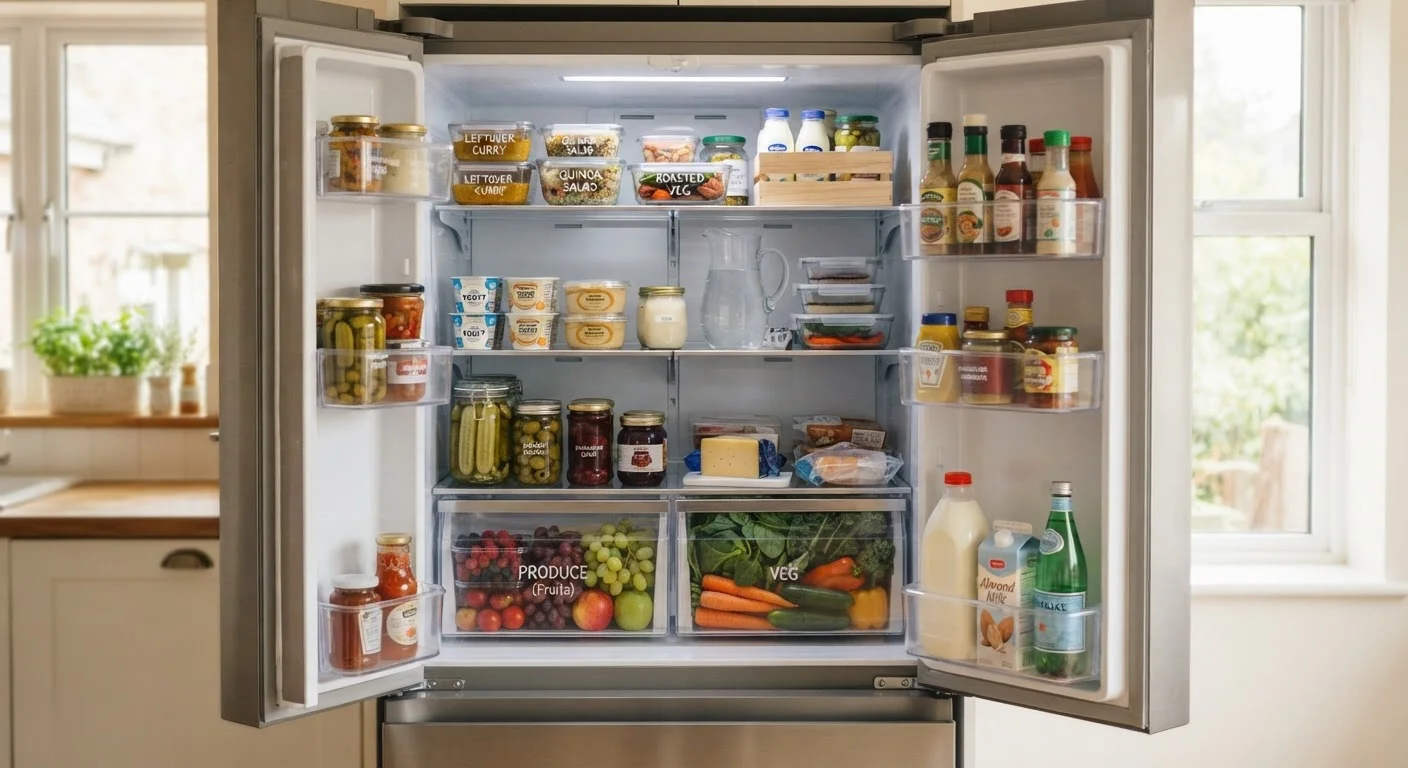
After the first meal, you should have: shredded or sliced breast meat (if not used), thighs and drumsticks (if reserved for a later meal), any pan drippings, and the carcass. Refrigerate cooked chicken within two hours of cooking. Shredded meat and cooked bone-in pieces keep well for three to four days in a sealed container in the refrigerator. Broth made from the carcass keeps for four to five days refrigerated, or up to three months frozen.
For the shredded-meat meal (meal three), toss the meat into tacos, grain bowls, or a simple pasta with olive oil and garlic. For the broth meal (meal four), use the finished stock as a base for vegetable soup, rice pilaf, or a light noodle dish. Adding beans or lentils to either of these meals stretches them further without adding much cost.
If you want to compare this method to a similar approach using another affordable protein, the ground beef weeknight meals guide applies the same one-ingredient, multiple-meal logic to beef. Both strategies work well together across a two-week grocery cycle.