
What makes a cut 'cheap' and why cooking method matters
Affordable cuts of beef, pork, and lamb tend to come from parts of the animal that do the most work, such as the shoulder, shank, or leg. Heavy use during the animal's life means more muscle fibers and more connective tissue, specifically collagen. That collagen is why a chuck roast costs a fraction of a tenderloin per pound, and it is also why technique determines whether dinner tastes like a restaurant meal or shoe leather.
Collagen begins to dissolve into gelatin at around 160 to 180 degrees Fahrenheit, but only when held there for an extended time and, in the case of braising, in the presence of moisture. Dry heat can reach the same temperature, yet without liquid surrounding the meat, collagen tightens before it softens if the internal temperature climbs too quickly. That single difference in how heat and moisture interact is the foundation of the braising-versus-roasting decision.
For families trying to get more from their grocery budget, see practical strategies for eating well on a tight grocery budget for a broader look at cost-smart shopping before you get to the stove.
How braising works and when to use it
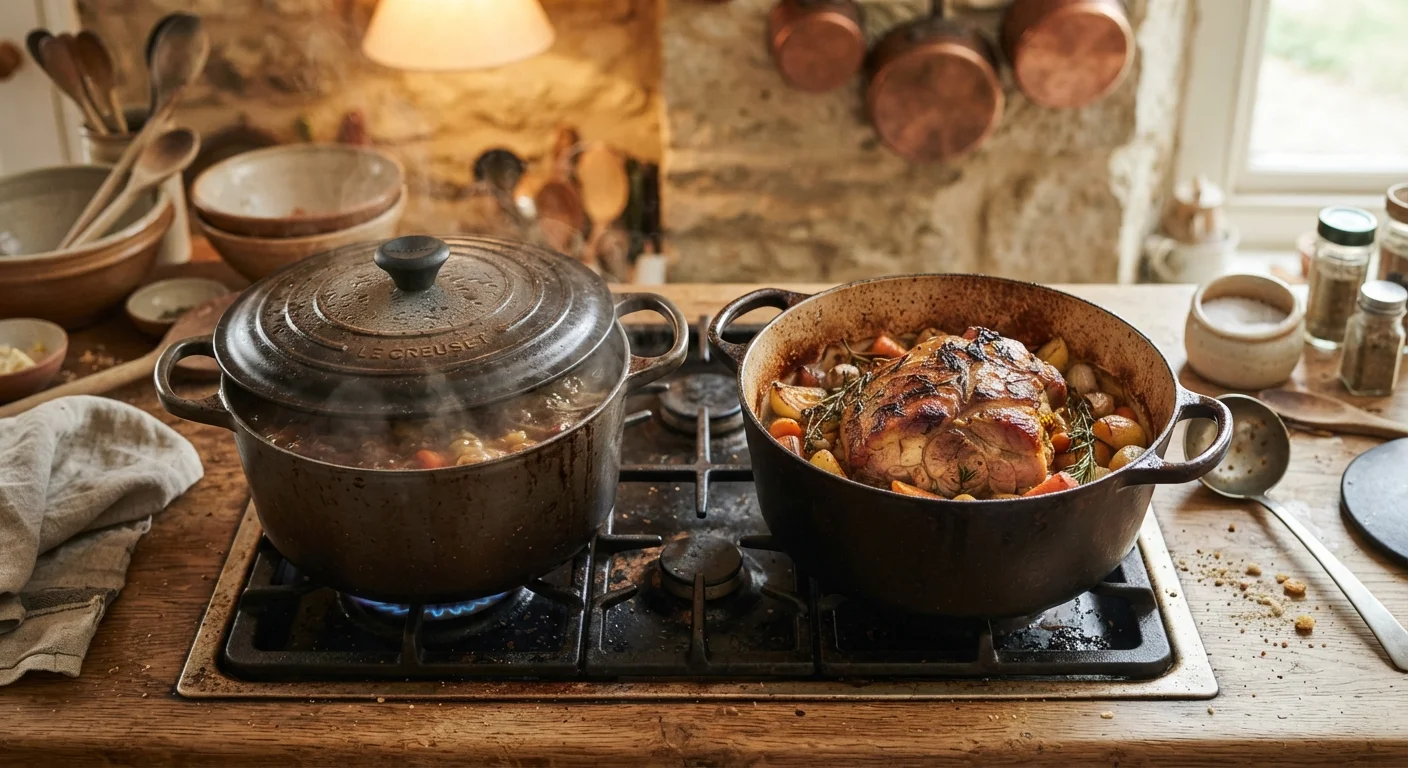
Braising involves searing the meat first, then cooking it partially submerged in liquid inside a covered pot, typically in an oven set between 300 and 325 degrees Fahrenheit. The lid traps steam, surrounding the meat with moist heat from both the liquid below and the vapor above. Over two to four hours, collagen converts to gelatin, muscle fibers relax, and the result is meat that pulls apart with a fork.
The cuts that respond best to braising are those with the most connective tissue: beef chuck, brisket, short ribs, lamb shank, pork shoulder, and oxtail. These are consistently among the least expensive cuts at the butcher counter, which makes braising a genuinely budget-useful skill.
The cooking liquid itself adds value. After the meat is done, the pot contains concentrated, gelatin-rich liquid that can be reduced into a sauce or refrigerated and used as a soup base later in the week. That secondary use means braising produces two outputs from one cooking session, which fits naturally into a Sunday batch cooking approach where efficiency matters.
| Criterion | Braising | Roasting |
|---|---|---|
| Heat type | Moist, covered | Dry, uncovered |
| Oven temperature | 300 to 325 degrees F | 325 to 425 degrees F |
| Best cut profile | High collagen, tough muscle | Moderate fat, lower collagen |
| Typical cooking time | 2.5 to 4 hours | 45 minutes to 2 hours |
| Surface browning | From initial sear only | Throughout cooking |
| Secondary output | Rich cooking liquid for sauce | Drippings for pan sauce |
| Timing flexibility | Forgiving of extra time | Sensitive to overcooking |
| Active effort required | Sear, then mostly hands-off | Season, then mostly hands-off |
How roasting works and when to use it
Roasting places meat uncovered in a hot oven, typically between 325 and 425 degrees Fahrenheit depending on the cut, and relies entirely on dry circulating heat. Without moisture, the surface of the meat dries quickly, which allows the Maillard reaction to develop a browned, savory crust. That crust is one of roasting's main attractions.
Roasting works well on cuts that have enough intramuscular fat to self-baste as they cook, such as bone-in chicken thighs, a pork loin with a fat cap, or a lamb leg. These cuts cost more per pound than chuck or shank but less than premium steaks, putting them in a moderate budget range. They also require less hands-on attention: season, place in the pan, and return when the internal temperature reaches the target.
Where roasting struggles is with very lean or very collagen-dense cuts. A beef shank roasted dry at high heat will tighten and dry out before the collagen has time to dissolve. Putting an already tender, low-fat cut in a braise will overcook it to mush. The mismatch between method and cut is where most budget-cooking failures happen.
Roasted meats also lend themselves to repurposing. A whole roasted chicken, for example, yields meat for two meals and a carcass for stock. That kind of planning connects directly to the principles covered in protein batch cooking across multiple meals.
Choosing the right method for common affordable cuts
The table above lays out the structural differences. In practice, the decision comes down to two questions: how much connective tissue does the cut contain, and how much time do you have?
Beef chuck, pork shoulder, lamb shank, and brisket: always braise. These cuts have too much collagen and too little intramuscular fat to benefit from dry heat. A minimum of two and a half hours in covered moist heat is what they require.
Bone-in chicken thighs, pork loin with fat cap, and lamb leg: roast. The fat content protects the meat during dry cooking, and the exposed surface develops flavor that a covered pot prevents.
Beef bottom round and top round sit in between. They have less collagen than chuck but less fat than a rib roast. Pot roasting, which is a slower, lower-temperature braise with very little added liquid, works better for these than a standard high-heat roast. Slicing thin against the grain after cooking also reduces perceived toughness regardless of method.
One practical note: braising is forgiving of timing in a way roasting is not. A braise left an extra 30 minutes in the oven typically just gets more tender. A roast left 30 minutes too long dries out. For households juggling schedules, that flexibility is a real advantage worth factoring into the decision. For more ideas on building efficient cooking habits around affordable proteins, see quick recipe ideas the whole family will enjoy.