
Why the pantry matters more than the fridge on a busy night
Fresh produce and proteins disappear fast, and a hectic week can leave the fridge looking sparse by Wednesday. A stocked pantry changes that math. Shelf-stable ingredients don't expire on a Tuesday, don't require a special trip, and can anchor a complete meal when fresh options run short.
The goal here isn't to list every ingredient that exists. It's a working reference: the items that show up most reliably in fast, budget-friendly weeknight cooking, what they do, and how to use them together. For a broader look at keeping grocery costs down, see the family grocery budgeting guide.
| Dried pasta shelf life | 1 to 2 years (USDA FoodKeeper guidelines) |
| Canned beans shelf life | 2 to 5 years (USDA FoodKeeper guidelines) |
| Dried lentils shelf life | 2 to 3 years (USDA FoodKeeper guidelines) |
| White rice shelf life | Indefinite if sealed (USDA FoodKeeper guidelines) |
| Canned tomatoes shelf life | 18 months to 2 years (USDA FoodKeeper guidelines) |
| Cost per pound, dried pasta | Under $2 in most U.S. stores |
| Red lentil cook time | About 20 minutes, no soaking |
| White rice cook time | 18 minutes, stovetop |
Canned and dried proteins
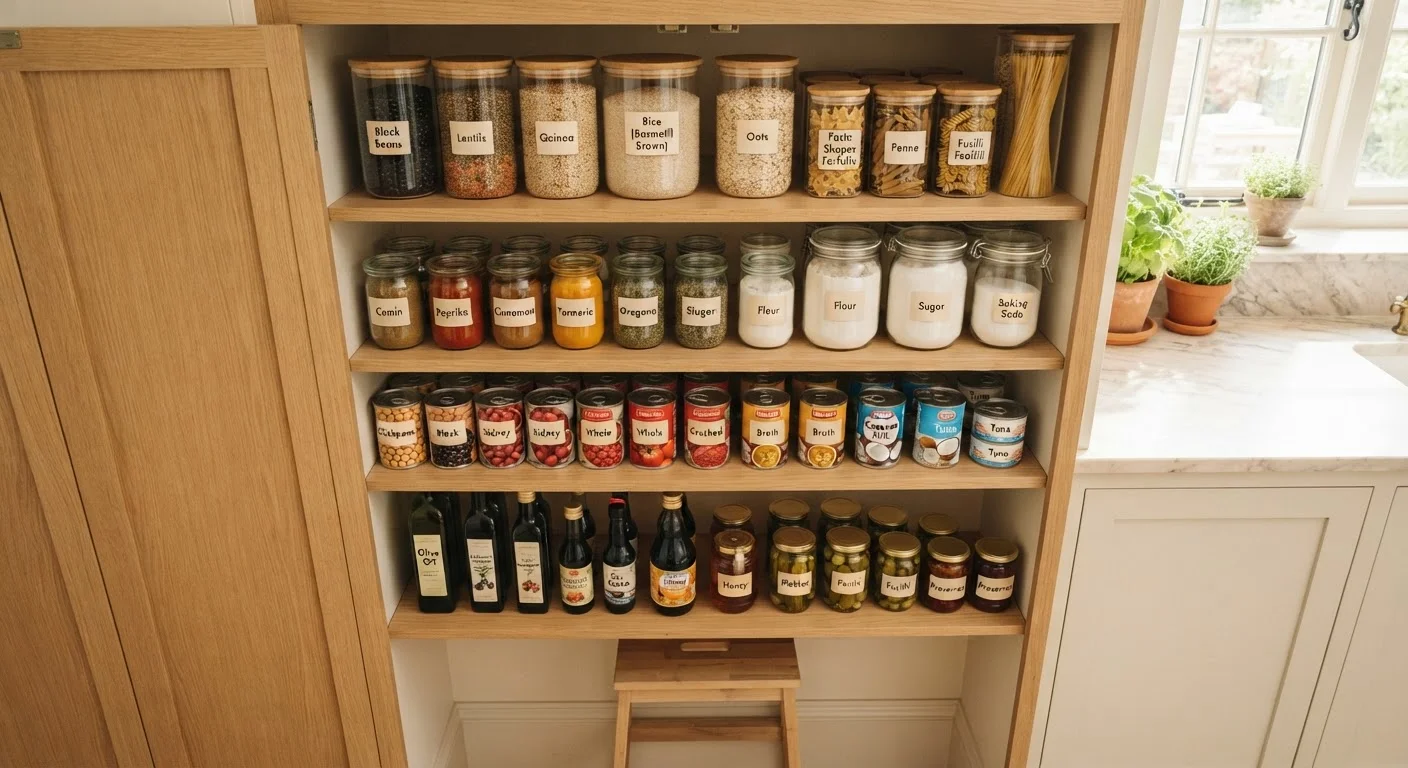
Canned beans (black, kidney, chickpea, cannellini) are the fastest protein a pantry can offer. They need no soaking, cook in minutes, and cost far less per serving than most fresh meats. Drain and rinse them to cut down on sodium. Canned tuna and canned salmon work the same way: open, drain, and add to pasta, grain bowls, or wraps without any cooking.
Dried lentils sit between canned beans and dry beans in terms of time. Red lentils dissolve into soups and dals in about 20 minutes with no pre-soaking. Brown lentils hold their shape and work well in salads or as a meat extender in ground-beef dishes. For more on how dried staples stack up against their fresh equivalents, the dried pasta comparison covers the same logic applied to pasta.
Grains, pasta, and starches
Dried pasta is the weeknight workhorse. A one-pound box feeds four adults and costs under two dollars in most stores. White rice keeps indefinitely and cooks in 18 minutes on the stovetop. Long-grain and jasmine rice both work well as a base for stir-fries, curries, or simple protein-and-vegetable meals.
Quick-cooking grains worth adding: instant brown rice (10 minutes), bulgur wheat (soaks in boiling water in 15 minutes), and rolled oats (which double as a dinner thickener, not just breakfast). These starches pair naturally with sheet pan dinners, where a grain on the side completes the plate with almost no extra effort.
Shelf-stable
A food product that can be stored safely at room temperature for an extended period without refrigeration. Canned goods, dried pasta, and dried legumes are common examples.
Aromatics
Ingredients used to build a flavor base when cooked in fat. Onion, garlic, and celery are the most common fresh examples, but dried spices and tomato paste serve the same function in a pantry context.
Legumes
The seed family that includes beans, lentils, and chickpeas. They are high in protein and fiber, inexpensive, and available both dried and canned.
Tomato paste
A concentrated cooked tomato product sold in small cans or tubes. A tablespoon or two adds depth and body to sauces, soups, and stews without adding much liquid.
Bulgur wheat
Whole wheat that has been parboiled, dried, and cracked. It needs only a soak in boiling water to rehydrate, making it one of the fastest whole grains to prepare.
Aromatics, acids, and fats
This category does the most flavor work per dollar. Olive oil and neutral vegetable oil are both worth having: olive oil for finishing and lower-heat cooking, vegetable oil for high-heat work. Soy sauce, canned tomatoes (crushed and diced), tomato paste, and fish sauce each add deep, savory flavor without long cooking times. A small can of coconut milk transforms rice and lentils into something that tastes like it took effort.
Acids matter. White wine vinegar, apple cider vinegar, and canned lemon juice brighten finished dishes and balance richness. A tablespoon of vinegar stirred into a bean soup at the end costs almost nothing and noticeably improves the result. For detail on how to use these ingredients to fix flat meals, the seasoning mistakes article is a useful companion.
Dried spices are their own category. Cumin, smoked paprika, garlic powder, onion powder, dried oregano, chili powder, and red pepper flakes cover the flavor profiles in most American weeknight cooking. Buy them in bulk bins or larger containers if your family cooks frequently; small jars at standard grocery prices are expensive per ounce.
How to build a meal from pantry ingredients alone
Most fast pantry dinners follow a simple structure: a starch, a protein, a fat for cooking, aromatics for flavor, and an acid or sauce to finish. That structure produces pasta e fagioli (pasta and beans), a rice and lentil bowl with cumin and olive oil, a tuna and canned tomato pasta, or a spiced chickpea and tomato stew, all without leaving the house.
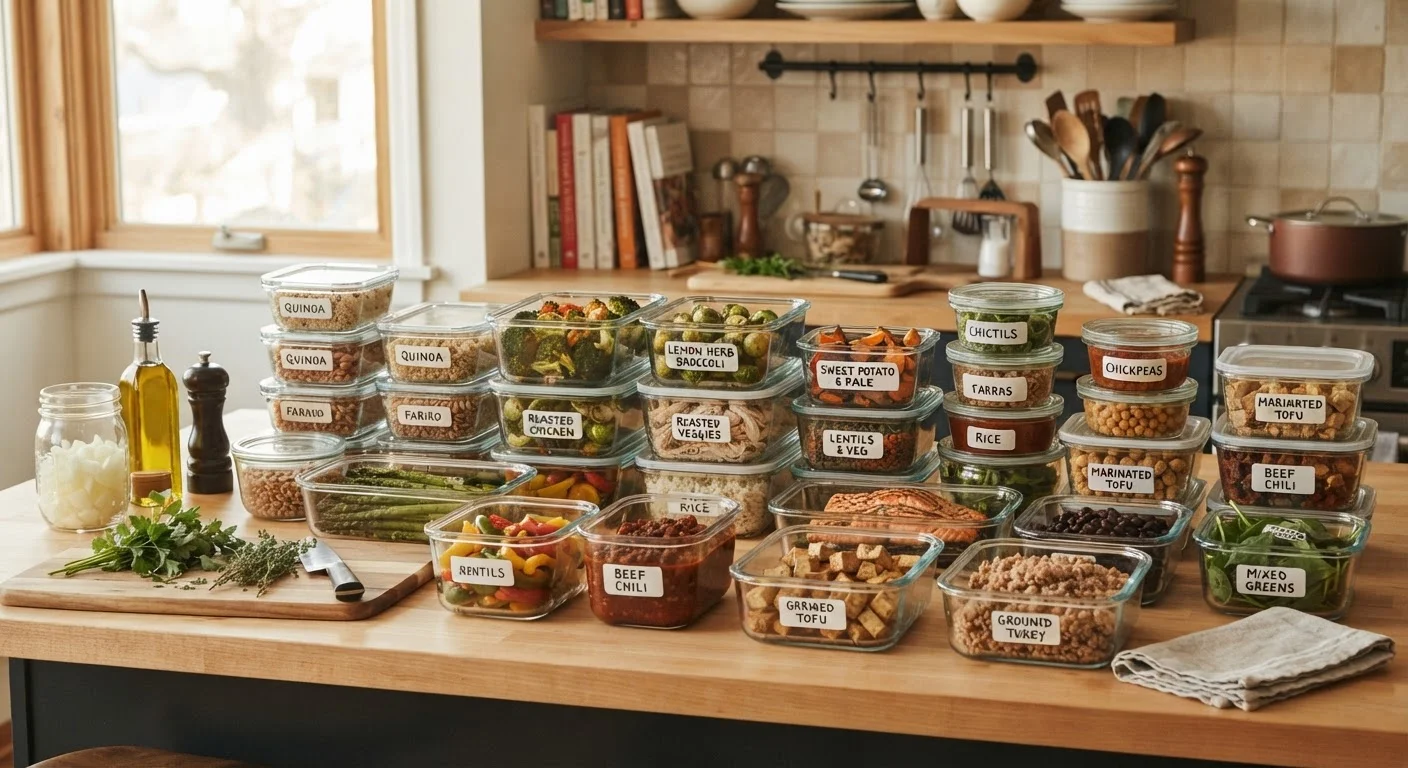
Batch cooking is where a stocked pantry pays off most. Cooking a large pot of grains or beans on a Sunday means those ingredients are ready to slot into different meals across the week. The batch cooking guide walks through how to plan that kind of session efficiently. If you want to extend the pantry into dessert, pantry desserts covers what a few basic staples can produce without a grocery run.
The staples listed here also appear in a parallel reference on healthy low-cost pantry items, which frames the same ingredients through a nutritional lens rather than a speed lens.