
What makes a sheet pan dinner work
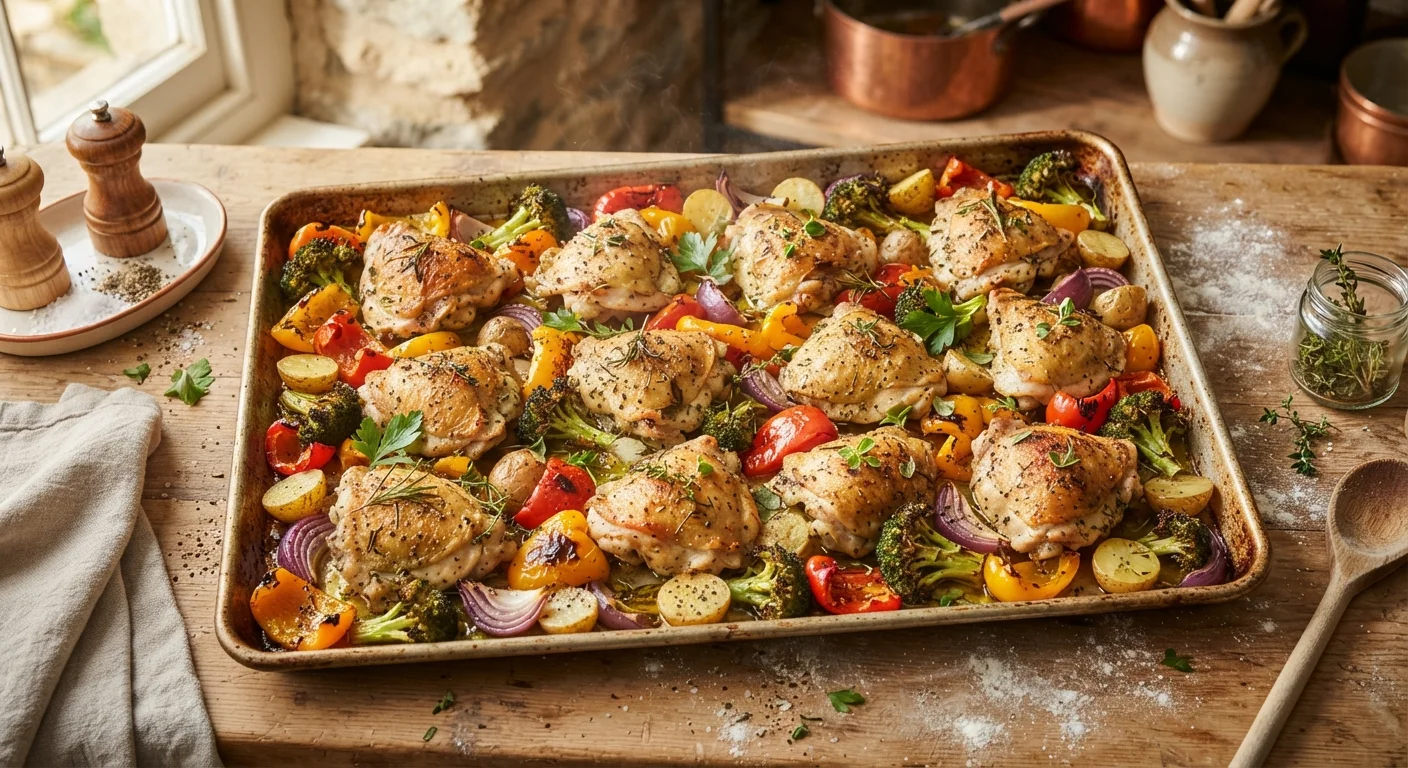
The method is simple: coat ingredients in oil and seasoning, spread them on a hot pan, and let the oven do the work. Roasting at high heat drives off moisture from the surface of the food, which creates browning. That browning is where most of the flavor comes from.
The pan matters more than most people expect. A rimmed half-sheet pan gives you enough surface area to spread a full family meal without crowding. Crowding is the most common reason sheet pan dinners turn out steamed and pale instead of browned and flavorful. Each piece of food needs a little clearance so hot air can circulate around it.
Oil is not optional. A thin, even coating of oil on every piece transfers heat, promotes browning, and carries fat-soluble flavors from spices into the food. About one to two tablespoons for a full pan is usually enough. See common seasoning mistakes if your roasted meals keep coming out flat.
Line the pan to cut cleanup further
A sheet of parchment paper or heavy-duty aluminum foil under your ingredients means most stuck-on bits stay on the liner, not the pan. Parchment is better for high-heat roasting because foil can stick to some sugary glazes or acidic ingredients. Either option cuts scrubbing time significantly.
Matching cook times so everything finishes together
The practical challenge of sheet pan cooking is that chicken thighs and cherry tomatoes do not need the same amount of oven time. Dense, starchy vegetables like potatoes, carrots, and beets take 35 to 45 minutes at 425 degrees Fahrenheit. Boneless chicken thighs take about 25 to 30 minutes. Thin-cut zucchini or bell pepper strips take 15 minutes.
The fix is staggered additions. Start the longest-cooking items first, then add proteins, then add quick-cooking vegetables toward the end. A simple mental model: if a vegetable would be done in 15 minutes on its own, add it 15 minutes before the whole dinner is supposed to be done.
Cutting size also controls cook time. Smaller pieces of potato cook in 20 minutes; large chunks take 40. If you need everything to go on the pan at once, cut slow-cooking ingredients smaller and leave quick-cooking ones in larger pieces.
1 pan
Dishes to wash for a full dinner
A standard sheet pan dinner uses a single rimmed baking sheet for both protein and vegetables, reducing post-dinner cleanup to one main item.
25-30 min
Average hands-off oven time for boneless chicken thighs
At 425 degrees Fahrenheit, boneless skinless chicken thighs are typically cooked through in about 25 to 30 minutes, leaving time for other tasks.
Under $10
Estimated cost for a 4-serving sheet pan dinner
Using bone-in chicken thighs, seasonal vegetables, and pantry seasonings, a full family sheet pan meal can cost less than $10 depending on local prices and sales.
Building a balanced sheet pan meal on a budget
A complete sheet pan dinner has three parts: protein, vegetables, and something starchy. You do not need all three on the pan itself. Rice or bread on the side works fine. But pairing everything on one pan is what makes cleanup genuinely fast.
Affordable proteins that roast well include bone-in chicken thighs, sausage links, ground turkey shaped into small patties, and canned white beans drained and patted dry. Bone-in thighs are particularly forgiving because the fat in the skin keeps them moist even if they spend an extra five minutes in the oven. For ideas on getting more meals from a single bird, see how to stretch one chicken into four meals.
Root vegetables, cabbage, and broccoli are generally the most affordable fresh vegetables per pound and all roast well. Frozen broccoli and cauliflower are workable alternatives. Pantry staples like olive oil, garlic powder, paprika, and dried herbs are all you need for seasoning.
A simple formula for any night of the week
Rather than following a rigid recipe, use a template you can fill with whatever is on sale or already in the fridge:
- Choose a protein (chicken thighs, sausage, shrimp, or beans for a meatless option).
- Choose one or two vegetables with similar density, or plan to add them at different times.
- Toss everything in oil, salt, pepper, and one or two spices.
- Roast at 400 to 425 degrees Fahrenheit, adding quicker items partway through.
- Check protein temperature with a thermometer before serving.
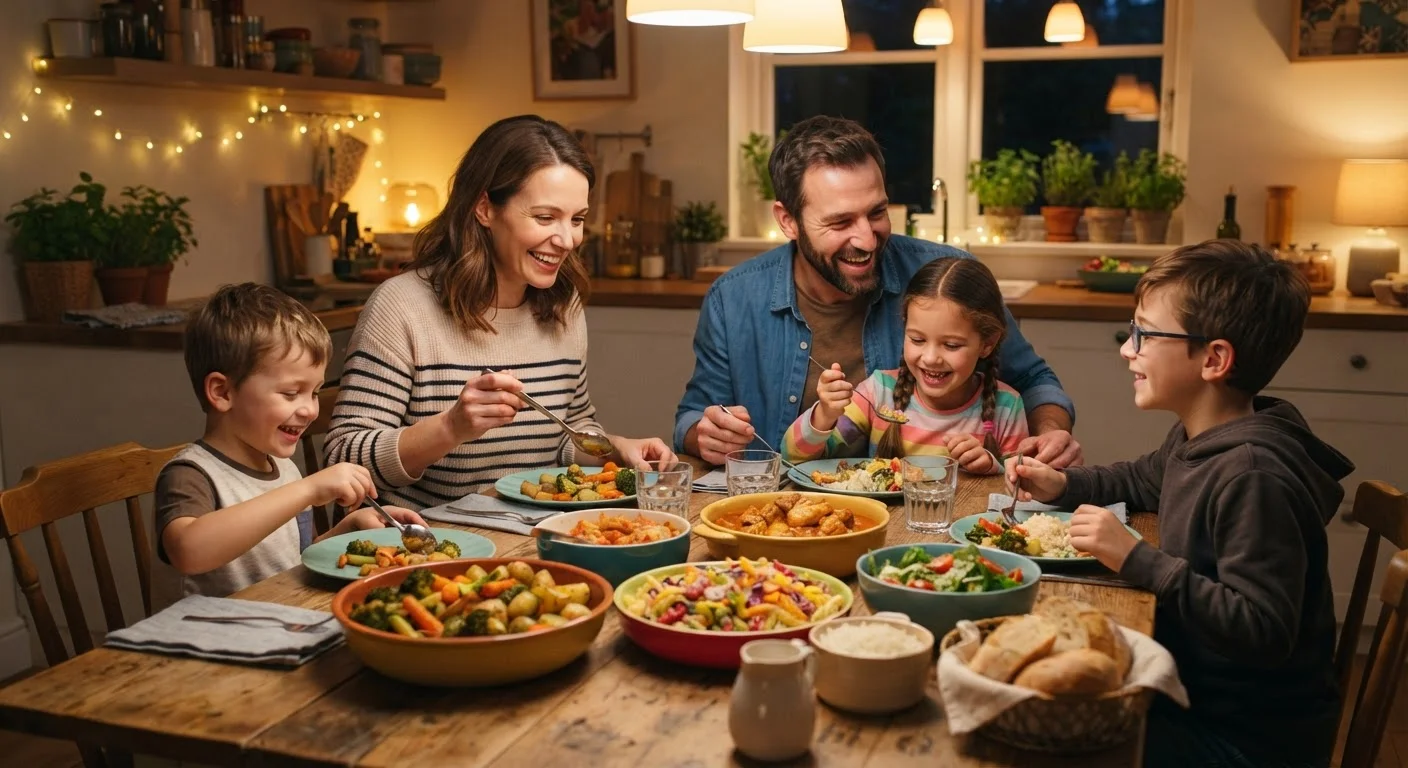
This approach also makes it easier to cook meals the whole family will eat. Placing each component in a separate section of the pan means picky eaters can avoid touching foods they dislike without requiring a separate meal. Reducing mealtime battles without extra cooking is one of the real practical advantages of this format.
Sheet pan cooking is not a replacement for every method. A stir-fry like a 30-minute chicken stir-fry is faster on high-heat nights. But for hands-off dinners that need almost no attention once they go in the oven, a loaded sheet pan is hard to beat.
A family uses bone-in chicken thighs, baby potatoes halved, and broccoli florets on one pan. Potatoes go in first, chicken thighs join 10 minutes later, and broccoli goes in for the final 15 minutes.
On a meatless night, drained canned chickpeas are tossed with olive oil, cumin, and smoked paprika alongside sliced bell peppers and red onion, all roasted at 425 degrees for 25 minutes.
Italian sausage links are nestled between wedges of fennel and halved cherry tomatoes, everything seasoned with dried oregano and a drizzle of oil.