
Why these three proteins work for batch cooking
Chicken breast or thighs, dried or canned beans, and eggs are among the most affordable proteins available at most grocery stores. More importantly, all three respond well to batch cooking: they hold their texture after refrigeration, absorb sauces and seasonings added later, and work across a wide range of cuisines. A single prep session covering all three sets you up with protein for grain bowls, wraps, soups, salads, and egg-based breakfasts without repeating the same dish twice.
The approach pairs naturally with a weekly planning habit. If you already follow a Sunday prep routine, see the Sunday batch-cooking walkthrough for a broader framework to build around. For technique-focused guidance on chicken specifically, the guide to stretching one chicken into four meals covers how to maximize variety from a single bird.
One practical note: keep your batch proteins lightly seasoned at this stage. Salt and a little garlic go a long way, but heavy spice rubs limit how you can use the protein later. Season fully at the point of serving.
Keep your base proteins plain
Batch proteins seasoned with only salt and garlic stay versatile. A Mexican-spiced chicken works great in tacos but limits your options for Asian-style rice bowls or pasta dishes later in the week. Add bold spice blends and sauces at the point of serving, not during the batch cook.
What you need before you start
Gather equipment and ingredients before you begin so the session runs smoothly. Having everything on hand prevents mid-cook interruptions that throw off timing when multiple proteins are cooking simultaneously.
What you will need
Check your storage containers before cooking. Running out of airtight space after a two-hour prep session is a common and avoidable problem.
Step-by-step batch cooking instructions
Follow these steps in order. The timing is designed so chicken and beans can cook at the same time, with eggs boiled while the oven runs.
Season and roast the chicken
Preheat your oven to 400 degrees F. Pat chicken dry with paper towels and coat lightly with oil, salt, pepper, and garlic powder. Arrange in a single layer on a baking sheet. Roast boneless breasts for 22 to 25 minutes and bone-in thighs for 35 to 40 minutes, until the internal temperature reaches 165 degrees F at the thickest point.
Let chicken rest for 10 minutes before slicing or shredding. Shredded chicken absorbs sauces better and works in more dishes than whole sliced pieces.
Cook the beans
If using canned beans, drain and rinse them, then warm briefly in a small pot with a pinch of salt and a splash of water or broth. This removes the metallic taste from the can and makes them more pleasant cold or reheated later. If using soaked dried beans, place in a large pot, cover with two inches of water, bring to a boil, then simmer for 45 to 90 minutes depending on the variety until tender throughout.
Drain and let cool before storing. Dried beans yield roughly three times their dry volume once cooked, so one cup dry produces about three cups cooked.
Hard-boil the eggs
Place eggs in a single layer in a saucepan and cover with cold water by one inch. Bring to a full boil over medium-high heat, then remove from heat, cover the pot, and let sit for 11 minutes. Transfer immediately to an ice bath (a bowl of ice water) and let cool for at least 5 minutes before peeling or refrigerating.
Store unpeeled eggs in the refrigerator for up to one week. Peel only what you plan to use within two days, as peeled eggs dry out faster.
Cool and store everything properly
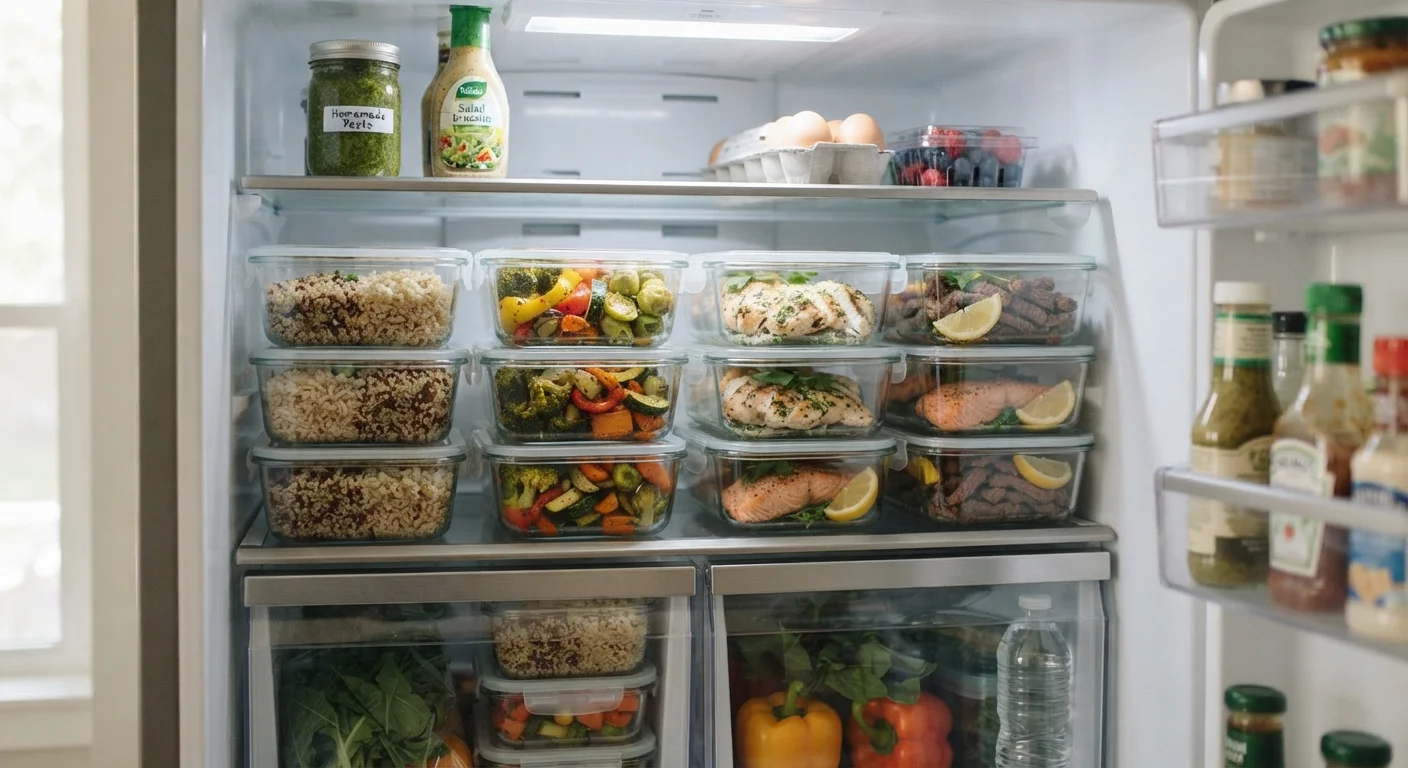
Allow all three proteins to reach room temperature before sealing in containers, which takes no more than 30 minutes. Placing hot food directly into sealed containers traps steam and raises the internal container temperature, which can encourage bacterial growth. Divide chicken into two or three smaller containers rather than one large one so you can grab a portion without exposing the rest to air repeatedly.
Label each container with the date. Cooked chicken and beans keep safely in the refrigerator for four to five days. Hard-boiled eggs keep up to one week unpeeled. For longer storage, chicken and beans can be frozen for up to three months.
Plan your meals around the proteins
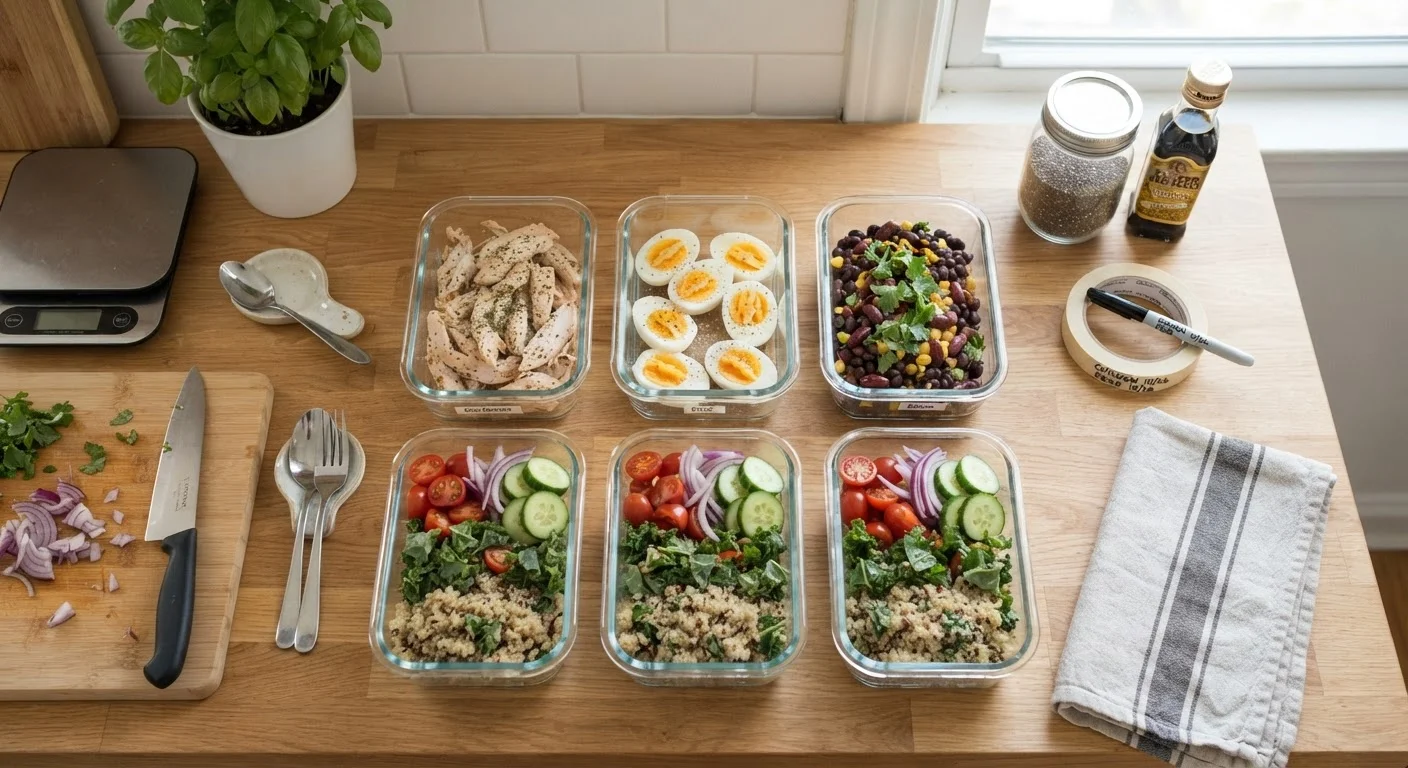
Before finishing your prep session, sketch out how you will use each protein across the week. Assign the chicken to two or three different formats: shredded in tacos one night, stirred into soup another, sliced over a grain bowl midweek. Use beans in a burrito bowl, mixed into a pasta, or served alongside eggs for a quick breakfast. Hard-boiled eggs work as a standalone snack, sliced over salads, or chopped into a simple egg salad.
This planning step prevents the most common batch-cooking problem: a full refrigerator and no idea what to make with it. You do not need detailed recipes for every meal, just a rough map so nothing goes unused. The practical Sunday batch cooking guide has a useful meal mapping template if you want more structure.
Once everything is stored, you have a flexible protein base for the week. For ideas on how to use batched proteins in fast weeknight dinners, browse the quick recipes collection. Additional technique tips are available in the cooking tips hub.