
Why knife skills affect more than speed
Most home cooks assume knife skills are about working faster. Speed is a side effect, but the real gains are consistency, safety, and less food in the trash. When you cut vegetables unevenly, smaller pieces overcook before larger ones are done. The result is a pan with some burnt and some underdone pieces, no matter how attentive you are at the stove.
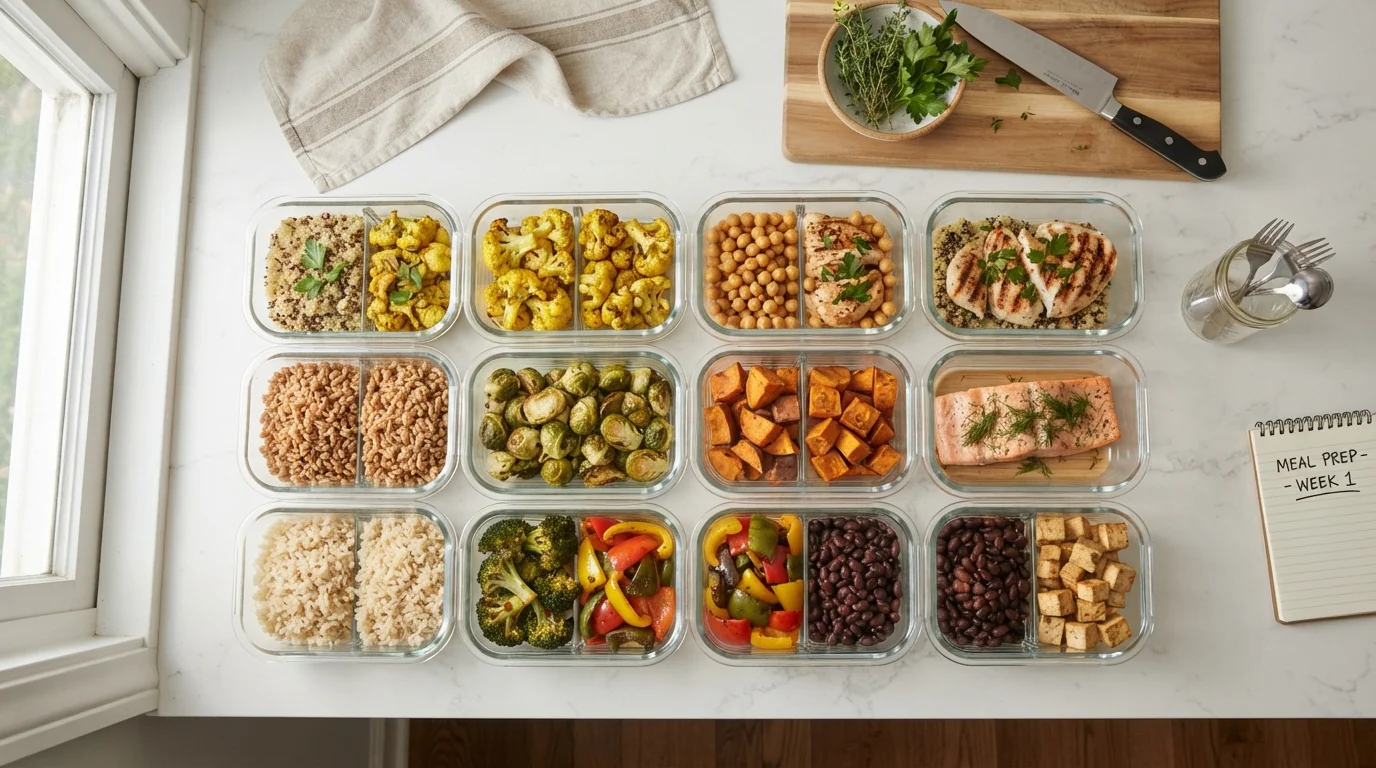
Better cuts also mean you trim less. Confident technique removes only what needs to go, keeping more of each ingredient on the cutting board and out of the compost bin. For families watching grocery costs, that difference adds up across a week of meals. These habits tie directly into the kind of efficient prep covered in a practical batch cooking approach.
Pinch grip
A way of holding a knife where the thumb and side of the index finger pinch the blade just above the handle, giving better control than gripping only the handle.
Claw grip
A way of holding food while cutting that curls the fingertips inward so the knuckles guide the blade and the fingertips stay away from the edge.
Honing
The process of realigning a knife's edge using a honing steel. It does not remove metal or sharpen a truly dull blade.
Dice
A cut that produces uniform cubes by making a series of slices in three directions. Size is described as small, medium, or large.
Mince
Repeated fine cuts that produce very small, almost paste-like pieces. Commonly used for garlic, ginger, and herbs.
Whetstone
A rectangular sharpening stone used to grind and reshape a knife's edge by removing a small amount of metal.
The cuts worth learning first
Four cuts cover the majority of everyday home cooking:
- Slice: A single, continuous stroke through the ingredient. Used for onions, peppers, mushrooms, and most proteins.
- Dice: Uniform cubes produced by a sequence of slices in three directions. Small dice (about 1/4 inch) works for aromatics; medium dice (about 1/2 inch) works for soups and stews.
- Chop: A rougher cut where size is approximate. Use it for herbs, nuts, and ingredients that will be cooked down or pureed.
- Mince: Very fine, repeated cuts that produce tiny, almost paste-like pieces. Garlic and ginger are the most common targets.
Learning these four in order builds muscle memory that transfers to nearly every recipe you will encounter. Once prep is reliable, you can move comfortably into larger-volume sessions like the ones outlined in a weekly meal prep routine.
How to hold the knife and the food
Two grips handle almost all cutting tasks. The pinch grip on the knife places your thumb and the side of your index finger directly on the blade, just above the handle. Your remaining three fingers wrap around the handle. This position gives you control over the blade's direction and reduces lateral wobble.
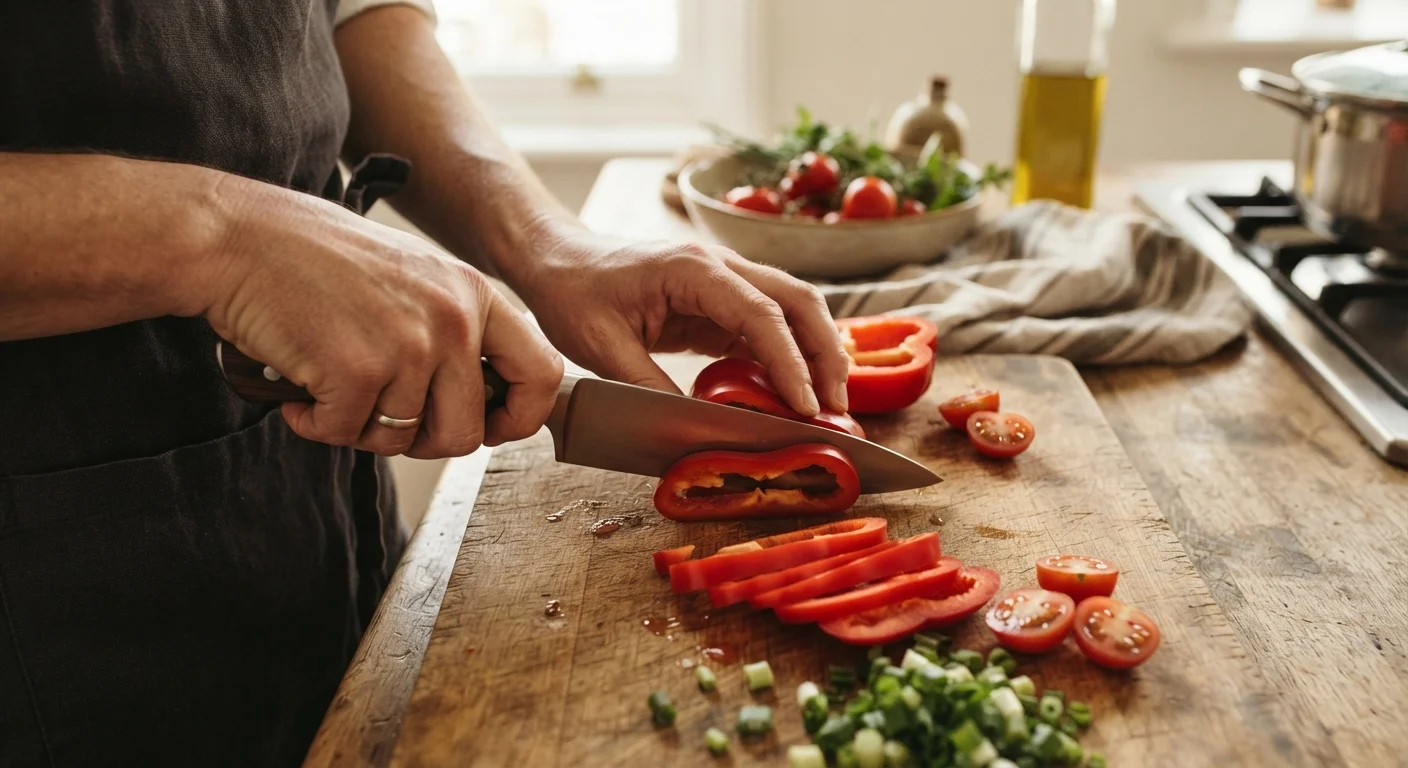
The claw grip on the food curls your fingertips inward so the flat of the blade rests against your knuckles as you cut. Your fingertips stay behind the knuckles and away from the edge. This is the single most effective safety habit a beginner can build.
The wrist does most of the directional work; the elbow stays relatively still. For slicing, the tip of the blade often stays in contact with the board while the heel rocks through the ingredient. For chopping herbs or nuts, lift the knife fully and use a rocking motion through the pile.
Keeping a knife sharp enough to use safely
A dull knife requires more downward force to cut through food. More force means a higher chance of the blade slipping sideways off a rounded surface. Sharpness is a safety issue, not just a quality-of-life one.
Test sharpness before you start
Hold a sheet of printer paper by the top edge and draw the knife downward through it. A sharp knife cuts cleanly with minimal pressure; a dull one tears or deflects. This takes five seconds and tells you whether honing is enough or whether sharpening is needed before your prep session.
There are two distinct tools here. A honing steel (the long rod often sold with knife sets) does not sharpen a blade. It realigns the microscopic edge that bends slightly with regular use. Hone before each session and the knife stays performing well longer between sharpenings. A whetstone or pull-through sharpener actually removes a small amount of metal to restore the edge. For most home cooks, sharpening every few months is sufficient. The test: if the knife slides across a tomato skin rather than biting through it, sharpen the blade.
Storage matters too. A knife block, a magnetic wall strip, or individual blade guards all protect the edge. A loose knife rattling in a drawer dulls faster and is more hazardous to reach for.
Reducing waste at the cutting board
A lot of food waste happens before anything hits a pan. Aggressive trimming removes edible material because it looks rough or unfamiliar. Broccoli stems, once the tough outer layer is peeled, are as usable as the florets. Celery leaves work well in stocks and salads. Carrot peels and onion skins can go into a freezer bag with other scraps for homemade stock.
The habit to build is intentional trimming: remove what is genuinely inedible (tough fibrous ends, damaged spots, seeds that are not meant to be eaten), and leave the rest. This connects directly to stocking a pantry with ingredients that stretch across multiple meals, as covered in our guide to pantry ingredients for fast dinners.
A sharp knife makes this easier. Clean cuts through produce leave flat, stable surfaces that make subsequent cuts more controlled and reduce the chance of slipping into a section you did not intend to remove.