
What makes a dessert a pantry dessert
A pantry dessert is any sweet that you can make without leaving the house. The concept is less about a specific category of recipe and more about a habit of cooking: scan what is already on the shelf, then build something delicious from it.
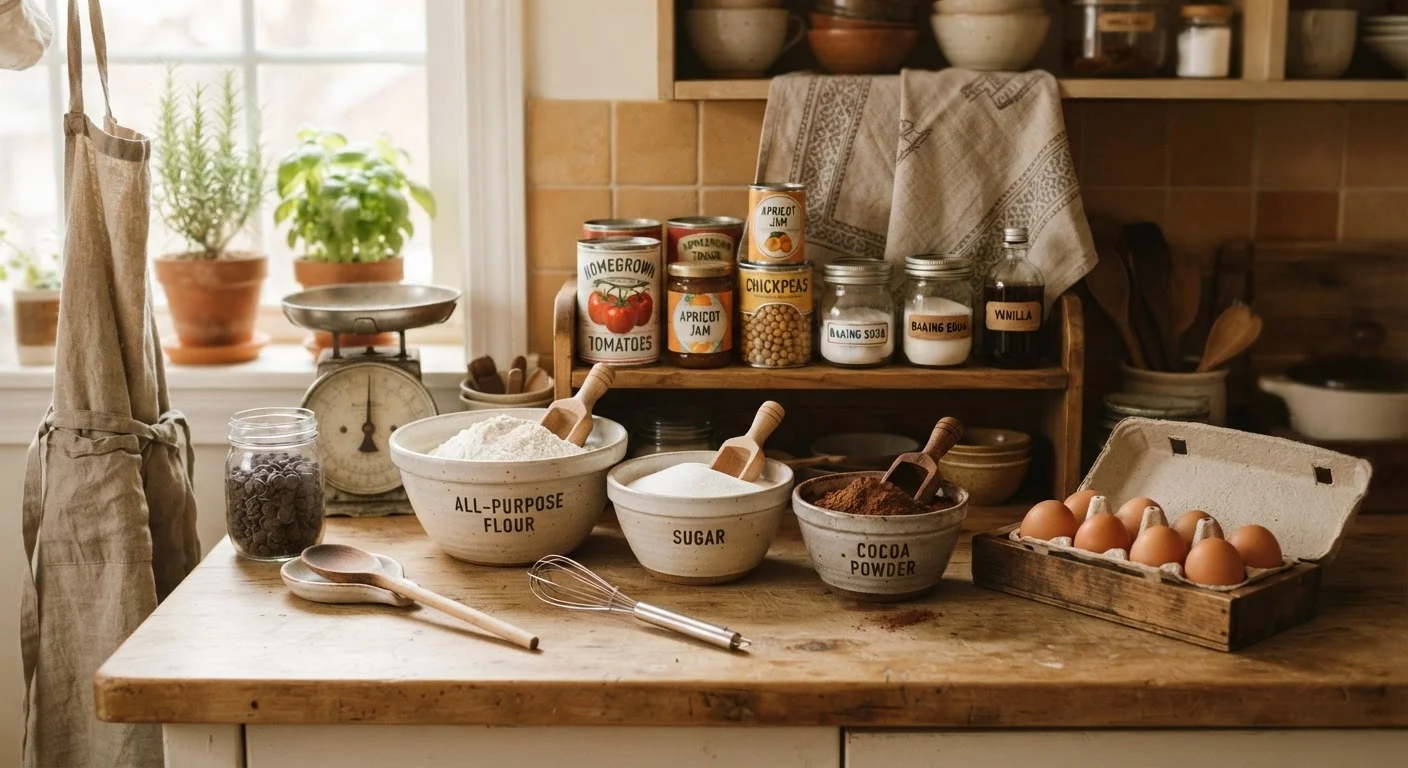
The core building blocks are flour, a sweetener (granulated sugar, brown sugar, honey, or even jam), a fat (oil, butter, or shortening), a leavener (baking powder, baking soda, or nothing at all for dense bars and cookies), and flavoring agents like cocoa, vanilla extract, or spices. That short list covers brownies, cakes, cookies, mug cakes, puddings, crisps, and more.
Canned goods significantly widen the range. A can of sweetened condensed milk is the backbone of fudge, caramel sauce, and key lime-style bars. Canned fruit makes a cobbler possible on any given Tuesday. For a full breakdown of the staples worth keeping stocked, see this pantry reference guide.
Stock these five staples first
If your pantry has all-purpose flour, granulated sugar, cocoa powder, baking powder, and cooking oil, you can make a chocolate cake or a batch of cookies at any time. Adding a can of sweetened condensed milk and a jar of oats covers nearly every other pantry dessert format on this list.
Flavor from simple ingredients
Simple does not mean flat. A few pantry staples contribute flavor that is genuinely complex, provided you handle them well.
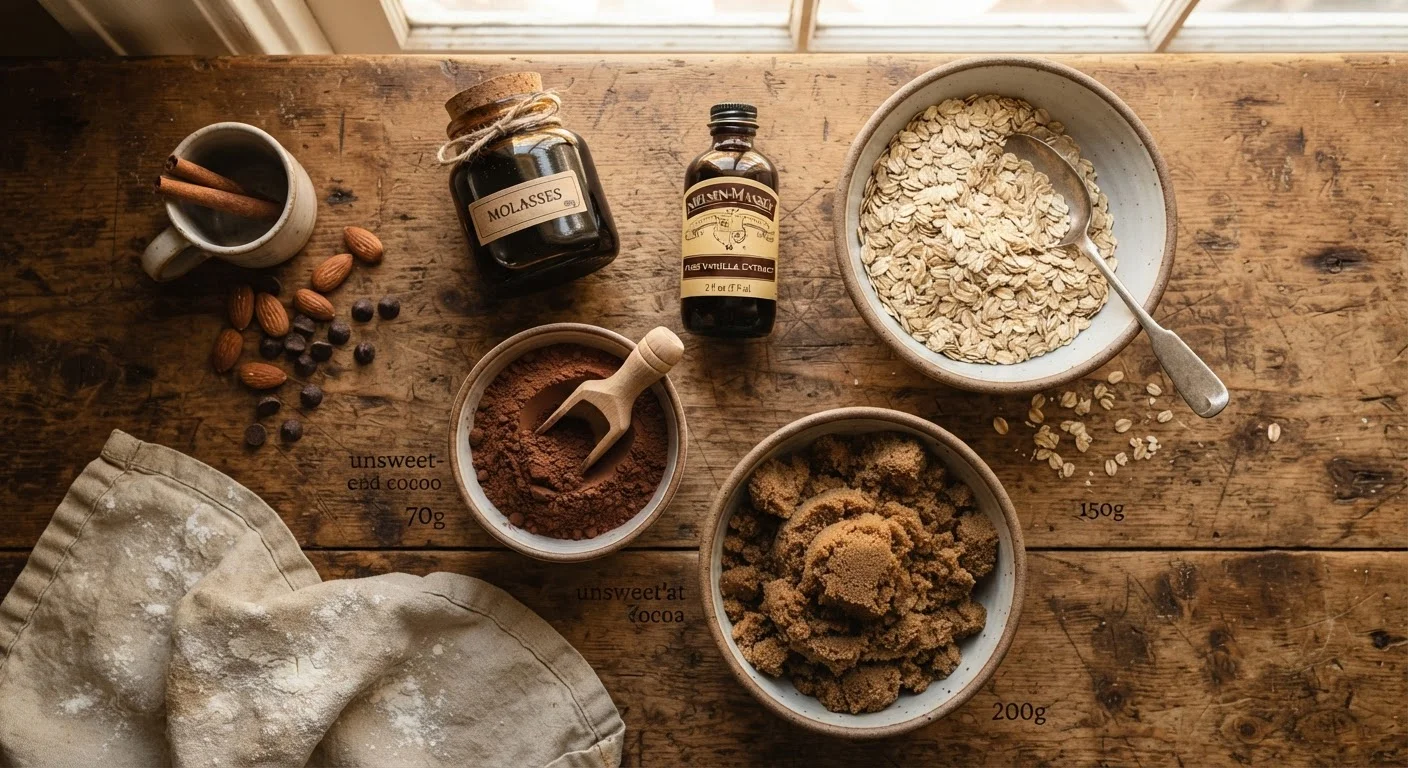
Cocoa powder, when bloomed in hot water or hot fat for thirty seconds before mixing, releases more of its aromatic compounds and produces a noticeably deeper chocolate flavor. Brown sugar contains molasses, which adds a caramel-like undertone that white sugar cannot replicate. Cinnamon and nutmeg are inexpensive spices that make oat-based bars taste far more finished.
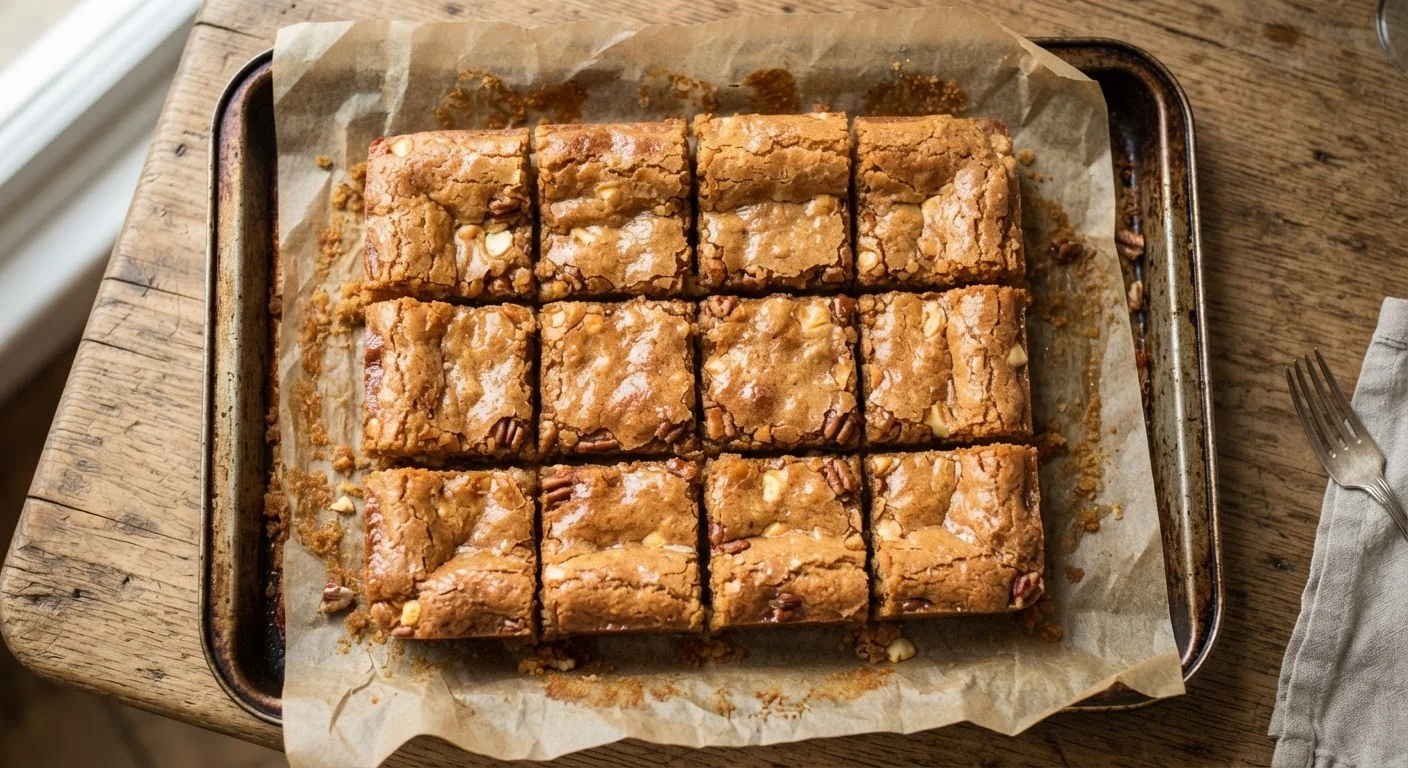
Browning butter is one of the most efficient flavor upgrades available. It takes an extra two minutes on the stovetop, costs nothing extra, and changes the character of cookies and blondies from plain to nutty and rich. If you want to go further without adding ingredients, consider these affordable baking staples that punch well above their price point.
For recipes where sugar is a concern, the techniques in this guide to baking with less sugar show how to cut sweetness without losing structure or moisture.
Four dependable pantry dessert formats
These four formats cover a wide range of textures and occasions, and all of them rely almost entirely on shelf-stable ingredients.
One-bowl chocolate cake
Flour, sugar, cocoa powder, baking soda, salt, oil, and water or black coffee. That is the full ingredient list. Coffee amplifies the cocoa without tasting like coffee in the finished cake. Mix dry ingredients, add wet, stir, and bake. The result is a moist, fudgy cake that serves eight for well under two dollars in most grocery markets.
Oat-based bars
Rolled oats, flour, brown sugar, butter, baking powder, and a filling from your pantry (jam, peanut butter, or sweetened condensed milk) produce a versatile bar cookie. Press half the oat mixture into the pan, spread the filling, top with the remaining mixture, and bake until golden. These also freeze well, which makes them a natural for batch cooking alongside savory prep sessions from meal prep basics.
Stovetop rice pudding
White rice, milk (or evaporated milk from a can), sugar, vanilla, and cinnamon. Simmer on low heat, stirring occasionally, until thick and creamy. Rice pudding is one of the most economical desserts per serving of any format, and it works with leftover cooked rice too.
Canned fruit crisp
Drain a can of peaches, pears, or cherries and pour into a baking dish. Top with a mixture of oats, flour, brown sugar, and melted butter. Bake at 375 degrees for about 30 minutes. The result is practically indistinguishable from a fresh-fruit version in winter. For a detailed look at how crisps differ from cobblers and crumbles, see this breakdown of fruit dessert formats.
No-bake options and when to reach for them
Not every pantry dessert needs the oven. No-bake recipes cut energy costs, reduce kitchen heat in warm months, and often come together faster than any baked alternative.
Chocolate oat clusters (oats, cocoa, sugar, butter, milk, and peanut butter cooked briefly on the stovetop then dropped onto parchment) set at room temperature within twenty minutes. Peanut butter bars made with oats and sweetened condensed milk need only a few minutes of mixing and an hour in the refrigerator. A condensed milk fudge requires just two ingredients and a microwave.
For a practical cost and time comparison between no-bake and baked options, this side-by-side look at no-bake vs. baked desserts works through the trade-offs clearly. If you are new to the kitchen altogether, the beginner baking guide has a practical entry point for both styles.
Under $2
Typical cost for a one-bowl chocolate cake
Based on average U.S. grocery prices for flour, cocoa powder, sugar, oil, and baking soda in standard quantities.
5
Core ingredients in most pantry dessert recipes
Flour, sugar, fat, a leavener, and one flavoring agent cover the majority of baked goods formats.