
Why pantry staples matter for family nutrition and cost
Convenience foods cost more per serving and often deliver less fiber, protein, and micronutrients than their whole-food counterparts. A pantry built around shelf-stable staples reduces the need for those purchases and gives a household the raw material for balanced meals on almost any budget.
This reference covers the most useful categories of pantry staples, what each one contributes nutritionally, and how to use them. For broader strategies on feeding a family without overspending, see our family grocery budget primer.
| Cost per serving: dried lentils | Approximately $0.10 to $0.20 per cooked cup (USDA Economic Research Service, general pricing data) |
| Shelf life: dried beans and lentils | 2 to 5 years when stored in airtight containers (USDA Food Safety and Inspection Service) |
| Shelf life: rolled oats | Up to 2 years at room temperature (USDA guidelines on dry grain storage) |
| Protein in one cup cooked lentils | Approximately 18 grams (USDA FoodData Central) |
| Fiber in one cup cooked black beans | Approximately 15 grams (USDA FoodData Central) |
| Shelf life: canned fish | 3 to 5 years unopened (FDA guidelines on shelf-stable foods) |
Legumes: dried and canned
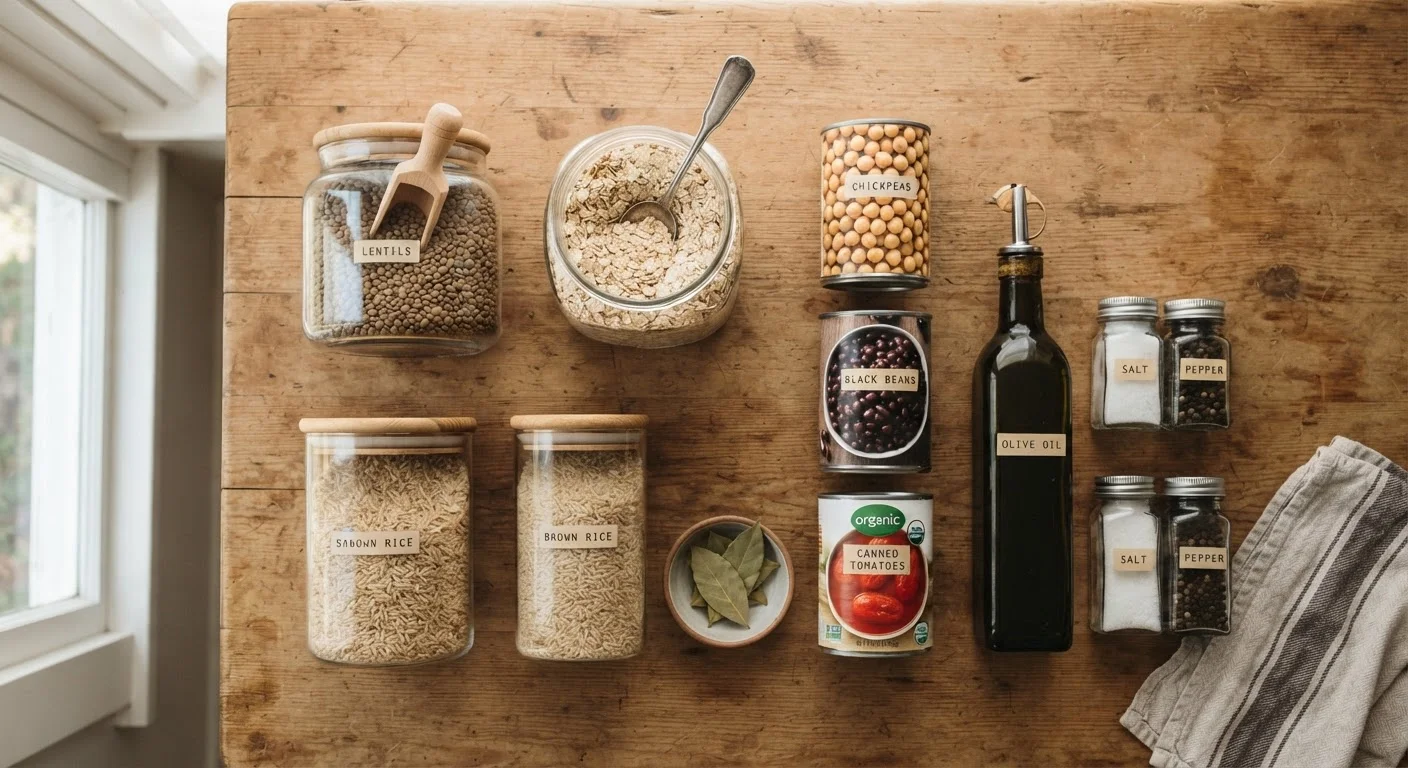
Dried beans, lentils, and chickpeas are among the most nutrient-dense foods available at a low cost per serving. They supply plant-based protein, soluble fiber, iron, and folate. Lentils stand apart because they cook in 20 to 30 minutes without soaking, making them practical for weeknight meals.
Canned beans carry essentially the same nutritional profile as home-cooked beans after draining and rinsing. The tradeoff is a higher per-serving cost compared with dried, but the time savings are real. Whole grains, legumes, and frozen vegetables covers the nutritional case for these foods in more depth.
Uses: soups, grain bowls, tacos, bean-based dips, and pasta dishes. A pot of cooked lentils or beans refrigerates well for four to five days and can anchor multiple meals.
Whole grains
Rolled oats, brown rice, whole wheat flour, and cornmeal are affordable sources of complex carbohydrates, fiber, and B vitamins. Oats work at breakfast as porridge or overnight oats, and in baked goods. Brown rice is a reliable base for grain bowls and stir-fries. Whole wheat flour can replace some or all of the all-purpose flour in many baked goods, adding fiber without a significant cost difference.
Buying larger quantities of dry grains typically reduces the per-unit cost. Stored in airtight containers, most whole grains stay usable for six to twelve months at room temperature, and longer in the freezer.
For ideas on turning these staples into satisfying desserts, see pantry desserts using everyday staples.
Canned and shelf-stable proteins
Canned tuna, canned salmon, and canned sardines provide protein and omega-3 fatty acids at a fraction of the cost of fresh fish. Canned tuna mixed with beans or whole grain crackers produces a quick, protein-rich meal with minimal preparation. Eggs, while refrigerated, function as a pantry-adjacent staple because of their low cost per gram of protein and their versatility across meals.
A cost-per-gram comparison of common protein sources can help households decide how to allocate protein spending across the week.
This article provides general nutritional information and is not a substitute for advice from a qualified healthcare or dietary professional. People managing specific health conditions should consult a professional before making significant dietary changes.
Pantry flavor builders and cooking fats
Olive oil, canola oil, apple cider vinegar, low-sodium soy sauce, canned tomatoes, and dried herbs and spices are inexpensive per use and determine how appetizing a meal tastes. Dried cumin, garlic powder, smoked paprika, chili flakes, and oregano each cost very little per meal and can shift a basic bean or grain dish from bland to satisfying.
Canned tomatoes are one of the most useful items in this category. Crushed, diced, or whole, they form the base of pasta sauces, soups, chili, and braises. The canning process actually concentrates lycopene, an antioxidant found in tomatoes.
For baking specifically, a small number of affordable flavor ingredients carry significant impact. Affordable baking ingredients that deliver outsized flavor covers that category in detail.
Building meals around these staples also reduces reliance on pre-made sauces and seasoning packets, which add cost without adding nutrition. See when convenience cooking saves money and when it does not for a balanced look at that tradeoff.