
What actually separates dried from fresh pasta
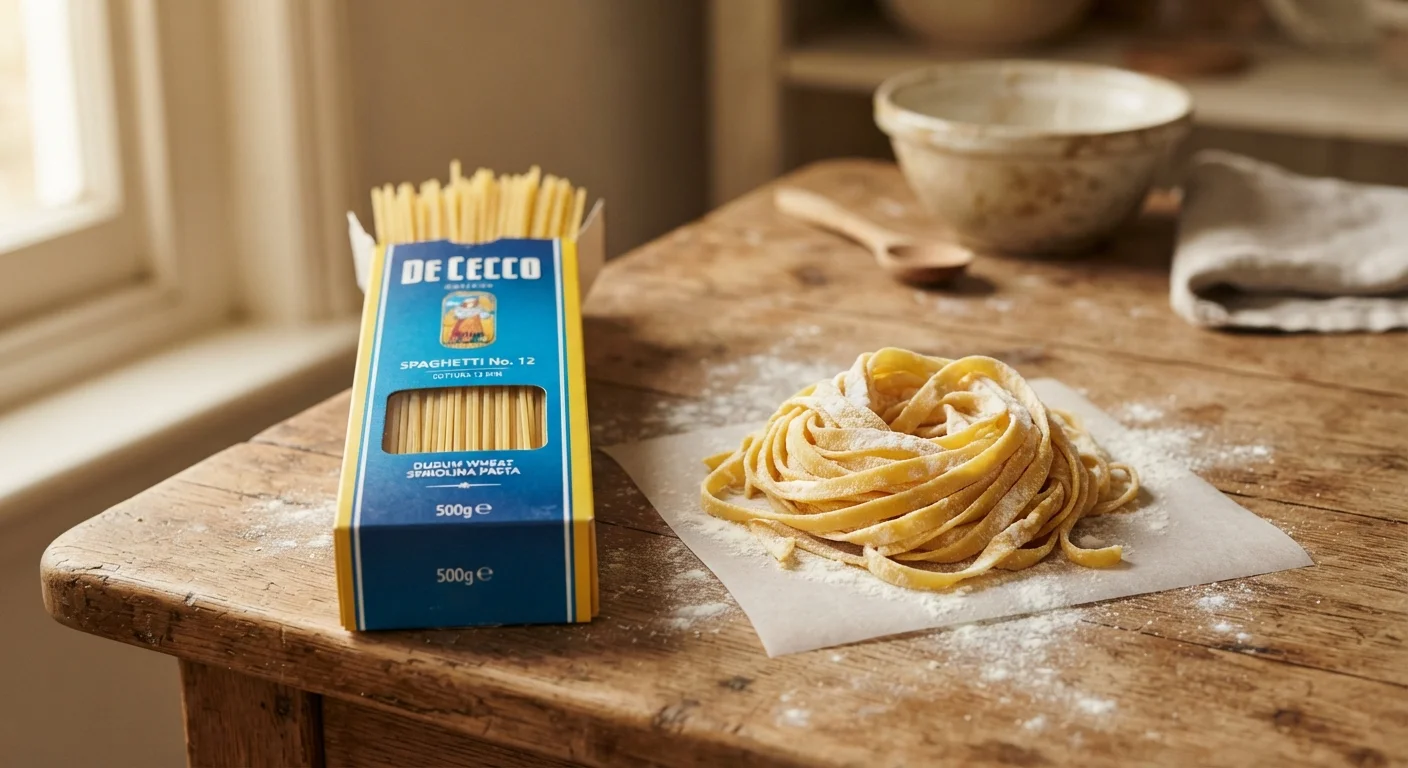
Dried pasta is made from semolina flour and water, then extruded and dried until it is shelf-stable. Fresh pasta typically includes eggs and soft wheat flour, which gives it a richer flavor and a softer bite. The difference in ingredients is also a difference in behavior: dried pasta absorbs sauce as it cooks, while fresh pasta stays more tender and porous from the start.
Fresh pasta from a grocery store refrigerator case takes roughly 2 to 3 minutes to cook. Dried pasta takes 8 to 12 minutes depending on the shape. That sounds like a point in fresh pasta's favor, but the full picture is more complicated. Fresh pasta is perishable, usually lasting only a few days in the fridge or a few months in the freezer. Dried pasta, stored in a cool, dry spot, can last one to two years without any quality loss.
For families who want a reliable, low-cost staple, dried pasta is a natural fit alongside the pantry items covered in this guide to fast weeknight pantry staples.
Cost and pantry convenience
On a per-serving basis, dried pasta is significantly cheaper. A one-pound box of dried spaghetti or penne typically feeds four people and costs well under two dollars at most grocery stores. Fresh pasta, whether store-bought or homemade, costs two to four times as much per serving and requires either immediate use or careful storage.
Dried pasta also removes the need to plan precisely. You can keep six boxes on the shelf and pull one out on any given Tuesday without worrying about expiration dates. That kind of flexibility is hard to put a number on, but it matters when a family dinner needs to come together in 20 minutes.
| Criterion | Dried pasta | Fresh pasta |
|---|---|---|
| Average cost per serving | Under $0.50 | $1.00 to $2.00+ |
| Shelf life | 1 to 2 years (pantry) | 2 to 4 days (refrigerated) |
| Cook time | 8 to 12 minutes | 2 to 3 minutes |
| Best sauce pairing | Hearty, chunky, or baked | Light, delicate, or cream-based |
| Reheats well | Yes | Less reliably |
| Shape variety available | Very wide | Limited in most stores |
If you cook larger batches on weekends, dried pasta is also the better choice. It reheats evenly and does not continue absorbing liquid the way fresh pasta can. For more on building efficient cooking habits, see how batch cooking works for families.
When fresh pasta is worth it
Fresh pasta earns its place in a few specific situations. With a simple brown butter and sage sauce, or a light Alfredo, fresh pasta's soft texture and egg-enriched flavor come through in a way dried pasta cannot replicate. The sauce clings differently, and the pasta itself tastes richer without needing anything extra.
Homemade fresh pasta can also be a genuinely fun kitchen project for families on a slower weekend. Children can help with rolling and cutting, and the result is noticeably different from anything out of a box. The trade-off is time: a from-scratch pasta dough takes at least 30 minutes to rest before you can shape it.
For weeknights, however, the math rarely works in fresh pasta's favor. A box of dried rigatoni and a sheet pan of roasted vegetables can become dinner in the time it takes to find parking at a specialty grocery store. On the subject of simple, low-cleanup cooking, sheet pan dinners are worth a look as a companion strategy.
Which pasta shape to use for everyday cooking
Shape matters more than many cooks realize, and dried pasta gives you far more options at lower cost. Chunky, ridged shapes like rigatoni and penne hold thick tomato or meat sauces well. Long strands like spaghetti and linguine work with oil-based or thinner sauces. Small shapes like ditalini and orzo fold into soups and casseroles cleanly.
Fresh pasta shapes are more limited in most grocery stores, and the specialty shapes that do exist tend to cost more. If a recipe calls for a specific shape, dried pasta usually has an equivalent at a fraction of the price.
Choosing the right shape is one of those small decisions that affects how a meal turns out without adding any time or cost. It fits naturally into the broader conversation about kitchen techniques that save time and cut costs. Pairing the right dried pasta shape with whatever protein and vegetables you have on hand is also a practical form of convenience cooking that actually saves money.