
Why one chicken goes further than you might expect
A whole chicken weighing around 4 to 5 pounds costs noticeably less per pound than pre-cut pieces, and it contains more usable protein than many families realize. Breasts, thighs, drumsticks, and wings each suit different recipes, and the carcass itself becomes the foundation for a cooking liquid that would otherwise cost extra. This approach fits naturally alongside a Sunday batch-cooking session, where one hour of active kitchen work sets up several nights of faster assembly.
The four-meal method works by treating the chicken as a bank of ingredients rather than a single dinner. Cook it once, divide the meat by cut and texture, then assign each portion to a recipe where it performs well. Dark meat holds up in braises and soups. White meat suits quick stir-fries and grain bowls. Shredded meat from both works in tacos or sandwiches. For more ideas on getting the most from affordable proteins, see protein batch cooking with chicken, beans, and eggs.
Vary the seasoning, not just the recipe
Using the same base chicken in four meals only works if the flavor profile changes each time. Season meal 2 with soy sauce and ginger, meal 3 with thyme and lemon, and meal 4 with cumin and chili powder. The meat is identical; the seasoning makes it feel like a different protein entirely.
What you need before you start
Gathering the right equipment before you begin saves time and reduces the chance of food safety missteps. Below are the tools and pantry items worth having on hand.
What you will need
Meat thermometer
Confirms the chicken has reached 165 degrees Fahrenheit internally, the safe temperature for poultry.
Large roasting pan with rack
Holds the whole bird during roasting and catches drippings that can go into stock.
Large stock pot (6 quarts or more)
Used to simmer the carcass and aromatics into a usable cooking stock.
Airtight storage containers (at least 4)
Keep divided chicken portions fresh and prevent cross-contamination in the refrigerator.
Kitchen shears
Speed up carving and help separate the backbone for stock making.
Fine mesh strainer
Strains solids from homemade stock to produce a clean, ready-to-use broth.
The four meals: what they are and how to assign cuts
The goal is variety in flavor and texture across the week so the same protein never feels repetitive. The assignments below are guidelines; swap cuts if your family has preferences.
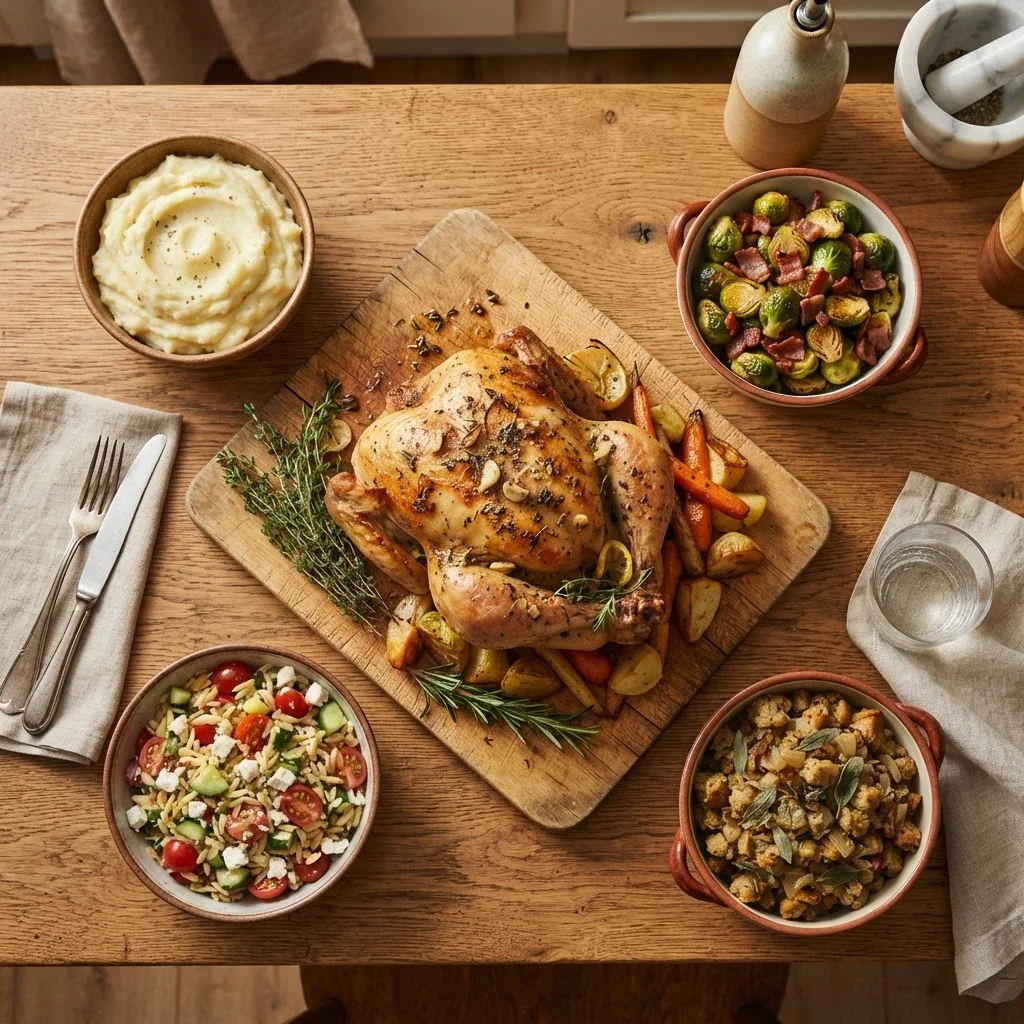
- Meal 1: Roasted chicken with vegetables (the whole bird, served the first night, sets up all the leftovers).
- Meal 2: Quick chicken stir-fry using sliced breast meat with whatever vegetables are in the refrigerator. See how to build a 30-minute chicken stir-fry for a reliable method.
- Meal 3: Chicken and vegetable soup built from homemade stock and shredded thigh meat. If you keep vegetable trimmings while prepping, these scraps add depth to the broth at no extra cost.
- Meal 4: Chicken tacos or grain bowls using the remaining shredded meat from both dark and white portions, seasoned differently from meals 2 and 3.
This four-meal structure contrasts with ground beef approaches: stretching ground beef into five weeknight meals follows a similar logic and is worth reading if your household rotates proteins.
Storage and food safety basics
Cooked chicken stored in airtight containers stays safe in the refrigerator for up to four days, according to USDA food safety guidelines. Assign each portion to its intended meal before refrigerating so you are not re-handling the same container repeatedly. Stock can be refrigerated for four days or frozen for up to three months.
Label each container with the date and the meal it is assigned to. This small habit prevents waste and removes the nightly question of what to cook. Families with children will find this kind of advance planning also reduces mealtime friction; strategies for getting kids to eat one dinner pair well with this system because the meals are already varied enough to suit different preferences without cooking separately.
This article is for general informational purposes only and is not a substitute for advice from a qualified nutrition or food safety professional. Always follow current USDA food safety guidelines for handling, storing, and reheating poultry.