
Why homemade stir-fry beats the takeout box
A typical takeout order runs $12 to $18 per person before tip and delivery fees. This recipe feeds a family of four for roughly the cost of a single delivery order, using chicken thighs or breasts you likely already have and a sauce built from shelf-stable pantry staples. For a deeper look at which pantry items make fast dinners like this one possible, see our pantry staples guide.
The other advantage is control. Takeout sauces are often very sweet or very salty, and portion sizes vary wildly. At home, you adjust seasoning as you go, add more vegetables, and skip the mystery oil. The technique below is straightforward enough for a weeknight and repeatable enough to become a weekly rotation.
Frozen vegetables save real time
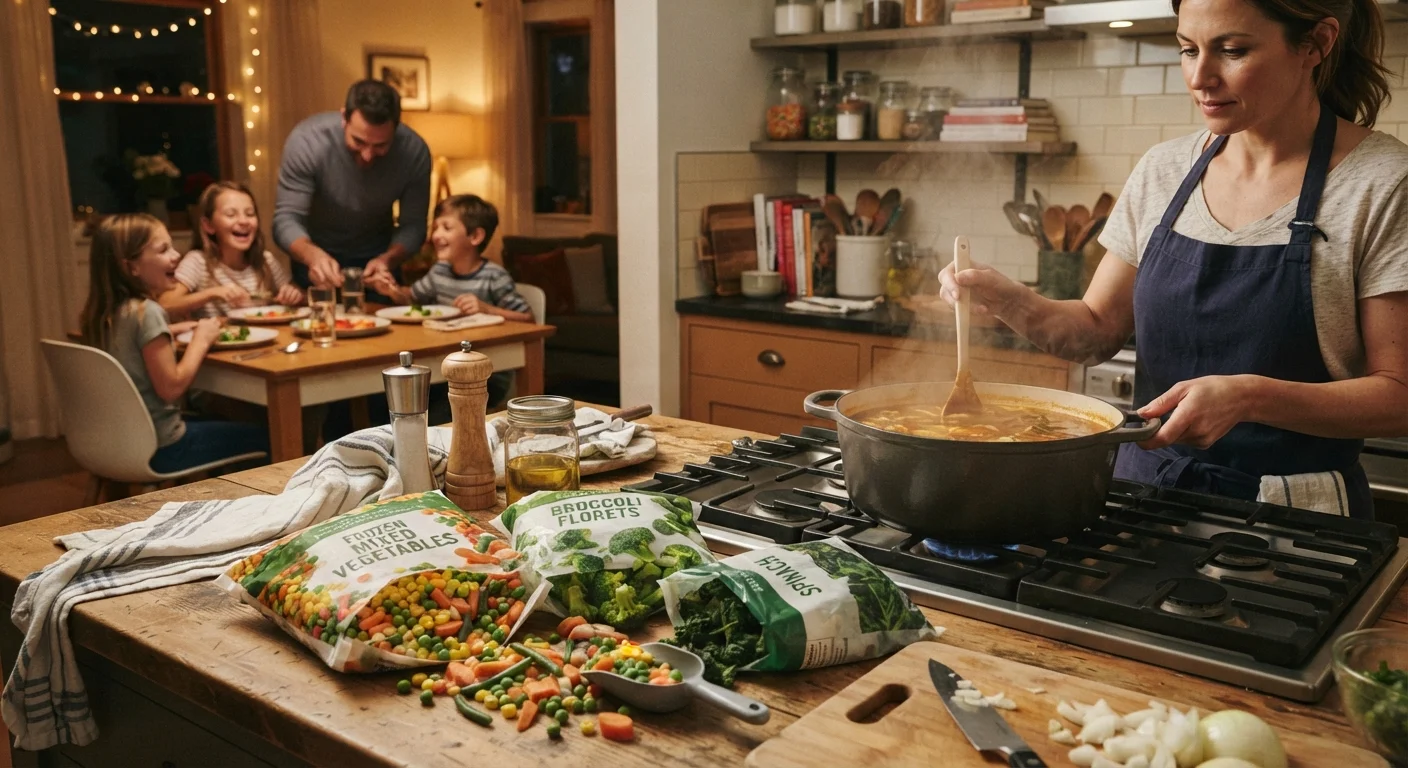
A bag of frozen stir-fry vegetables costs less than a dollar per serving and eliminates all chopping. They are picked and frozen at peak freshness, so the nutritional profile is comparable to fresh. Thaw them in the bag under cold water for five minutes before adding to the pan so excess ice does not water down your sauce.
If you end up with leftover chicken after making this, stretching that chicken into more meals is easier than you might expect.
What you need before you start
Gather everything before the skillet gets hot. Stir-fry moves fast once you start, and stopping to measure soy sauce while chicken sits in a hot pan is how you end up with dry, overcooked protein.
What you will need
For the vegetables, you have real flexibility. A standard bell pepper-broccoli-snap pea combination works well, but a 12-ounce bag of frozen stir-fry vegetables is a perfectly good substitute and saves about 10 minutes of prep. Check your cooking tips reference if you want guidance on knife work to cut prep time further.
12-inch skillet or wok
Provides the surface area and heat retention needed to sear chicken without steaming it.
Sharp chef's knife
Cuts chicken and vegetables into uniform pieces so everything cooks evenly in the same time.
Small mixing bowl
Holds the sauce ingredients so you can pour them in quickly without measuring while cooking.
Tongs or wooden spatula
Moves chicken and vegetables around the pan without breaking the pieces apart.
Step-by-step instructions
Follow these steps in order. The total active cooking time is about 15 minutes once prep is done.
Mix the sauce
In a small bowl, whisk together 3 tablespoons soy sauce, 1 tablespoon cornstarch, 1 teaspoon ginger, 1 teaspoon sesame oil (if you have it), and 2 tablespoons water. Set aside. Having the sauce ready before the pan heats up is the single biggest time-saver in this recipe.
Prep and dry the chicken
Pat the chicken dry with paper towels. Slice it against the grain into strips roughly half an inch thick. Dry chicken browns properly; wet chicken steams and turns pale. Season lightly with salt and pepper.
Sear the chicken
Heat 1 tablespoon of oil in your skillet over high heat until it shimmers. Add chicken in a single layer, do not move it for 90 seconds. Flip and cook another 60 to 90 seconds. Work in two batches if needed. Transfer to a plate.
Cook the vegetables
Add the remaining tablespoon of oil to the same pan. Add your vegetables and stir constantly for 3 to 4 minutes. If using frozen vegetables, cook until they are heated through and any water has evaporated, about 5 minutes.
Add garlic and return the chicken
Push the vegetables to the edges of the pan. Add the minced garlic to the center and stir it in the oil for 30 seconds until fragrant. Return the chicken to the pan and toss everything together.
Pour in the sauce and finish
Give the sauce bowl a quick stir to re-suspend the cornstarch, then pour it over the chicken and vegetables. Toss continuously for 60 to 90 seconds until the sauce thickens and coats everything. Remove from heat immediately.
Serve over rice or noodles
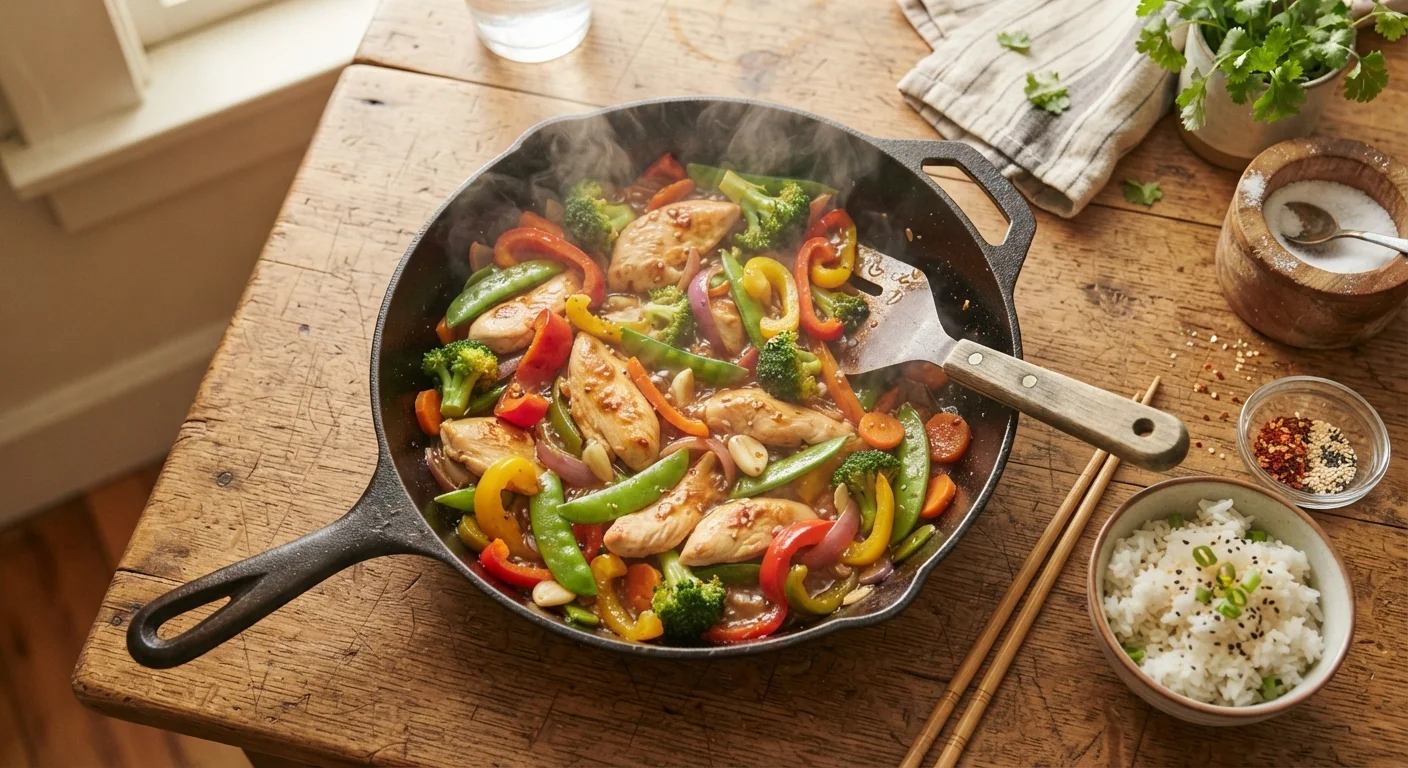
Spoon the stir-fry over cooked white rice, brown rice, or noodles. Garnish with sliced green onions or sesame seeds if you have them on hand. Leftovers keep in the refrigerator for up to three days and reheat well in a skillet with a splash of water.
Adjustments and common problems
Sauce too thin: mix one additional teaspoon of cornstarch with a tablespoon of cold water, stir it in, and cook for 60 more seconds. Sauce too thick: add a splash of water or low-sodium broth and stir over heat.
Chicken came out rubbery: the pieces were likely too thick, or the pan was not hot enough before they went in. Aim for strips no thicker than half an inch and make sure the oil is shimmering before anything touches the pan.
Vegetables turned soggy: they went in while still wet, or the pan was overcrowded. Pat everything dry and cook in two batches if your skillet is smaller than 12 inches. If you want an equally fast weeknight dinner with even less hands-on work, sheet pan dinners are worth trying on nights when you need to walk away from the stove.