
What happens to nutrients between the field and your plate
Both fresh and frozen produce start from the same place: a field or orchard. What separates them nutritionally is what happens in the hours and days after harvest.
Fresh produce shipped to a grocery store can spend several days in transit and on shelves before a family buys it. Water-soluble vitamins, particularly vitamin C and some B vitamins, degrade during that window through exposure to light, heat, and oxygen. A 2017 study published in the Journal of Food Composition and Analysis found that frozen peas, green beans, and spinach retained comparable or higher levels of riboflavin and vitamin C than their fresh-stored counterparts after several days of refrigeration.
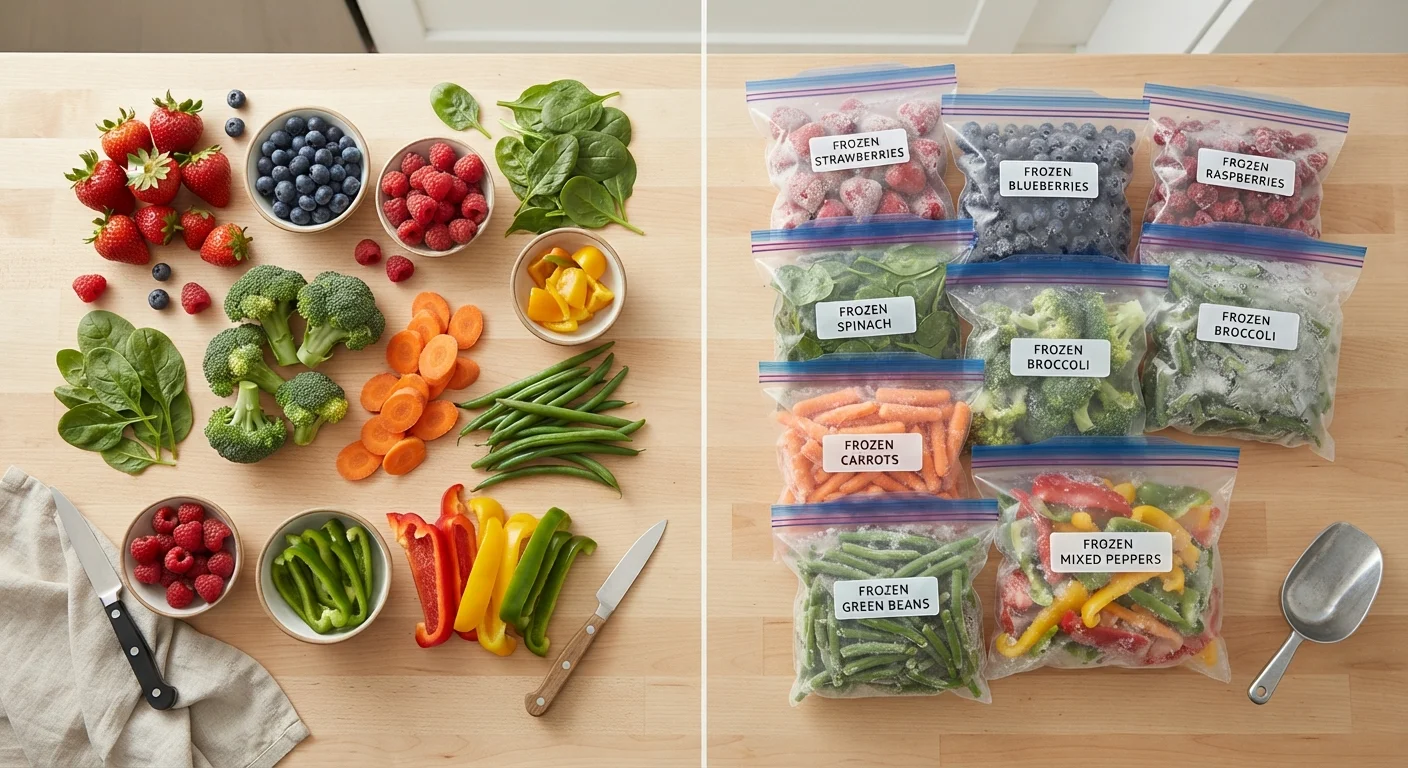
Frozen produce follows a different path. Vegetables and fruits destined for the freezer are picked at or near peak ripeness, blanched briefly in hot water to deactivate enzymes that cause breakdown, and then flash-frozen within hours of harvest. Blanching does reduce some heat-sensitive nutrients slightly, but the freezing process then stops most further degradation.
The practical takeaway: produce bought fresh and eaten the same day or the next is nutritionally excellent. Fresh produce that sits in a refrigerator for five or more days before cooking has likely lost a measurable share of its water-soluble vitamins. Frozen produce, used any time within its freezer life, delivers a consistent nutrient profile that is broadly equivalent to fresh.
This article is for informational purposes only and is not a substitute for advice from a registered dietitian or other qualified health professional.
Cost per serving: the numbers that matter
| Criterion | Fresh produce | Frozen produce |
|---|---|---|
| Nutrient retention (same day) | Excellent if just harvested | Excellent, stable at freezer temp |
| Nutrient retention (after 5 days) | Moderate; water-soluble vitamins decline | Stable; minimal further loss |
| Typical shelf life | 3 to 7 days (most items) | 8 to 12 months (most vegetables) |
| Cost per serving (in season) | Often lower | Competitive |
| Cost per serving (out of season) | Higher | Consistently lower |
| Waste risk | Higher; spoils quickly | Low; use only what you need |
| Texture in raw dishes | Intact crunch and structure | Soft after thawing; not suitable |
| Texture in cooked dishes | Good to excellent | Good; works well in most recipes |
| Year-round availability | Limited by season; prices vary | Consistent year-round |
| Convenience | Requires frequent shopping | Stock in bulk; use as needed |
Price comparisons between fresh and frozen depend heavily on season and location, but some patterns hold across most U.S. grocery markets. Frozen blueberries, spinach, broccoli florets, edamame, and peas consistently cost less per cup serving than their fresh equivalents when purchased outside the summer growing window. A bag of frozen spinach often yields four to six servings for around the same price as a fresh container that wilts within days.
Waste is a cost factor that grocery shelf prices do not show. The U.S. Department of Agriculture has estimated that American households discard a substantial share of fresh produce before it is eaten. When that waste is factored into the true cost per serving consumed, frozen produce becomes even more economical.
Fresh produce can be the lower-cost choice when purchased in season, at farmers markets, or from community-supported agriculture shares. A flat of in-season strawberries in June will cost far less per pound than frozen strawberries in the same month. The calculation shifts again in winter, when fresh berries travel long distances and their prices reflect that.
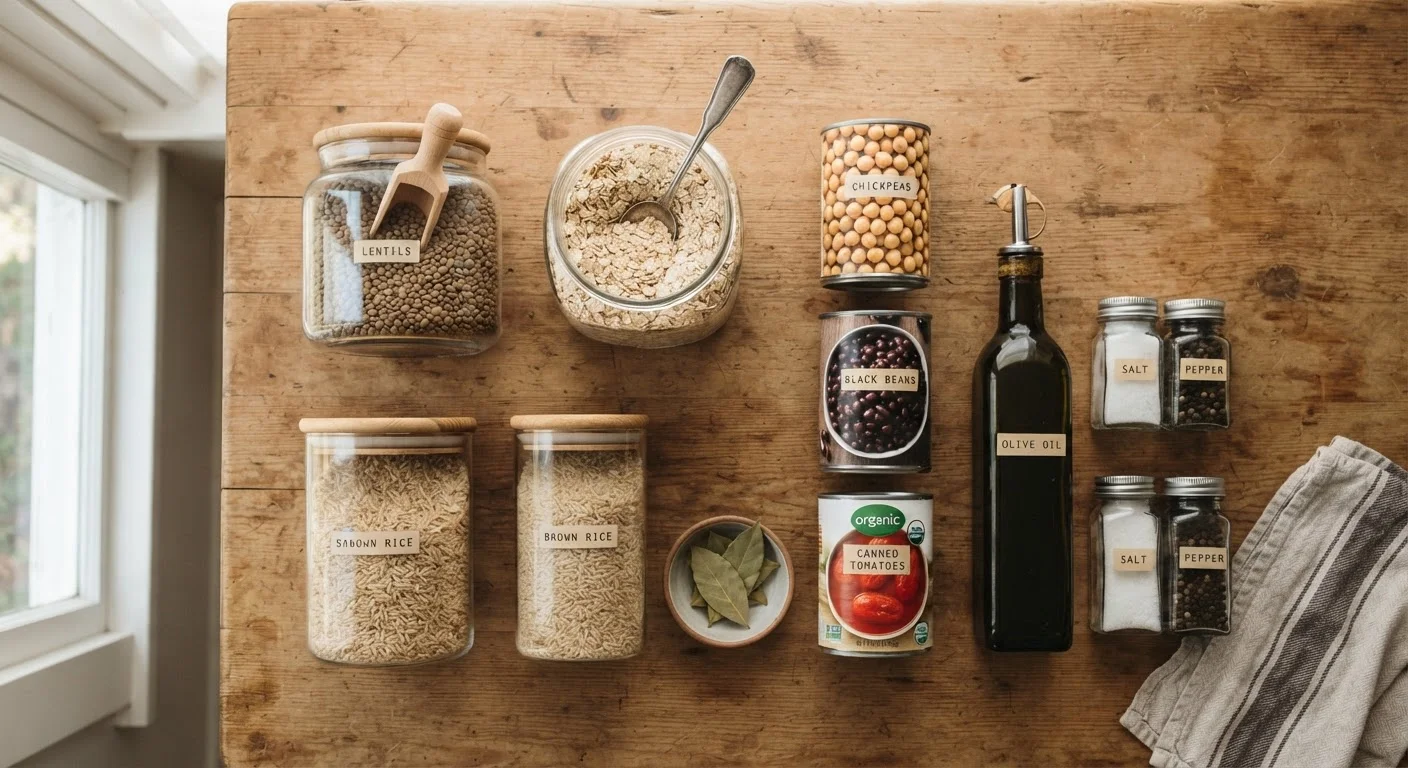
For families working with a fixed grocery budget, pairing frozen vegetables with whole grains and legumes is one of the most effective ways to stretch nutrition per dollar.
Shelf life and practical storage
Fresh vegetables and fruits have storage lives measured in days. Leafy greens, berries, and cut produce often last three to five days under refrigeration. Hardier items such as carrots, cabbage, and apples can last two to three weeks when stored correctly, but they are exceptions rather than the rule.
Frozen produce, stored at 0 degrees Fahrenheit or below, stays at acceptable quality for eight to twelve months for most vegetables and up to six months for most fruits, according to USDA food safety guidelines. This removes the pressure to cook everything within a tight window and makes it possible to stock a variety of vegetables without the risk of throwing money away.
Storage errors cut into both options. Fresh produce kept too warm or exposed to ethylene gas from ripening fruits deteriorates faster. Frozen produce that experiences repeated thawing and refreezing, or is left in a poorly sealed bag, develops freezer burn that degrades flavor and texture. Common food storage myths can quietly accelerate spoilage for both types, so understanding how to store each one correctly protects the investment.
Texture, taste, and the right use for each
Texture is where frozen produce has a clear limitation. Freezing causes water inside plant cells to expand, which ruptures cell walls. Thawed frozen spinach, zucchini, or mango becomes soft. That softness is not a problem in soups, stir-fries, smoothies, sauces, or casseroles, but it disqualifies frozen items from dishes that depend on crunch or structure.
Fresh produce handles every preparation equally well, from raw to roasted. For slaws, grain bowls with raw greens, or a fruit salad where each piece should hold its shape, fresh is the right choice.
One workable approach for most families is to keep frozen staples for cooked dishes and buy fresh selectively for preparations where texture matters or when a specific item is in season locally. Frozen vegetables in family cooking can function as a reliable foundation for weeknight meals without sacrificing meaningful nutritional value.
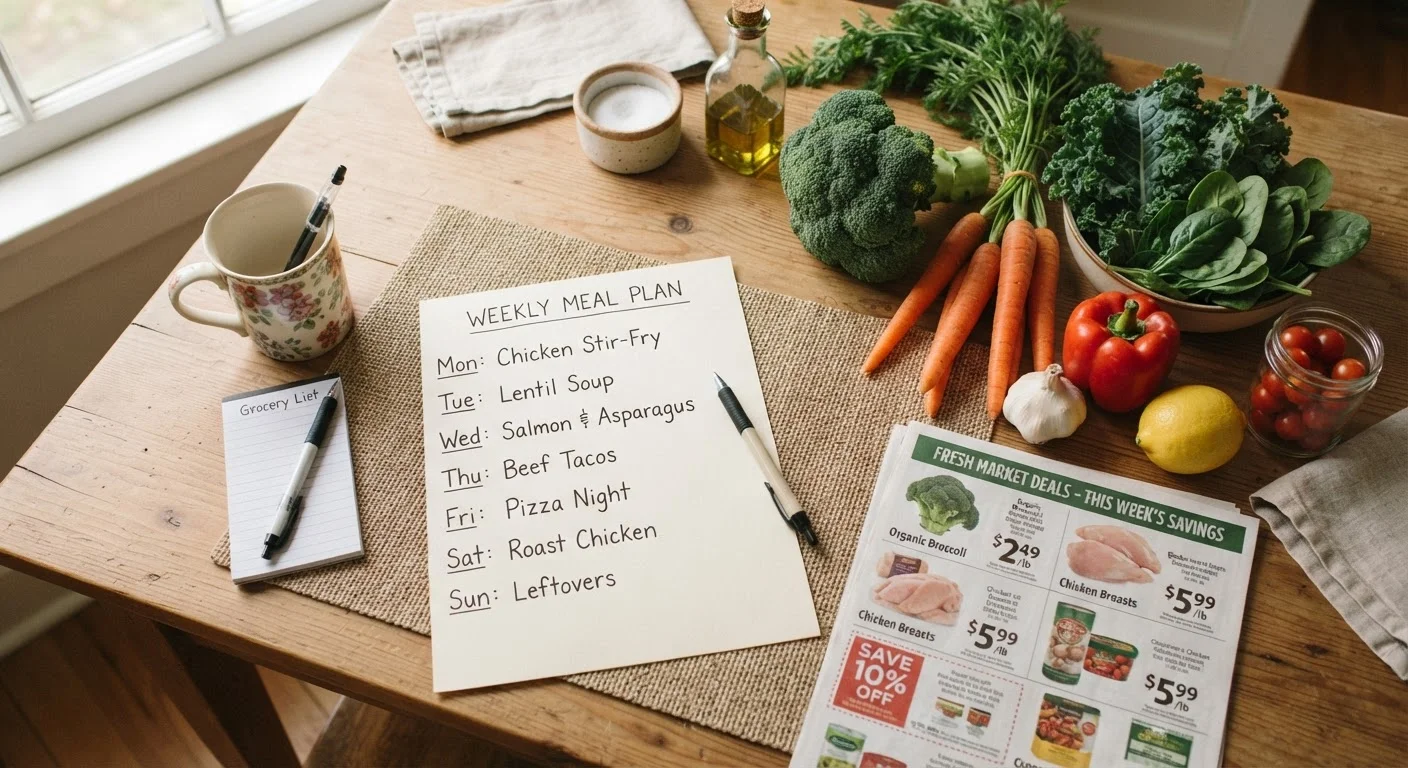
Planning which items to buy in which form also connects directly to meal prep. Comparing freezer and fridge meal prep strategies can help families decide how to allocate their produce spending across the week.