
Why the sale circular should come before your meal plan
Most families write a meal plan first and then head to the store, paying whatever the week's prices happen to be. Reversing that sequence puts the sale circular at the start of the process instead of the end, and that single shift can reduce what you spend without changing how well you eat.
Produce, proteins, and dairy rotate on promotional cycles at most grocery stores. When chicken thighs, canned black beans, or frozen broccoli are discounted, they cost considerably less per serving than the same foods at regular price. Anchoring your weekly menu to those items means your grocery budget naturally stretches further.
The approach works because nutritious foods are not rare in the weekly circular. Whole grains, legumes, eggs, and seasonal vegetables appear in promotions regularly. See our guide to eating well on a tight grocery budget for a broader look at how ingredient choices affect household food costs.
Start with stores you already use
You do not need to visit multiple stores to benefit from this approach. Even one store's weekly circular contains enough rotation to build a varied, nutritious menu. Once the habit is solid, comparing two local stores' circulars can add additional savings, but it is not necessary at the start.
What you need before you start
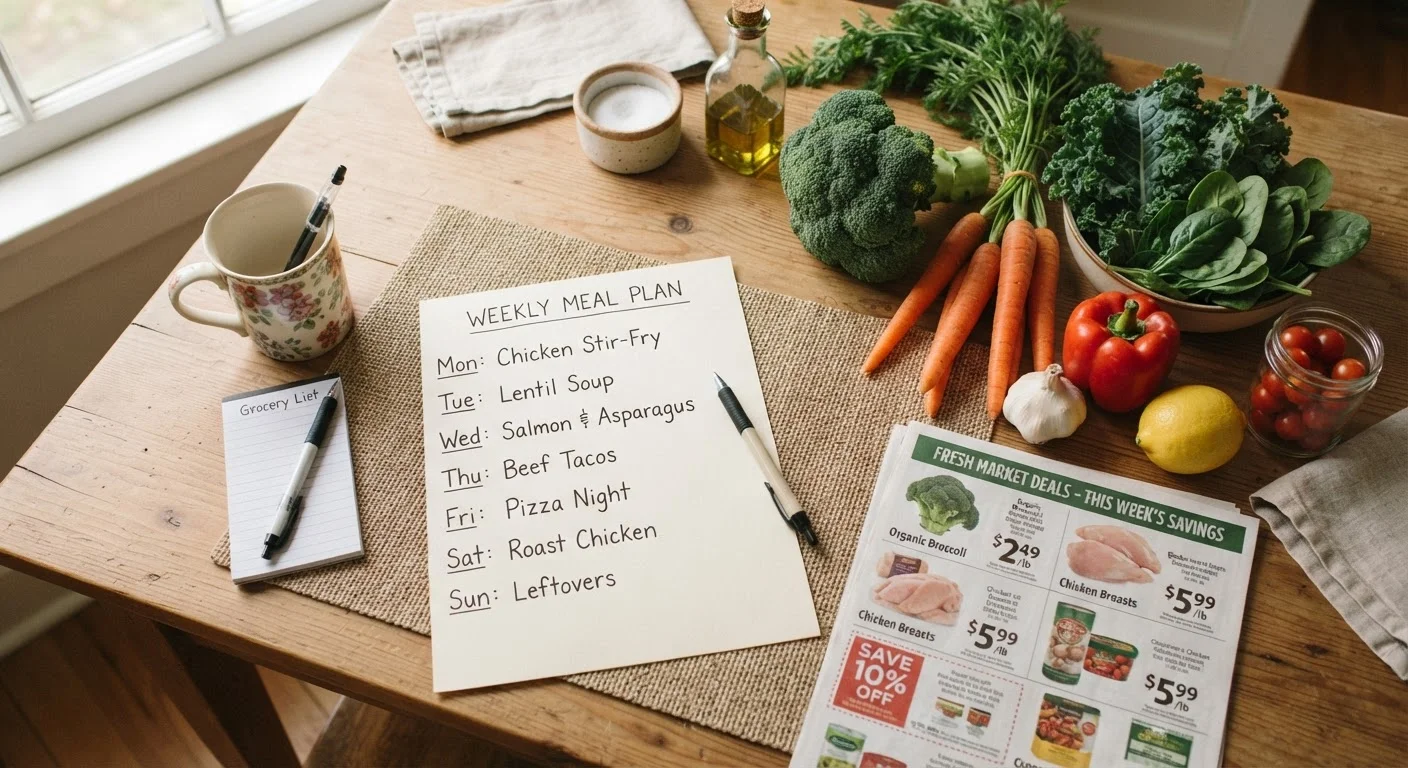
Gathering these items takes about five minutes and makes every subsequent step faster.
What you will need
If your family is new to meal planning altogether, starting with a simple weekly meal prep routine can help you build the habit before adding the sale-syncing layer.
Step-by-step: building your sale-anchored meal plan
Follow these steps in order once per week, ideally on Thursday or Friday when most new store sales begin. The full process takes 30 to 60 minutes the first few times, and closer to 20 minutes once it becomes routine.
Scan the circular for protein, produce, and grain discounts
Open the weekly circular and identify which proteins (meat, fish, eggs, legumes, tofu), vegetables or fruits, and grains or starches are on sale. Write down the four or five discounted items that your family already eats. Ignore promotions on items outside your normal diet; chasing unfamiliar ingredients to save a dollar usually results in waste.
Choose one or two sale proteins as anchor ingredients
Pick the one or two discounted proteins that offer the most servings per dollar and that your family will eat in more than one preparation. Chicken thighs, canned chickpeas, ground turkey, and eggs are examples that appear regularly in promotions and work across multiple meal formats. Mark these as your weekly anchor ingredients.
Build meals around each anchor ingredient
For each anchor protein, plan two or three dinners that use it in different ways. Write those meals on your weekly grid. Then identify which discounted produce and grains from the circular can pair with those meals. Filling the vegetable and grain slots with sale items rather than full-price ones reduces the total bill without changing the nutritional profile of the meals.
Fill remaining meals with pantry staples
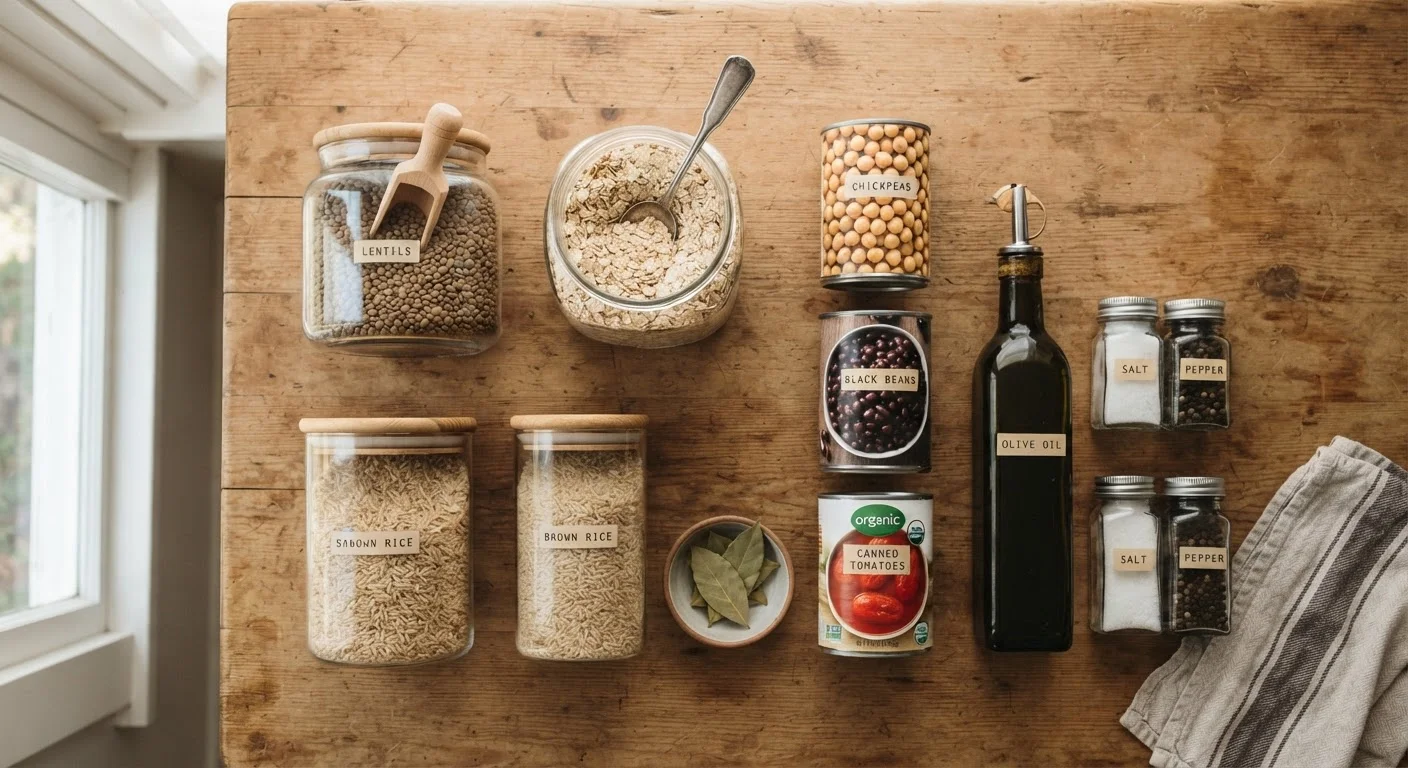
Not every night needs a new ingredient. Identify two nights where pantry staples (dried pasta, canned tomatoes, frozen peas, rice) cover the meal without a fresh purchase. These nights act as cost buffers and also use older pantry stock before it expires. A simple pasta with canned sauce and frozen spinach is a complete, inexpensive dinner that needs no promotion to be affordable.
Write a precise shopping list organized by store section
Transfer your finalized meal plan to a shopping list. Group items by store section: produce, proteins, dairy, dry goods, frozen. Write specific quantities rather than vague amounts ('one pound ground turkey' rather than 'turkey'). A precise list reduces the chance of buying more than you need and limits the impulse purchases that add cost without adding nutrition. Flexible, budget-friendly dinners like tacos are worth keeping as a weekly fallback since the ingredients are cheap, familiar, and easy to scale.
Schedule your prep and assign meals to days
Assign each planned meal to a specific day, placing meals with the most perishable ingredients earlier in the week. Set aside a prep window, typically 60 to 90 minutes over the weekend, to batch-cook the anchor proteins and grains. Pre-portioning these ahead of time means weeknight assembly takes 15 to 20 minutes rather than an hour, which makes it easier to stay out of the takeout cycle.
Handling fresh produce before it turns
Fresh produce discounts are some of the most valuable in the circular, and also the most time-sensitive. Building at least one meal early in the week that uses the most perishable discounted item, such as bagged salad greens or ripe tomatoes, prevents waste and captures the full value of the deal.
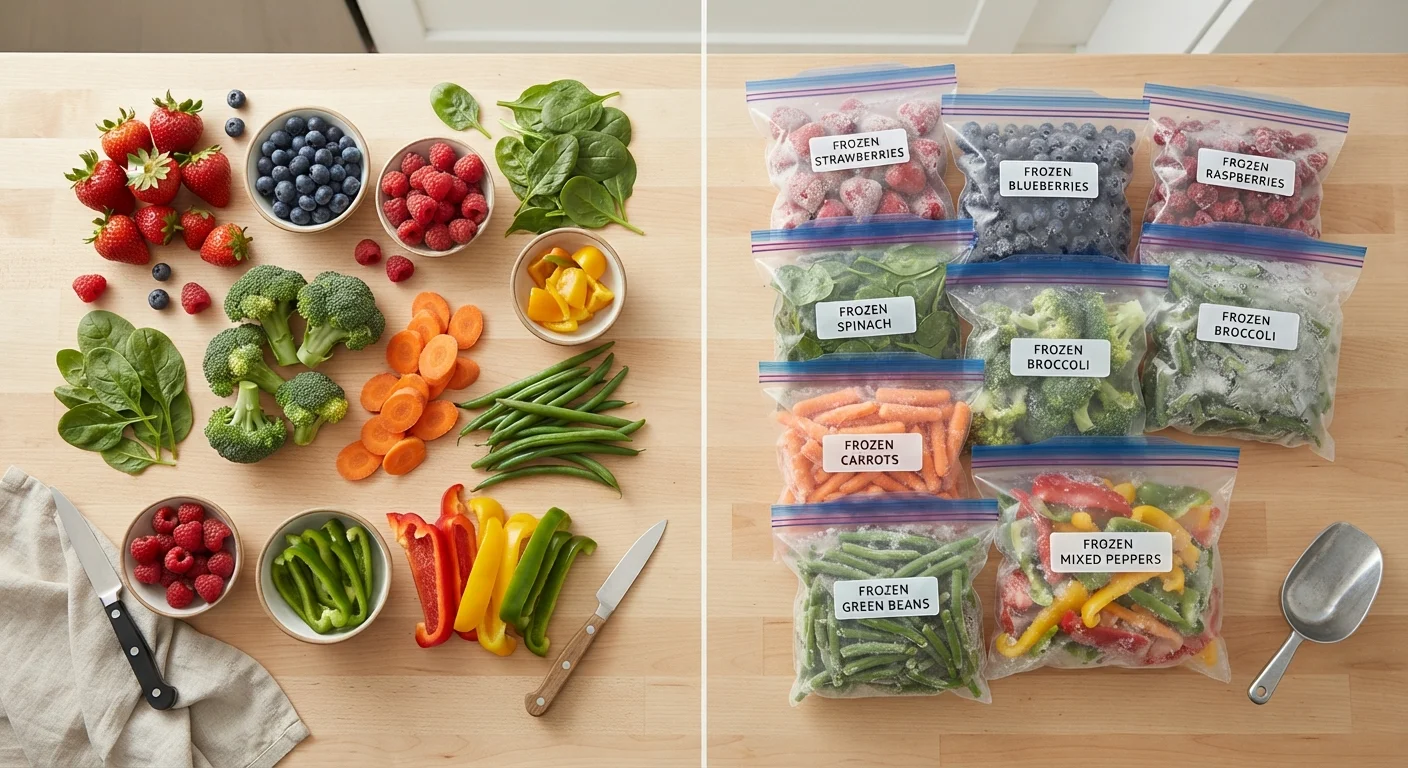
For items that you cannot use within two to three days, check whether they freeze well. Bananas, sliced peppers, corn, and many cooked grains freeze without significant quality loss. Using your freezer as a planning tool explains what to freeze, how to label portions, and how to build a rotation that reduces waste over time.
If a discounted protein like ground turkey or pork tenderloin is on sale in larger quantities than you need this week, buy the larger pack, cook it all during your weekend prep session, and freeze half. That freezer portion effectively costs you the same discounted price the following week.
Turning one prep session into five weeknight meals
Batch cooking is where sale-syncing pays off most clearly. When you cook a large portion of a discounted ingredient once, say a pot of brown rice or a tray of roasted vegetables, it becomes the base for multiple dinners without repeating the same meal.
A pot of cooked lentils bought on sale, for example, can become a lentil soup on Monday, a grain bowl topping on Wednesday, and a stuffed pepper filling on Friday. Each dinner looks and tastes distinct, but the ingredient cost stays low because you bought in volume at a promotional price.
A Sunday batch-cooking session is a practical way to execute this, and the Sunday prep method walks through how to store and rotate those portions across the week. For a full picture of the financial logic behind cooking ahead, see why meal prepping saves money at the grocery store.
This article is for informational purposes only. For personalized dietary guidance, particularly for children, pregnant individuals, or those managing a health condition, consult a qualified healthcare professional.