
Why these three food groups work together
Most families face a straightforward tension at the grocery store: nutritious foods often seem expensive, and cheap foods often seem to be nutritionally thin. Whole grains, legumes, and frozen vegetables break that pattern. Each group is inexpensive on a per-serving basis, widely available, and shelf-stable enough to reduce food waste, a hidden cost that erodes many household food budgets.
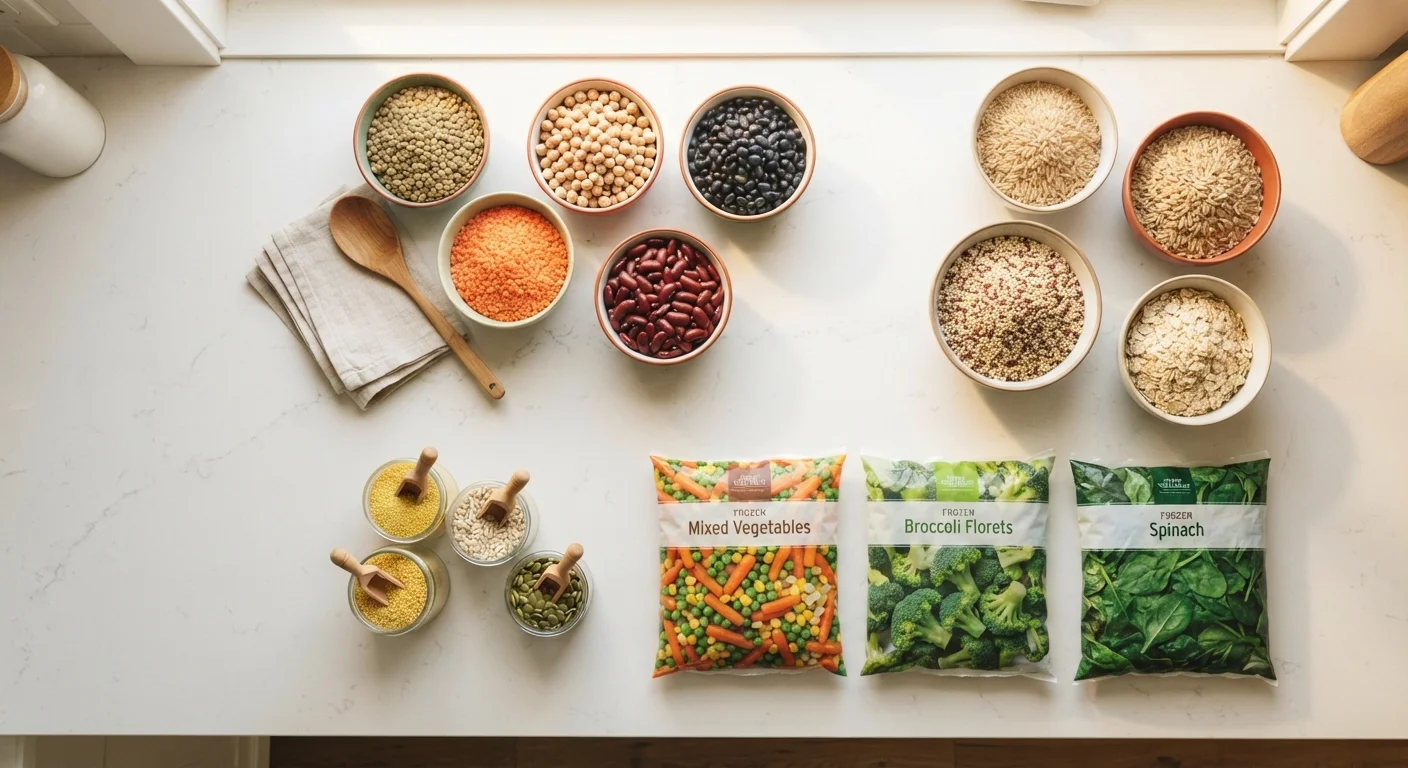
The nutritional logic behind combining them is equally direct. Whole grains supply complex carbohydrates and B vitamins. Legumes add protein, iron, and soluble fiber. Frozen vegetables fill the plate with vitamins A, C, and K, along with minerals that grains and legumes do not supply in large amounts. No single group covers everything on its own, but the three together come close to a nutritionally complete base for any meal.
For families working with tight grocery budgets, building meals around these groups also reduces reliance on the processed convenience foods that tend to dominate low-cost shopping. Our family guide to eating well on a tight grocery budget covers broader strategies for stretching a food dollar, but the trio of whole grains, legumes, and frozen vegetables is a practical starting point.
Start with one meal per week
Families new to cooking with dried legumes and whole grains often find the habit easiest to build by replacing one regular meal rather than overhauling the whole week at once. A simple lentil soup or grain bowl once a week builds familiarity with preparation times and flavors. From there, adding a second meal is a straightforward next step. Our guide to pantry staples for healthy cooking lists the specific ingredients worth keeping on hand.
Whole grains: more than just brown rice
Whole grains keep the bran and germ layers that refining removes. Those layers contain the bulk of the grain's fiber, B vitamins, and trace minerals like magnesium and zinc. Oats, barley, whole wheat pasta, and bulgur are all affordable options available in most supermarkets, not just brown rice.
Oats deserve particular attention for budget-conscious families. Plain rolled oats are among the least expensive foods by calorie and nutrition per dollar in any grocery store, and they work in both sweet and savory applications. Barley is another underused option with a high fiber content and a low price per pound.
One practical note: check ingredient labels when buying bread or pasta labeled "multi-grain" or "wheat." Those terms do not guarantee a whole grain product. The first ingredient should say "whole wheat" or name another whole grain to confirm the product is what it claims.
25g
Daily fiber target for adult women (general guidance)
The Dietary Guidelines for Americans note that most Americans consume far less than the recommended daily fiber intake, which ranges from about 25 to 38 grams depending on age and sex.
~9g
Protein per half-cup serving of cooked lentils
According to USDA FoodData Central, a half-cup of cooked lentils contains approximately 9 grams of protein and 8 grams of dietary fiber.
90%+
Vitamin C retention in many frozen vegetables
Research published in food science literature has found that flash-frozen vegetables can retain the large majority of their vitamin C content when stored properly and not overcooked.
Legumes: protein and fiber at a fraction of the cost
Dried lentils, black beans, kidney beans, chickpeas, and split peas are among the most cost-efficient protein sources available to American families. A one-pound bag of dried lentils, which costs roughly one to two dollars in most stores, yields roughly ten to twelve servings once cooked. Each serving provides around nine grams of protein and eight grams of fiber.
The fiber in legumes is a particular benefit for satiety: meals that include a legume tend to keep people full longer, which can reduce overall food consumption across the day. That makes legumes a practical tool for families managing both nutrition and grocery spend.
Canned beans offer similar nutrition with less preparation time. Draining and rinsing them removes most of the added sodium present in the canning liquid. For a broader look at how legumes compare to animal proteins on both cost and nutrition, see our article on protein on a budget.
Legumes also work well in meal prep because they hold their texture after cooking and reheating. A large batch of cooked lentils or beans prepared at the start of the week can go into soups, salads, grain bowls, or wraps over several days.
A family of four prepares a weeknight lentil and vegetable soup using dried red lentils, a bag of frozen mixed vegetables, and whole grain bread on the side.
A parent prepares overnight oats on Sunday using rolled oats, then pairs them throughout the week with frozen fruit thawed in the fridge.
A family swaps canned refried beans for home-cooked pinto beans in tacos and burritos, paired with brown rice.
A household uses frozen edamame as a protein-rich side dish for stir-fries built on a base of whole wheat noodles.
Frozen vegetables: nutritional value without the waste
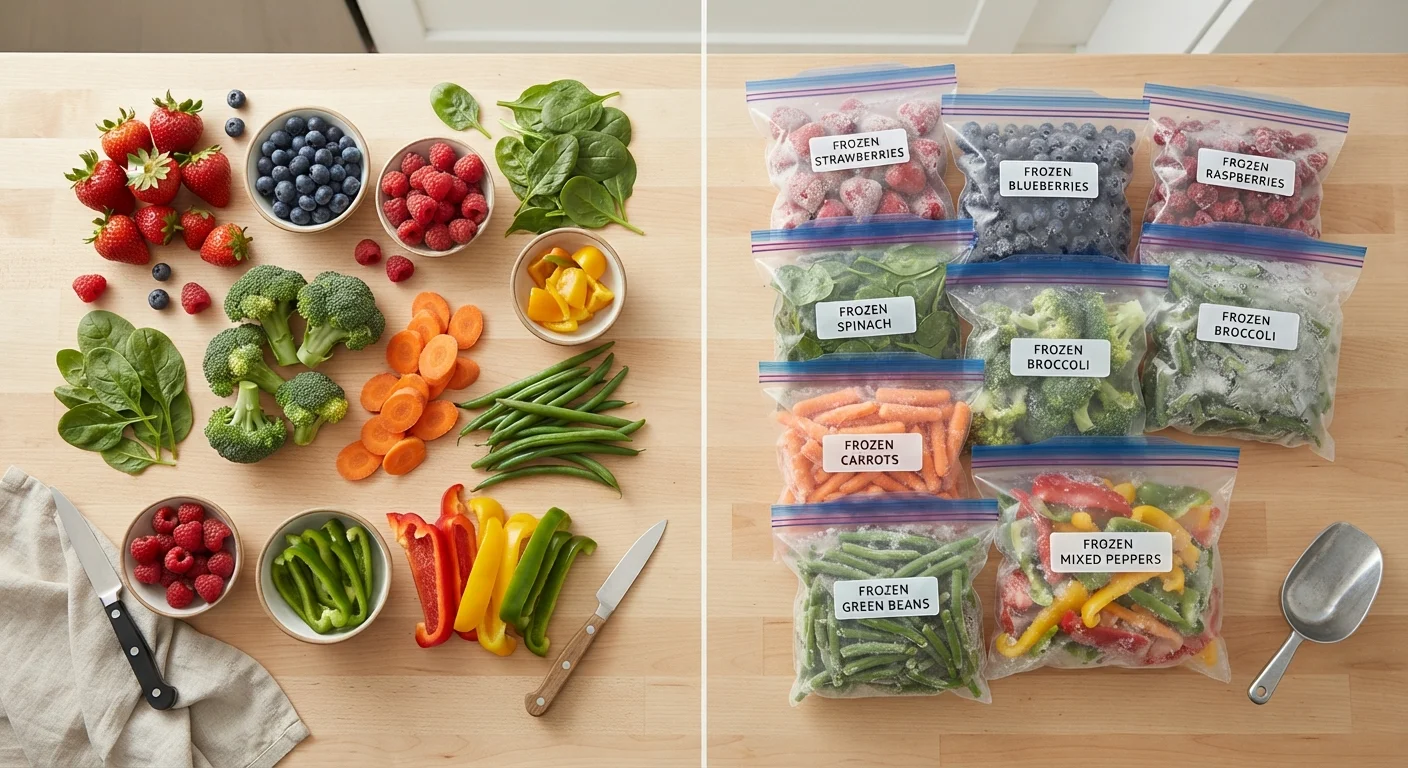
Fresh vegetables carry a hidden cost that rarely appears on the price tag: spoilage. A family that buys fresh spinach, broccoli, or green beans and does not use them within a few days absorbs that loss. Frozen vegetables remove that variable almost entirely, and their nutrition is largely preserved by the flash-freezing process applied at or near harvest.
The vitamins in frozen vegetables are retained well because low temperatures slow the enzymatic breakdown that begins after harvesting. Vitamin C and folate, which are water-soluble and sensitive to heat, do decline somewhat during blanching before freezing, but the amounts that remain are still nutritionally meaningful.
Frozen broccoli, spinach, peas, edamame, corn, and mixed vegetable blends are all available at low per-serving costs. Buying plain frozen vegetables (without added sauces or seasonings) gives a family full control over sodium and fat content. For more context on how frozen and fresh compare across different circumstances, our article on fresh vs. frozen produce covers the specifics.
Frozen vegetables also connect directly to faster weeknight cooking. The Quick Recipes hub has meal ideas that use these foods as the base, and our dedicated piece on frozen vegetables in family cooking addresses the trade-offs families should know about.
This article provides general nutrition information for educational purposes and is not a substitute for personalized medical or dietary advice. Consult a qualified healthcare professional or registered dietitian for guidance specific to your family's health needs.