
Why cost per gram of protein matters
Protein is one of the most scrutinized nutrients in the grocery aisle, yet price tags rarely tell the full story. A chicken breast and a bag of dried lentils sit at different price points, serve different cooking purposes, and carry different nutritional profiles. To compare them honestly, the useful figure is cost per gram of protein rather than cost per pound of food.
The calculation is straightforward: divide the price of a standard package by the total grams of protein it contains across all servings. A 1-pound bag of dried lentils typically yields around 100 grams of protein after cooking, at a cost that often works out to less than two cents per gram. A dozen eggs delivers roughly 72 grams of protein at a cost that varies by region but generally falls in a competitive range with plant options.
This framing matters for families following a tight grocery budget, because a modest shift in which proteins anchor weekly meals can meaningfully reduce total food spending without reducing nutritional quality.
Animal protein sources: nutrition and price profile
Animal proteins are valued in large part because they are complete, meaning they contain all nine essential amino acids in proportions the body can use directly. They also tend to be concentrated sources of vitamin B12, iron in a bioavailable form, and zinc.
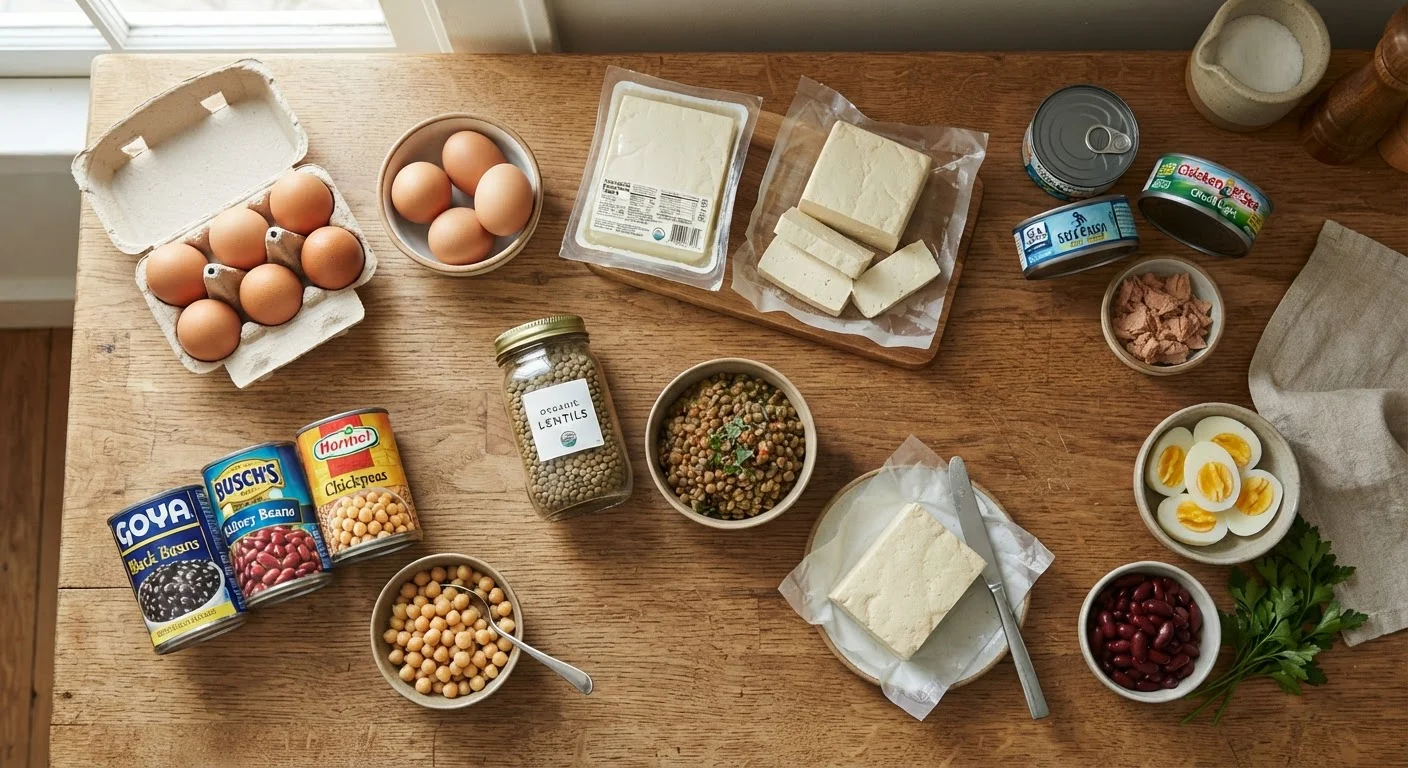
Eggs rank among the most cost-effective complete proteins available. A large egg contains about 6 grams of protein and also provides choline, vitamin D, and riboflavin. Whole eggs are more nutritious than egg whites alone, given that the yolk holds most of the micronutrients.
Canned tuna delivers approximately 20 to 25 grams of protein per 5-ounce can, along with omega-3 fatty acids and selenium. Water-packed canned tuna is generally the most economical option and keeps well in a pantry, making it a practical shelf-stable protein for busy households.
Chicken thighs (bone-in, skin-on) consistently cost less per pound than boneless chicken breasts while offering comparable protein content. They also hold up well in batch cooking, which reduces per-meal costs further. See protein batch cooking strategies for practical ways to stretch a weekly chicken purchase across multiple meals.
| Protein source | Approx. protein per serving | Protein completeness | Notable micronutrients | Relative cost per gram of protein | |
|---|---|---|---|---|---|
| Eggs (2 large) | 12g | Complete | B12, choline, vitamin D | Low | |
| Canned tuna (5 oz) | 20-25g | Complete | B12, selenium, omega-3 | Low | |
| Chicken thighs (3 oz cooked) | 18-20g | Complete | B12, zinc, iron | Low-moderate | |
| Dried lentils (1/2 cup cooked) | 9g | Incomplete | Iron, folate, fiber | Very low | |
| Canned beans (1/2 cup) | 7-9g | Incomplete | Iron, folate, fiber | Very low | |
| Firm tofu (1/2 cup) | 8-10g | Complete | Calcium, iron | Moderate |
Plant protein sources: nutrition and price profile
Plant proteins generally cost less per gram than animal proteins, though most (with the exception of soy) are incomplete on their own, meaning they are low in one or more essential amino acids. Eating a variety of plant proteins across the day, such as beans with rice or lentils with whole grain bread, covers those gaps without requiring precise meal planning.
Dried lentils are among the most affordable proteins in any grocery store. They cook in under 30 minutes, require no soaking, and provide fiber alongside protein, which supports satiety. Canned lentils cost slightly more but remain budget-friendly and save preparation time.
Canned chickpeas and black beans offer roughly 7 to 9 grams of protein per half-cup serving at a cost that makes them a staple worth keeping on hand. They are also covered in detail in the affordable nutrition trio guide alongside whole grains and frozen vegetables.
Tofu is made from soybeans, which makes it a complete plant protein. Firm tofu provides about 8 to 10 grams of protein per half-cup and absorbs flavors readily, giving it flexibility across cuisines. Its cost per gram of protein is higher than dried legumes but comparable to many cuts of meat.
Edamame (frozen, shelled) offers complete soy protein and cooks in minutes. It works as a side dish, a salad addition, or a snack and provides a higher protein density than most legumes by volume.
Micronutrients and what the numbers miss
Cost per gram of protein is a useful starting point, but it does not capture the full nutritional picture. Animal proteins supply vitamin B12, a nutrient not found naturally in plant foods, along with heme iron, which the body absorbs more readily than the non-heme iron in plant sources. Families who rely primarily on plant proteins may need to pay closer attention to these nutrients through dietary variety or, where a clinician recommends it, supplementation. For specific guidance, consult a registered dietitian or healthcare provider.
Plant proteins contribute dietary fiber, which animal proteins do not. Fiber supports digestive health, blood sugar regulation, and satiety. For families working to improve overall diet quality while managing costs, the fiber content of beans and lentils adds nutritional value beyond protein alone.
Stretch proteins further with smart pairing
Pairing plant proteins with complementary grains, such as lentil soup served with whole grain bread or black beans over brown rice, covers the full range of essential amino acids across a meal. This approach also increases fiber and total calorie content, which helps stretch a smaller protein budget without sacrificing nutritional coverage. You do not need to pair them precisely at every meal; variety throughout the day is sufficient.
The affordable pantry staples guide covers how to stock these proteins alongside complementary ingredients such as canned tomatoes, oats, and whole grains for well-rounded, low-cost meals.
This article is for general informational purposes only and is not medical or dietary advice. Consult a qualified healthcare professional for guidance specific to your health needs or those of your family members.