
Why the freezer is an underused budget tool
Most households treat the freezer as overflow storage, a place to park things they aren't sure about. That habit costs money. When food sits untracked, it gets buried, forgotten, and eventually thrown away. The USDA estimates that American families discard roughly 30 to 40 percent of the food supply, and a disorganized freezer contributes meaningfully to that figure at the household level.
A freezer used with intention works differently. It extends the shelf life of ingredients bought on sale, holds batch-cooked meals for nights when cooking isn't realistic, and acts as a buffer against impulse takeout orders. Paired with a plan built around store sales, it becomes a system rather than a storage unit.
The practices below cover what to freeze, how to label it, and how to keep the rotation moving so nothing gets lost.
What to freeze and what to skip
Proteins freeze reliably. Raw chicken, ground beef, fish fillets, and pork chops all hold well for two to six months when sealed properly. Cooked beans and lentils freeze just as well as canned ones and cost less per serving when made from dried. Soups, stews, chili, and tomato-based sauces are freezer staples because their moisture content survives temperature changes without significant texture loss.
Some foods do not freeze well and are worth knowing upfront. High-water vegetables like cucumbers, lettuce, and raw potatoes turn mushy after thawing. Dairy-heavy sauces, mayonnaise-based salads, and soft cheeses tend to separate or become grainy. Cooked pasta and rice can be frozen but absorb moisture on reheating, so slightly undercooking them before freezing improves the result.
For a broader look at how freezing interacts with nutrition, frozen vegetables in family cooking covers the facts families need to make their own call on convenience versus quality.
Freeze in flat layers first
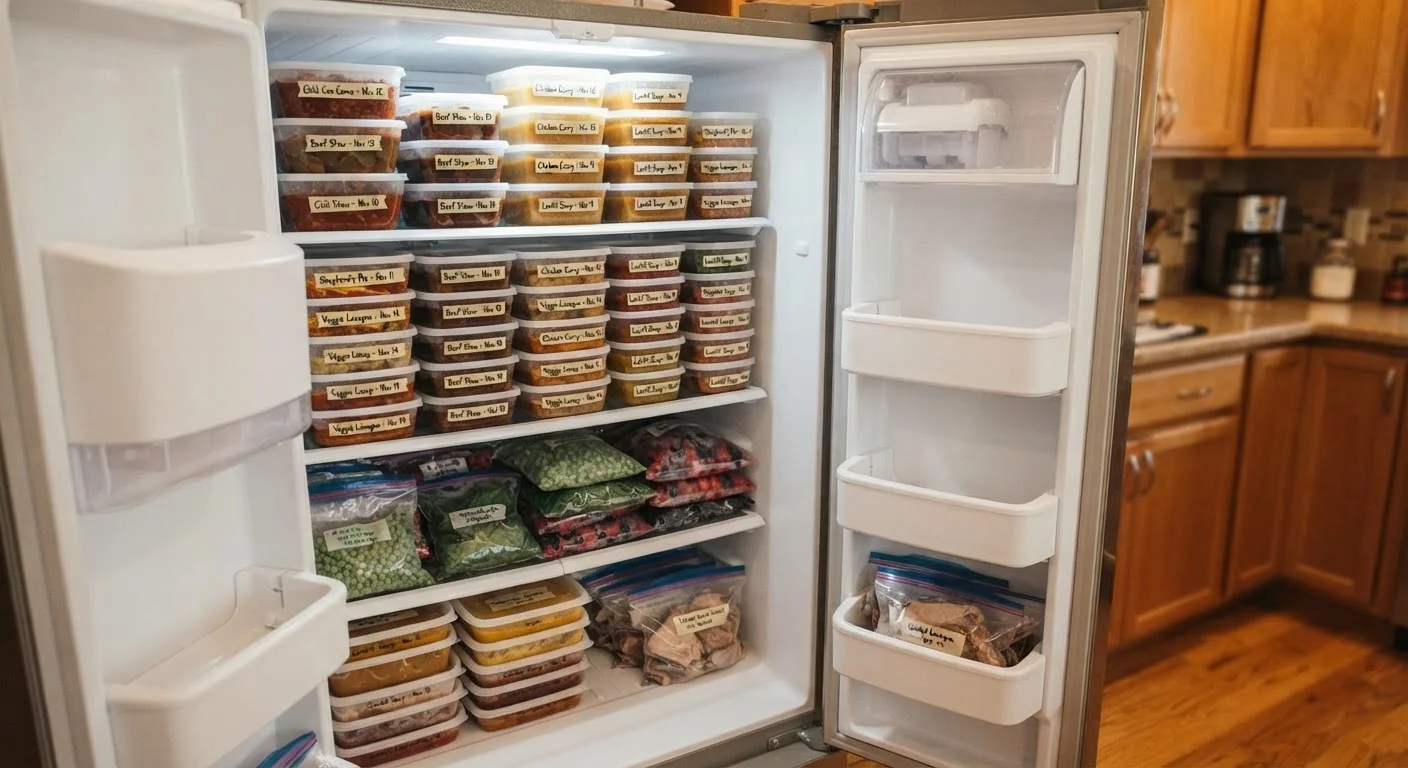
When freezing soups, sauces, or beans in zip-top bags, lay them flat on a sheet pan until solid. Once frozen, the flat bags stack vertically like files in a drawer, saving significant space and making labels easy to read without digging.
Labeling that actually works
A label with just the contents is not enough. Write three things on every container or bag: what it is, the date it was frozen, and the number of servings. A marker on freezer tape or a strip of masking tape works as well as printed labels and costs almost nothing.
Include brief reheating notes when the meal has a specific requirement, such as thawing overnight in the refrigerator before baking. That detail prevents someone from pulling a casserole out at 5 p.m. only to find it needs eight hours of thaw time. Clear labels also make it possible for other household members to use the freezer without asking questions, which matters on busy evenings.
Common labeling mistakes and other storage habits that affect food quality are covered in food storage myths that are costing you money.
Building a rotation that prevents waste
First-in, first-out is the core rule. When you add new items, move older ones to the front. This takes about thirty seconds per grocery trip and prevents the scenario where a meal from four months ago is still at the back while newer food gets used first.
A simple freezer inventory list, taped inside a cabinet door or kept as a note on your phone, makes the rotation easier to manage. Update it when you add something and cross items off when you use them. This list also informs your grocery shopping: if ground beef is already in the freezer, buying more on sale is a good call; buying it at full price when you already have plenty is not.
Freeze in single-meal or single-serving portions, not large blocks.
Large frozen blocks take longer to thaw, often require reheating more food than needed, and push families toward ordering out while waiting. Portioning before freezing means you pull exactly what you need.
Cool cooked food completely before freezing.
Placing hot or warm food in the freezer raises the internal temperature of surrounding items, which can affect food safety and texture. Cooling food to room temperature first, then refrigerating briefly before freezing, produces a better result.
Remove as much air as possible from bags and containers.
Air exposure causes freezer burn, which dries out the surface of food and creates off-flavors. Airtight packaging extends quality through the full recommended storage window.
Assign a monthly freezer audit to catch items approaching their quality limit.
Even well-labeled food can get overlooked if the rotation slips. A monthly check takes five minutes and surfaces anything that should move to this week's meal plan before quality declines.
Stock the freezer intentionally when prices drop, not randomly.
Buying extra protein or produce only when it is on sale and you already have space creates genuine savings. Buying just to fill the freezer without a plan leads to the same waste the system is meant to prevent.
For families deciding how much to prep at once, freezer meal prep versus fridge meal prep walks through the tradeoffs between the two approaches.
Quick wins you can do today
Getting started doesn't require a full freezer overhaul. A few targeted actions today can create the foundation for a functional system within a week.
The financial case for building this habit is laid out in why meal prepping saves money at the grocery store, which covers how planning ahead cuts impulse spending over time.