
The real cost of cooking without a plan
Most grocery overspending does not happen at the store because of high prices. It happens because shoppers walk the aisles without a specific plan, pick up items that seem useful, and then watch half of them go bad before they get used. The USDA has estimated that American households throw away a significant share of the food they buy, and a large portion of that waste is perishable produce and proteins bought without a clear meal in mind.
Meal prepping addresses this directly. When every item on your shopping list maps to a specific meal, you buy what you will actually use. That alone eliminates the slow drain of wilted vegetables and expired leftovers that never made it into a meal.
Unplanned weeknights are equally expensive. When dinner is not ready and no plan exists, most families default to takeout or delivery, both of which cost several times more per serving than a home-cooked meal. Meal prepping removes that default option by making a ready meal the path of least resistance.
How a written plan changes what you spend at the store
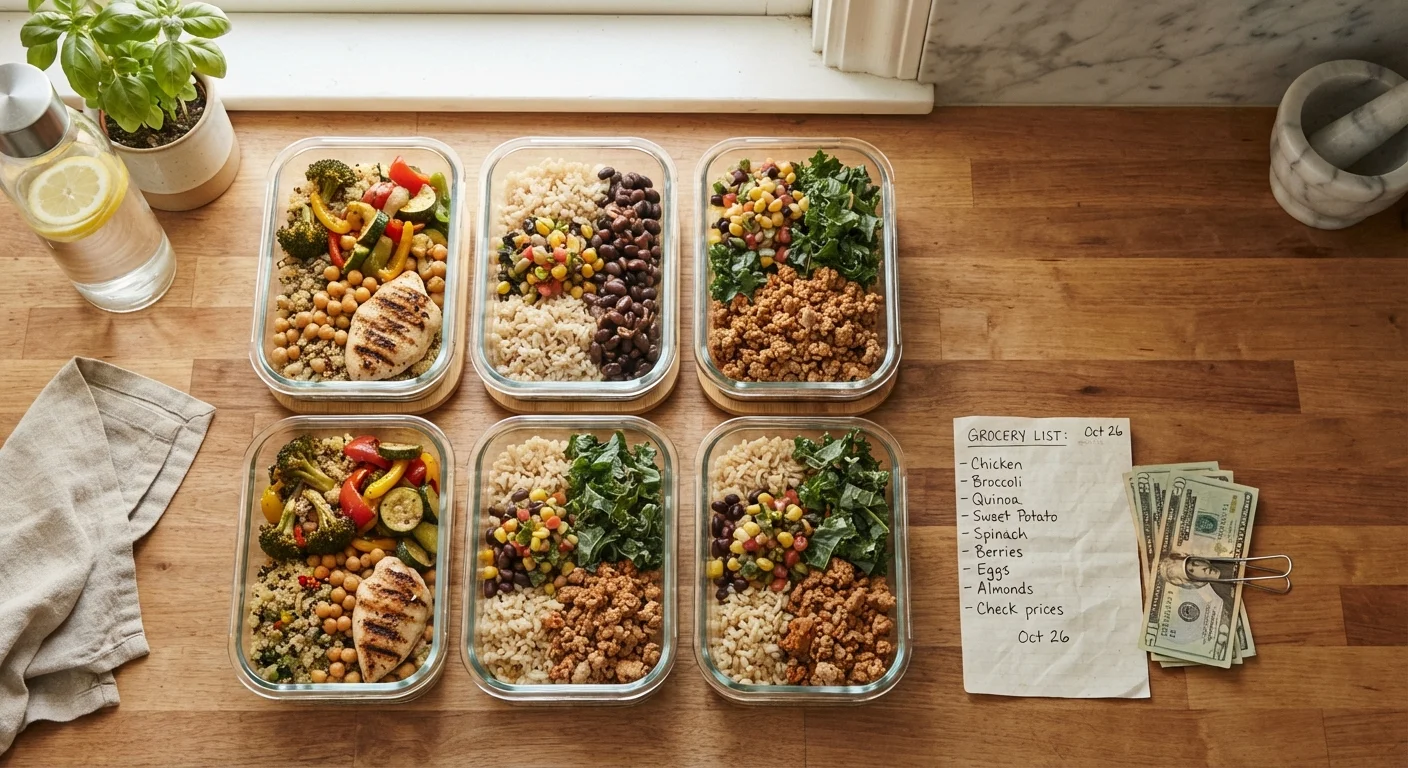
A grocery list built around planned meals behaves differently than a general list. It tells you exactly how much of each ingredient you need, which means you stop buying the second bag of carrots you do not need or the large container of sour cream you will use once and forget. Specificity reduces the ambient impulse purchases that accumulate at checkout.
A plan also lets you shop sales strategically. When you know you are making chicken thighs twice that week, you can buy the family pack on sale and use all of it. Without a plan, a sale item is just an invitation to overbuy something that may spoil. The approach of syncing your meal plan with weekly grocery promotions turns sales into genuine savings rather than spending triggers.
30-40%
Share of food supply wasted at consumer level
The USDA estimates that between 30 and 40 percent of the food supply in the United States is wasted, with household-level decisions being a major contributing factor.
$1,500+
Estimated annual household food waste cost
The Natural Resources Defense Council has estimated that the average American family of four discards more than $1,500 worth of food each year.
3-5x
Cost multiplier for takeout vs. home-cooked meals
Home-cooked meals generally cost three to five times less per serving than restaurant or delivery equivalents, based on commonly cited food cost analyses.
Buying whole ingredients instead of pre-cut or pre-portioned versions also reduces cost per serving. A full head of cabbage costs less than a bag of shredded cabbage. A block of cheese costs less per ounce than pre-shredded. Meal prepping gives you a reason to buy the less-processed version because you have already scheduled the time to prep it yourself.
Food waste: where the money actually disappears
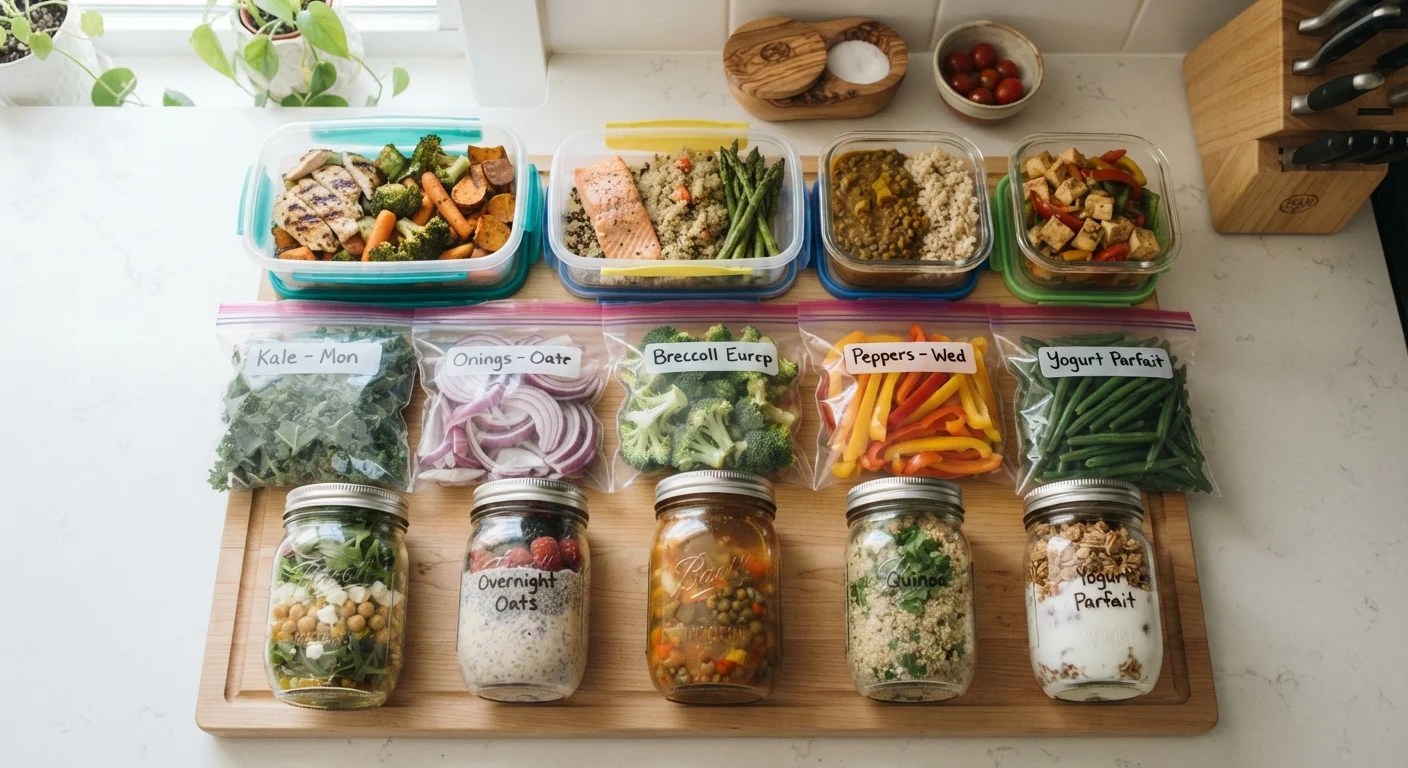
Food waste is a budget problem as much as an environmental one. When you prep ingredients right after shopping, you are handling them at peak freshness and giving them a clear destination. A batch of roasted vegetables prepared Sunday afternoon will be eaten by Wednesday. The same raw vegetables bought without a plan often sit in the crisper drawer until they are no longer worth cooking.
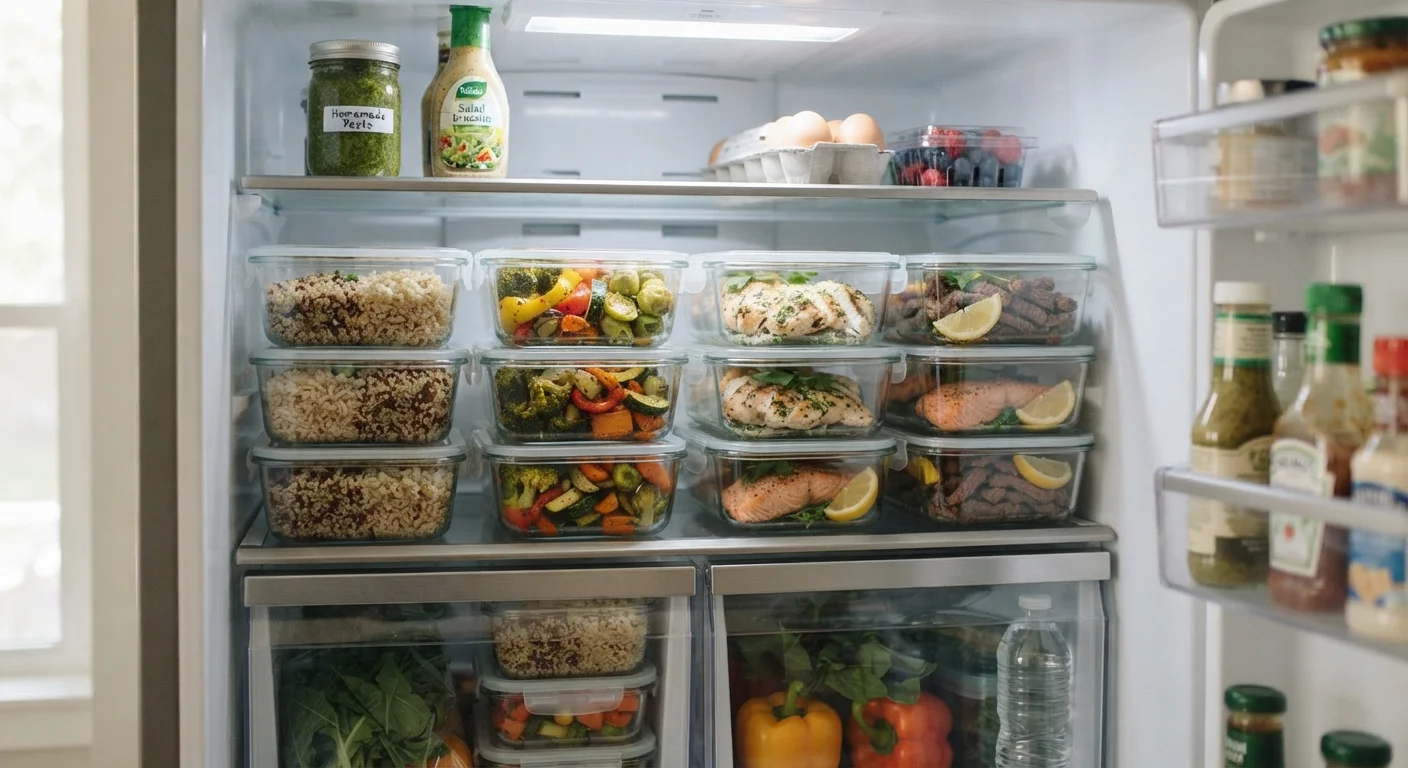
Proper storage extends that window further. Understanding how long prepped foods actually stay safe and appetizing matters here. The safe storage times for common meal prep staples helps you plan realistic prep quantities so nothing goes to waste before it gets eaten.
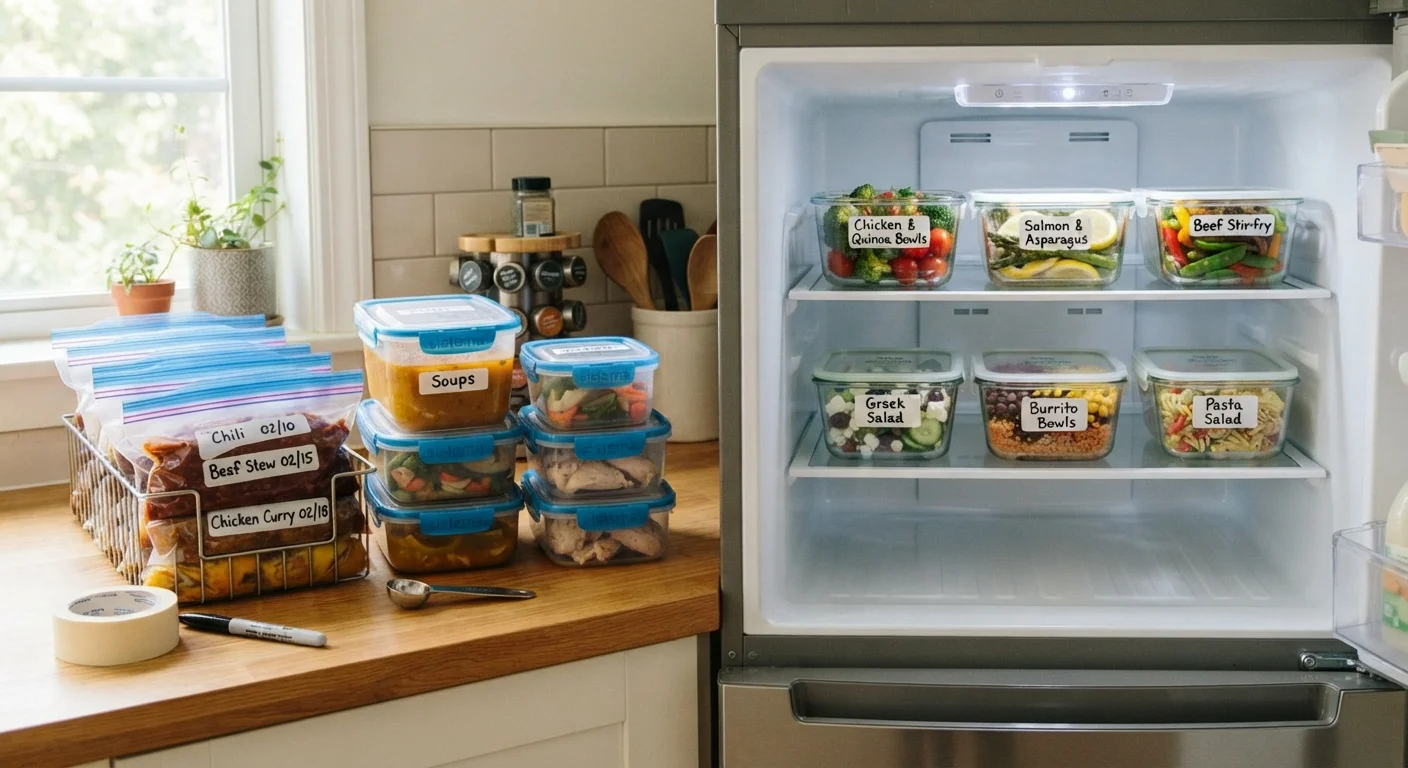
Freezer prep extends the logic even further. Soups, grains, and cooked proteins can be frozen in portions and pulled out weeks later, effectively giving perishable ingredients an indefinite shelf life. This makes it possible to take advantage of bulk pricing without the risk of spoilage. For a comparison of fridge versus freezer approaches, the tradeoffs between freezer and fridge meal prep lays out when each method makes more sense.
Building the habit without overhauling your kitchen routine
The financial benefits of meal prepping do not require a dramatic lifestyle change. Start with one or two dinners prepped ahead each week. Write a specific list before every grocery trip, even a short one. These two habits alone close most of the gap between how much a family currently spends and what they could realistically spend.
Families new to the process often find the first steps to building a weekly meal prep routine useful for structuring that initial session without feeling overwhelmed. The goal is not perfection; it is consistency over time.
It is also worth understanding where convenience shortcuts fit. Some pre-made items save enough time to justify a slightly higher cost. The analysis of when convenience cooking actually saves money gives a clear framework for making those calls without defaulting to all-or-nothing thinking.
Meal prepping is, at its most practical level, a spending decision made before you reach the store. The planning is where the savings happen.