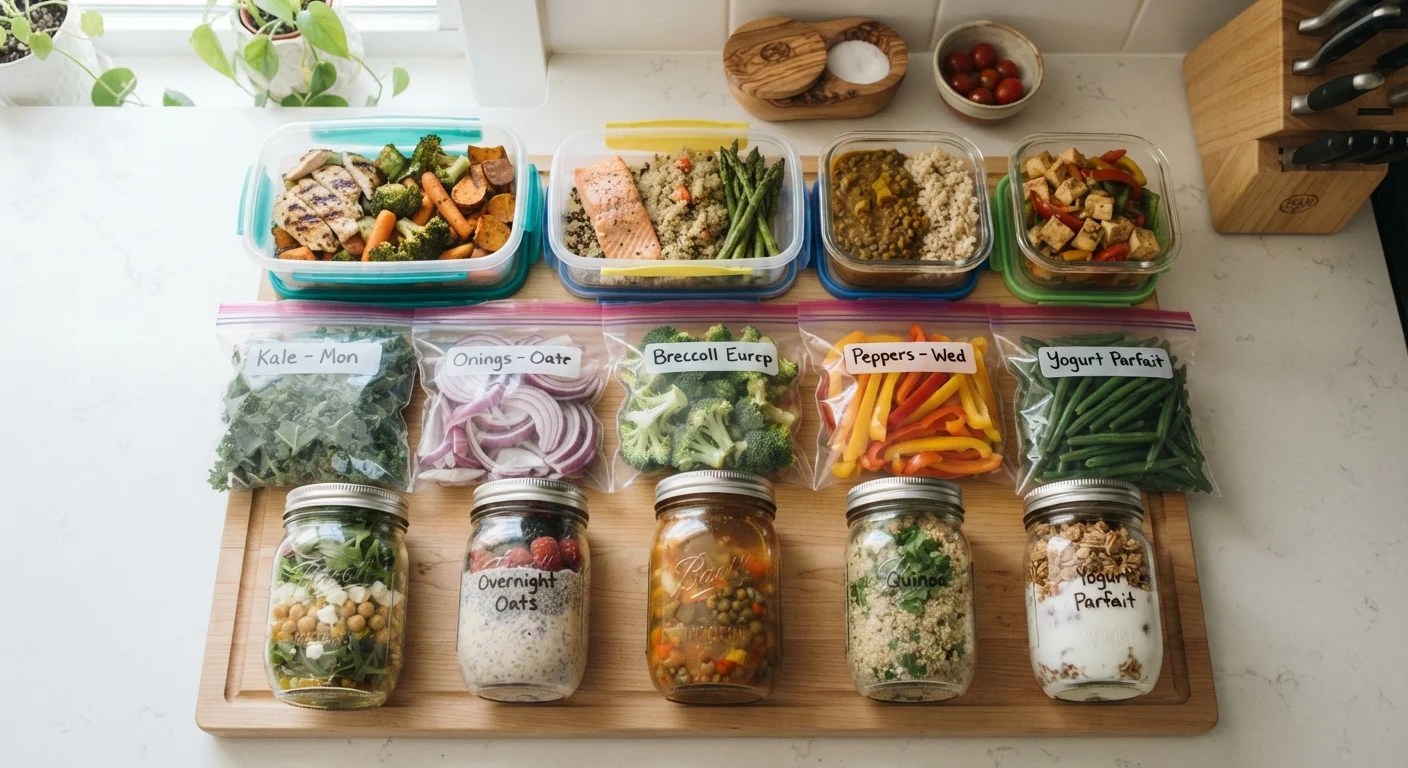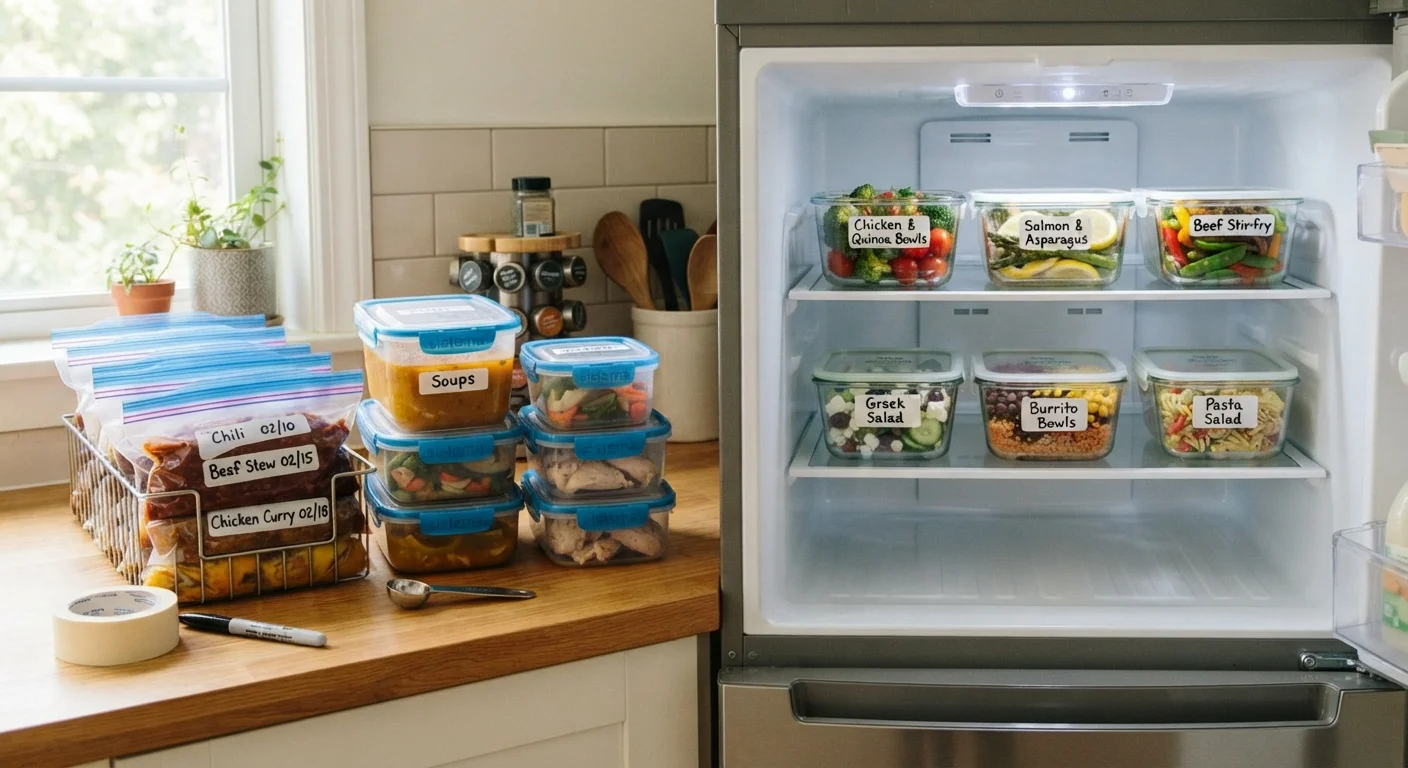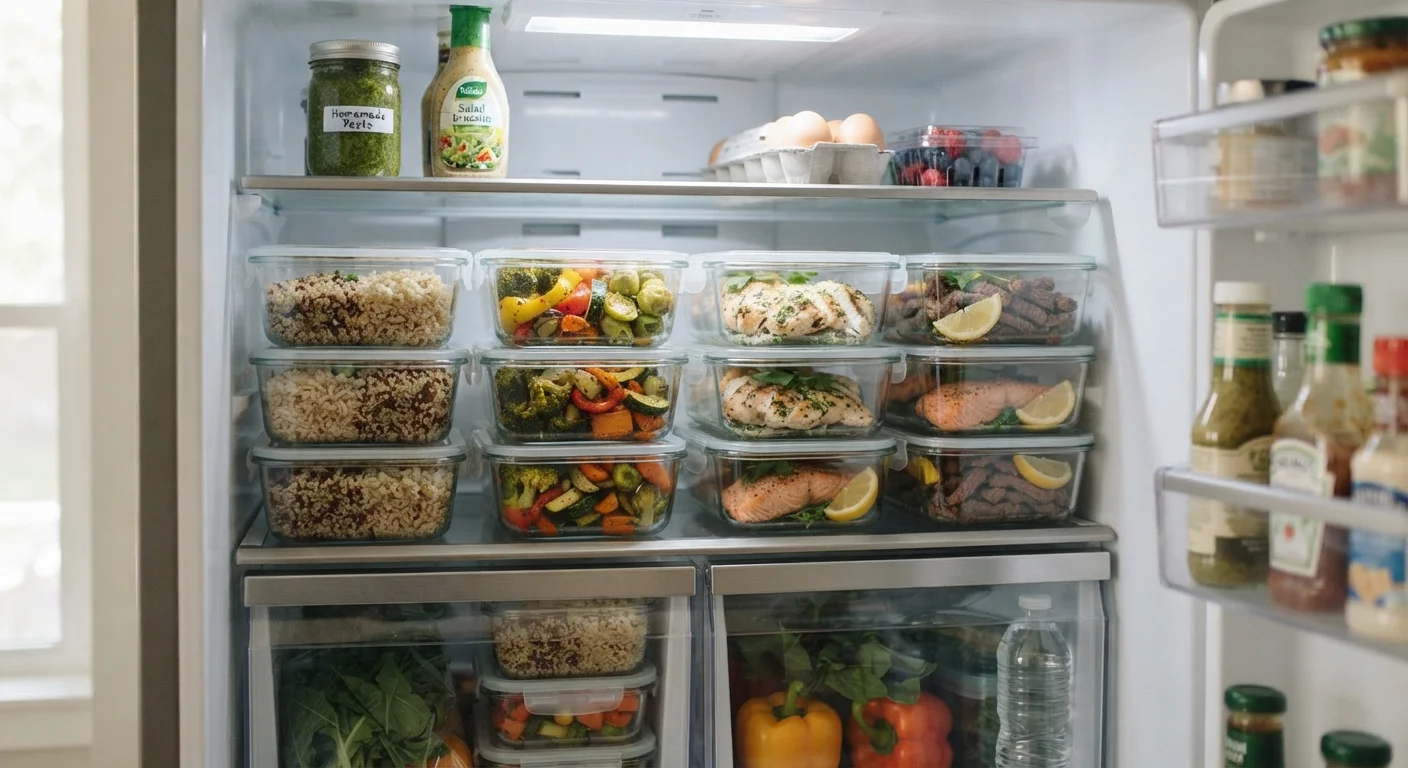

Why this method works for busy families
The Sunday prep method works because it separates the mental work of cooking (deciding what to make, shopping, measuring) from the physical work of assembling meals on tired weeknights. Once components are in the refrigerator, dinner becomes reheating and combining rather than cooking from scratch under time pressure.
It also reduces costs in two specific ways. Buying ingredients in larger quantities costs less per unit. And cooking at home consistently reduces the frequency of last-minute takeout, which is where family food budgets most often break down.
If you have never built a weekly prep routine before, this introduction to weekly meal prep covers the foundational habits worth establishing first.
Cook once, season twice
Keep batch-cooked proteins lightly seasoned at first. You can add bold sauces, spices, or marinades when reheating each portion, which makes the same chicken feel like a different meal on Tuesday than it did on Sunday. This approach also works well for grains and roasted vegetables.
What you will need before you start
Successful batch cooking depends on having the right equipment ready before you begin. Running out of containers halfway through puts hot food on the counter too long and wastes the effort of the whole session.
Sheet pans (half-sheet size)
Roast large quantities of vegetables and proteins in a single oven session.
Large stock pot or Dutch oven
Cook grains, soups, or beans in bulk without multiple batches.
Airtight glass or BPA-free plastic containers (various sizes)
Store portioned meals safely in the refrigerator or freezer.
Masking tape and marker (or adhesive labels)
Label containers with contents and date so nothing gets wasted.
Instant-read thermometer
Confirm proteins reach a safe internal temperature during batch cooking.
Slow cooker or pressure cooker
Handle a hands-off protein or bean batch while oven space is used for roasting.
What you will need
How to batch cook on Sunday
Cool food completely before sealing containers
Storing hot food in airtight containers traps steam, which raises internal temperature and accelerates bacterial growth. Let cooked food cool at room temperature for no more than two hours, then refrigerate or freeze. Shallow containers speed cooling significantly.
Choose 3 to 4 base components, not full recipes
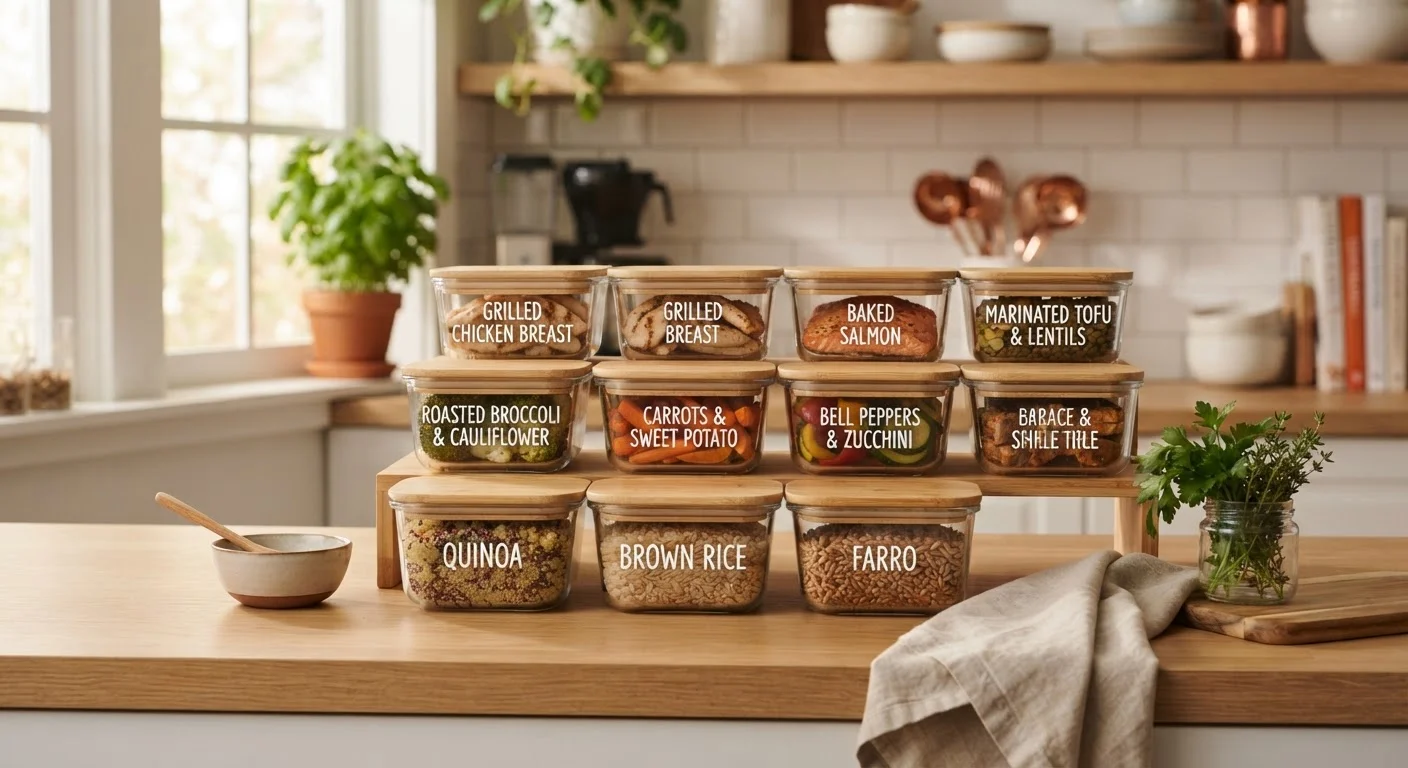
Pick components that combine into multiple meals rather than planning five separate dishes. A useful starting set is one grain (rice, farro, or oats), one roasted vegetable mix, one protein, and one sauce or dressing. These four items produce different combinations every night without cooking from scratch each time.
Look for ingredient overlap when selecting components. If chicken thighs and black beans both appear in your week, they share onion, garlic, and cumin, which means one shopping trip and less waste. See the protein batch cooking guide for specific quantity guidance on affordable proteins.
Shop with a component list, not a recipe list
Bring a list organized by component rather than by recipe. Group all produce together, all proteins together, and so on. This structure helps you spot redundancies (two bags of onions when one covers everything) and prevents impulse additions that break the budget.
Buy proteins in larger packages, which typically cost less per pound than smaller cuts. Divide and portion them at home before cooking or freezing.
Sequence your cooking to use the oven and stovetop simultaneously
Start with whatever takes longest: dried beans need soaking, a braise takes 90 minutes, and whole grains take 45. Get those going first. Then preheat the oven and line sheet pans for roasting while grains simmer on the stovetop.
A realistic sequence for a 2-hour session might be: start rice on burner one, start beans in a slow cooker, roast two sheet pans of vegetables at 400 degrees Fahrenheit for 25 minutes, then cook protein on burner two or in the same oven at the same temperature. For more on running an efficient single-day session, see the practical kitchen approach to Sunday batch cooking.
Cool, portion, and label everything before storing
Spread cooked food in shallow layers on sheet pans or wide bowls to cool quickly. Once food reaches room temperature (within two hours of cooking), transfer it into portioned containers sized for your household. A family of four might fill one large container per component; a couple might use two smaller ones per component instead.
Label every container with the item name and the date cooked. This takes under three minutes and prevents waste mid-week.
Assign components to specific nights before the week starts
Write a loose plan that maps each component to a night. Monday might be grain bowls with roasted vegetables and a drizzle of the batch-made dressing. Tuesday might use the same protein in tacos. Wednesday might combine the grain with beans and leftover vegetables in a soup.
This plan does not have to be rigid, but having it written down stops the 6 p.m. paralysis of staring into the refrigerator. For ideas on quick weeknight assembly using batch components, browse quick dinner recipes that work with precooked ingredients.
Common problems and how to avoid them
The most frequent issue families report is boredom: eating the same seasoned chicken four nights in a row. The fix is to keep base components plain and vary the seasoning at reheating. Lightly salted roasted chicken becomes butter chicken on Monday and a rice bowl with soy and sesame on Wednesday without any extra prep.
The second issue is overcommitting the first week. Batching five components across a three-hour session is realistic once the routine is established, but a 90-minute first session with two components teaches the workflow without burning out your Sunday. For an honest look at what batch cooking realistically delivers for different household types, see whether batch cooking on Sunday suits your family.
Storage failures happen when containers are not fully airtight or when food goes in warm. Both problems are avoidable with the right containers and a consistent cooling step before sealing.