
The fruit base is where they all start
All three desserts are built on the same idea: sweetened, lightly spiced fruit baked until it bubbles and softens. Peaches, berries, apples, cherries, and plums all work. So do canned and frozen options, which tend to cost less than fresh out-of-season fruit and perform just as well once baked.
The fruit layer gets tossed with sugar, a little cornstarch or flour to thicken the juices, and usually a pinch of cinnamon or nutmeg. That part is consistent across all three formats. Where they split is the topping, and that topping determines texture, effort, and final cost. For more ideas on building desserts from what you already have on hand, see how everyday staples become satisfying sweets.
What makes a cobbler a cobbler
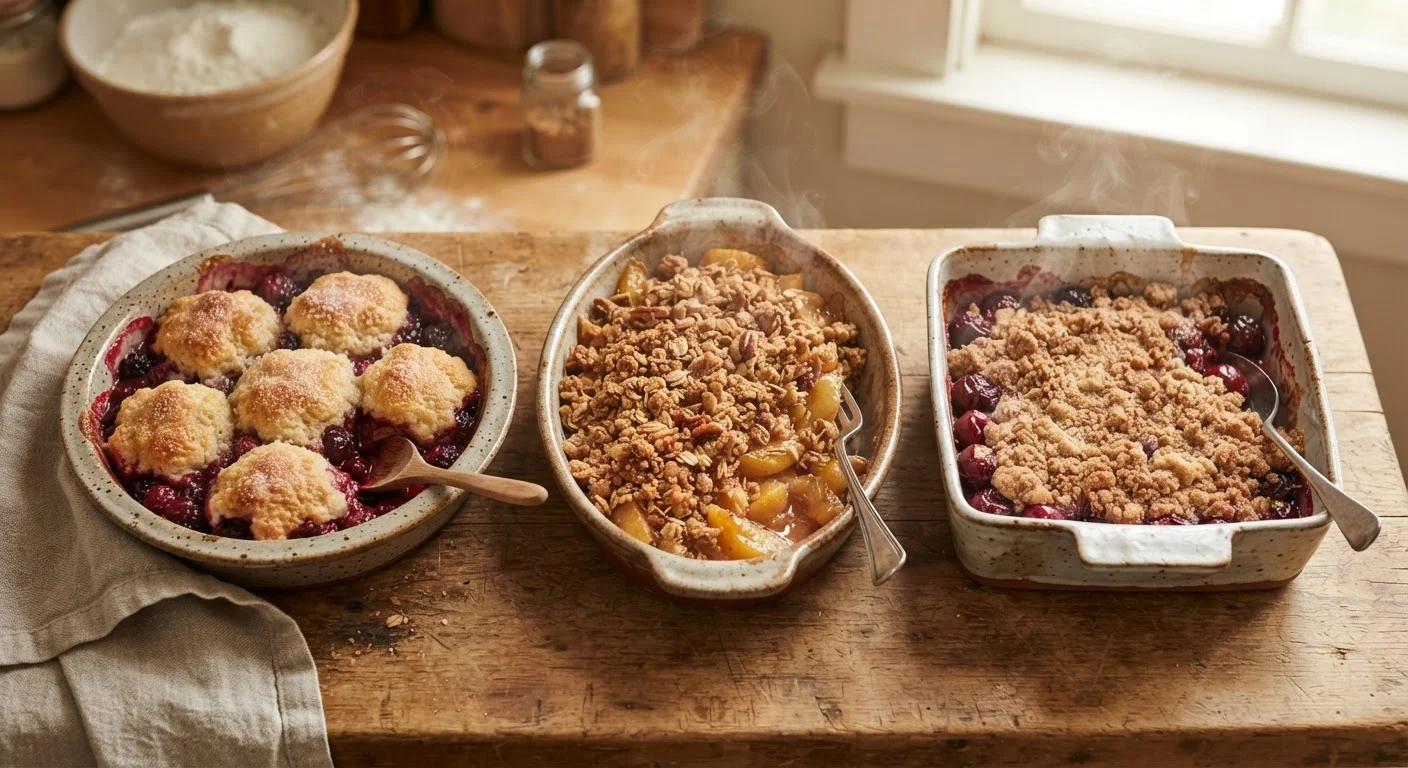
A cobbler topping is made from batter or biscuit dough dropped or spooned over the fruit before baking. The result is soft and cakey in some spots, golden and slightly crisp at the edges. It does not cover the fruit in one flat sheet; the irregular dollops of dough give it the bumpy, cobbled look the name refers to.
There are two main styles. A biscuit cobbler uses cold butter cut into flour with a little sugar and milk, producing a topping that is flaky and tender. A cake-batter cobbler pours a thin, sweetened batter under or over the fruit and lets it puff up as it bakes. Both are inexpensive to make and call for ingredients most kitchens already have.
The biscuit version takes a bit more technique because cold butter matters for the texture. If you are new to that process, a practical baking starting point covers the basics clearly.
How crisps and crumbles differ from each other
This is where most people get confused, and the distinction is straightforward. A crisp topping contains rolled oats. A crumble topping does not. Both are made by rubbing butter into dry ingredients until the mixture clumps into coarse, sandy pieces, but the oats in a crisp toast during baking and produce a noticeably crunchier result.
A crumble topping is flour, butter, and sugar in roughly equal proportions by weight. Rubbed together cold, it bakes into a sandy, slightly crunchy layer that sits over the fruit. It is the simplest of the three to prepare because there is nothing to roll, drop, or batter.
A crisp adds oats to that same base, sometimes with a small amount of chopped nuts. The oats absorb butter and sugar differently than flour, and they hold their texture through baking better. The result is a topping with real bite. Canned or frozen fruit works especially well under a crisp because the firmer topping holds up to the extra moisture released during baking.
| Cobbler | Crisp | Crumble | |
|---|---|---|---|
| Topping type | Biscuit or cake batter | Oat and butter mixture | Flour and butter mixture |
| Contains oats | No | Yes | No |
| Texture | Soft and cakey | Crunchy and toasted | Sandy and crumbly |
| Ease of prep | Moderate | Easy | Very easy |
| Key extra ingredient | Milk and leavening | Rolled oats | None beyond basics |
| Works with canned fruit | Yes | Yes, especially well | Yes |
If you want to pull more flavor out of basic butter, oats, and flour without spending more, a few affordable baking staples make a measurable difference.
Cost and pantry requirements at a glance
All three formats are inexpensive. A crumble topping for a 9x13 dish calls for roughly one cup each of flour, butter, and sugar, which costs very little per serving. A crisp adds a cup of rolled oats, one of the cheapest items in any grocery store. A cobbler adds milk or buttermilk and a leavening agent like baking powder to that flour base, again at minimal cost.
Where costs vary more is the fruit. Using canned peaches or frozen mixed berries instead of fresh stone fruit in winter can halve the cost of the filling without a noticeable drop in flavor. Reducing the sugar in the filling is another way to lower cost and keep the dessert balanced, especially when the fruit is already ripe and sweet.
For households weighing baked desserts against quicker options, a comparison of no-bake and baked desserts lays out when the oven is worth turning on.