
Why tacos are a budget weeknight winner
Taco night has a structural advantage over most weeknight meals: every component is separate, so you can scale each one up or down based on what you have and what your family will actually eat. Nothing is locked in. Run low on meat? Add more beans. Out of shredded cheese? Sour cream and salsa still make a satisfying taco.
The modular format also means less waste. Leftover taco fillings are easy to repurpose the next day, unlike a casserole that does not translate well to round two. For families watching the grocery bill, that flexibility matters. See practical strategies for feeding your family on a budget for a wider look at building meals around cost-conscious choices.
Cook once, eat twice with taco filling
Season and brown a larger batch of ground beef or beans than you need for one night. Store the extra in the refrigerator and use it for burritos, taco salads, or egg scrambles the next day. The effort is nearly identical and you get two meals from one cook session.
Choosing your protein without overspending
Ground beef is the most common taco protein for a reason: one pound feeds four people when stretched with beans or rice, and it cooks in under ten minutes. A 75/25 or 80/20 blend is cheaper than leaner options and works fine once you drain the fat after browning. For more ways to get mileage from that purchase, ground beef can stretch into five different weeknight meals with a little planning.
Beyond beef, canned black beans or pinto beans are the most affordable protein available. One 15-ounce can (roughly $1) gives you enough filling for three to four tacos after seasoning. Canned tuna or rotisserie chicken (bought on sale and shredded) are other low-cost options that work well with standard taco seasoning. The point is that the shell and toppings do the heavy lifting on flavor, so even a modest protein goes far.
$1
Average cost per can of black or pinto beans
A 15-ounce can of canned beans provides three to four taco servings, making it one of the most cost-efficient protein options available at most grocery stores.
10 min
Time to cook seasoned ground beef for tacos
Ground beef browns and seasons in under ten minutes in a standard skillet, making it one of the fastest weeknight proteins for family dinners.
$2-$3
Typical price for a 30-count pack of corn tortillas
Corn tortillas are generally the most affordable shell option at grocery stores, often priced lower per serving than flour tortillas or taco-sized hard shells.
The toppings that stretch your dollar
Toppings are where taco night feels generous without costing much. Shredded cabbage (cheaper than lettuce and holds up better) adds crunch. A can of corn, drained and briefly charred in a dry pan, adds sweetness. Diced white onion and fresh cilantro cost almost nothing and add real flavor. A squeeze of lime pulls everything together.
Jarred salsa stands in for fresh pico de gallo at a fraction of the cost and prep time. Sour cream stretches further than cheese when used as a sauce rather than a topping. If shredded cheese is in the budget, a small amount of a sharp variety like cheddar delivers more flavor per ounce than a mild blend. These choices do not require compromise, just intention. For a guide to the shelf-stable staples worth keeping on hand, see pantry ingredients that make fast dinners possible.
Tortillas: flour, corn, or skip the shell
Corn tortillas are generally the most affordable option and work well warmed directly on a gas burner or in a dry skillet for thirty seconds per side. A pack of 30 typically costs around $2 to $3. Flour tortillas are softer, which some kids prefer, but cost slightly more per serving.
If you run out of tortillas or want to stretch the meal further, cooked rice or shredded cabbage leaves work as a base. Taco bowls require no shell at all and are well-suited to larger portions. Keeping a bag of rice in the pantry as a backup means taco night can feed unexpected extra mouths without a last-minute grocery run.
Warm corn tortillas in a dry skillet or directly on a gas burner for 30 seconds per side before serving. Cold tortillas crack when folded; warm ones stay pliable and taste noticeably better.
Heat activates the oils in the masa, improving both texture and flavor. This takes about two minutes total and makes a real difference in the finished taco.
After browning ground beef, drain excess fat before adding seasoning and water. This keeps the filling from becoming greasy and lets the spices coat the meat evenly.
Fat pooling in the pan dilutes seasoning and changes the texture of the filling. Draining first gives you a cleaner, more consistent result.
Seasoning from scratch
Pre-packaged taco seasoning packets work, but a homemade blend costs less and lets you control sodium. The basic mix: 1 tablespoon chili powder, 1 teaspoon cumin, 1 teaspoon garlic powder, half a teaspoon each of onion powder, smoked paprika, and oregano, plus salt to taste. Mix a larger batch and store it in a jar. One rounded tablespoon seasons one pound of meat.
Add a splash of water (about 2 tablespoons) when stirring the seasoning into cooked ground beef so it coats evenly and forms a light sauce rather than dry powder. This small step makes a noticeable difference in texture. These are the kinds of pantry habits that a simple weekly meal prep routine makes second nature over time.
Handling picky eaters at taco night
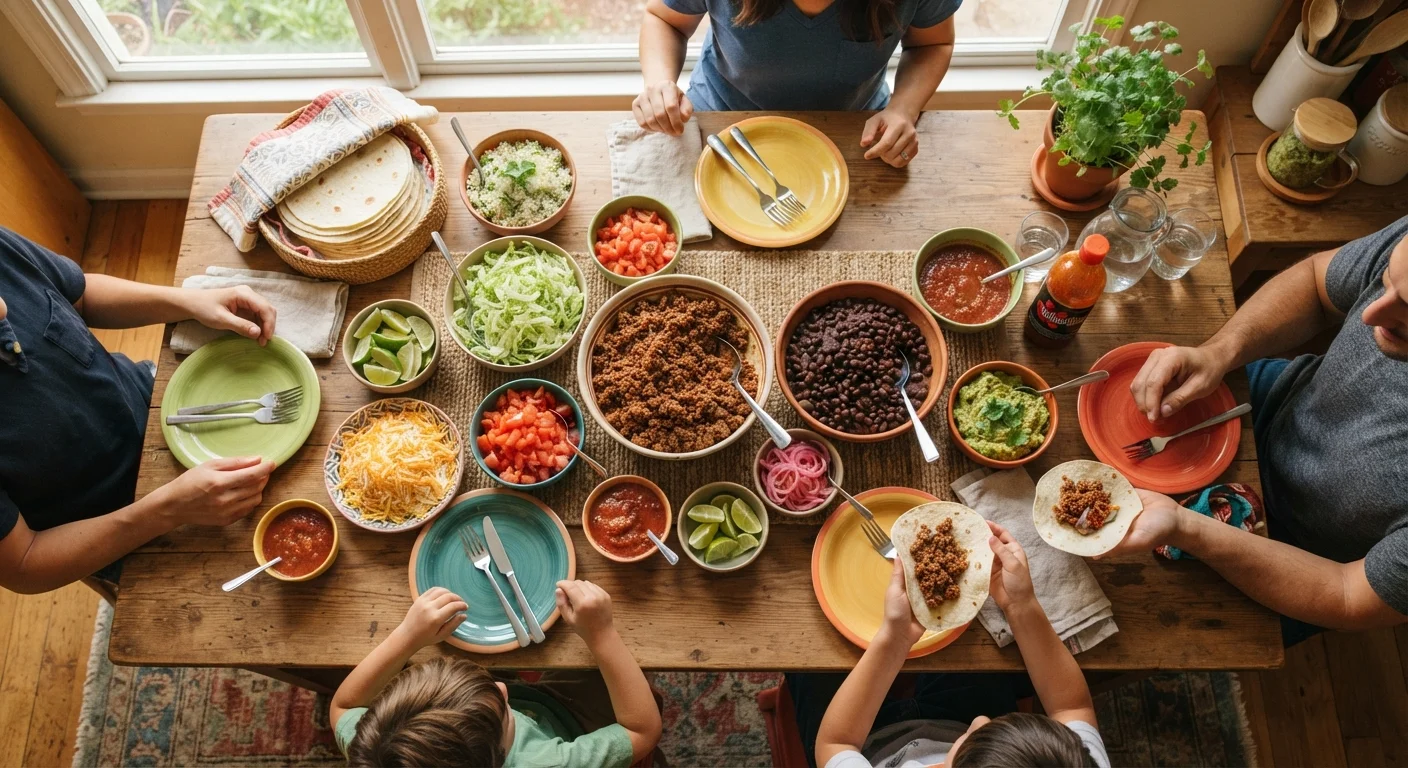
The build-your-own format is the solution to picky eaters. Set every topping out in small bowls and let each person assemble their own. A child who will not touch onions or beans can still have a satisfying meal with plain meat, cheese, and a tortilla. No separate cooking, no negotiating.
For families with very young children, a deconstructed taco on a plate (meat, a torn tortilla, a few pieces of corn) gets food on the table without a meltdown. The same ingredients, different presentation. Building a weekly meal plan around store sales can help you plan taco night alongside other crowd-pleasing meals so the whole week stays manageable.
Taco night leftovers worth planning for
Leftover seasoned meat and beans keep in the refrigerator for three to four days. The next night, the same filling becomes a burrito wrapped in a large flour tortilla with rice and sour cream, or a taco salad over shredded cabbage with a drizzle of salsa. Scrambled into eggs with a little salsa, taco meat works for a fast weekday breakfast.
Intentionally making a larger batch of filling specifically for leftovers is one of the simplest forms of meal prep. Cook once, eat twice without repetition. That habit compounds over time into genuine savings on groceries and time. More ideas for efficient weekly meal preparation can help you build that routine beyond taco night.