
How each strategy actually works
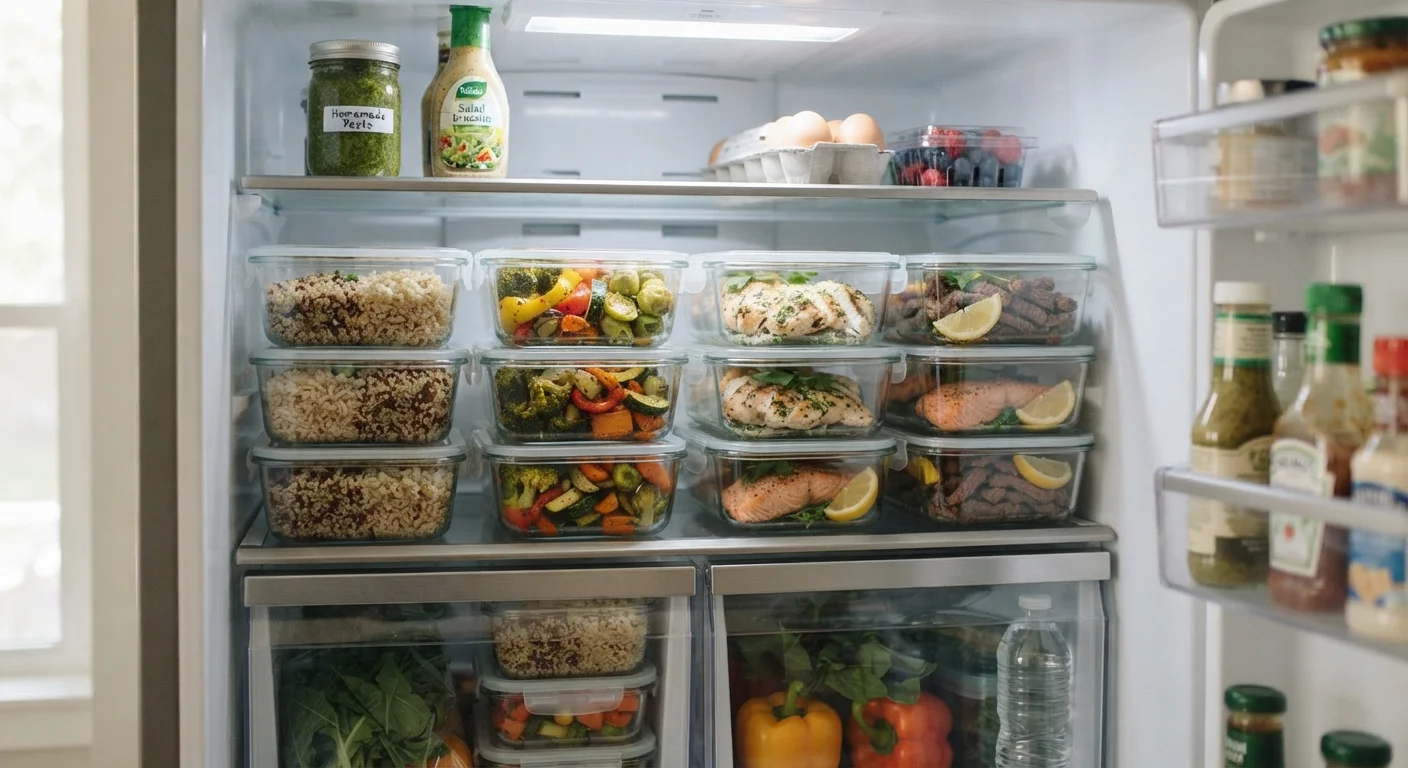
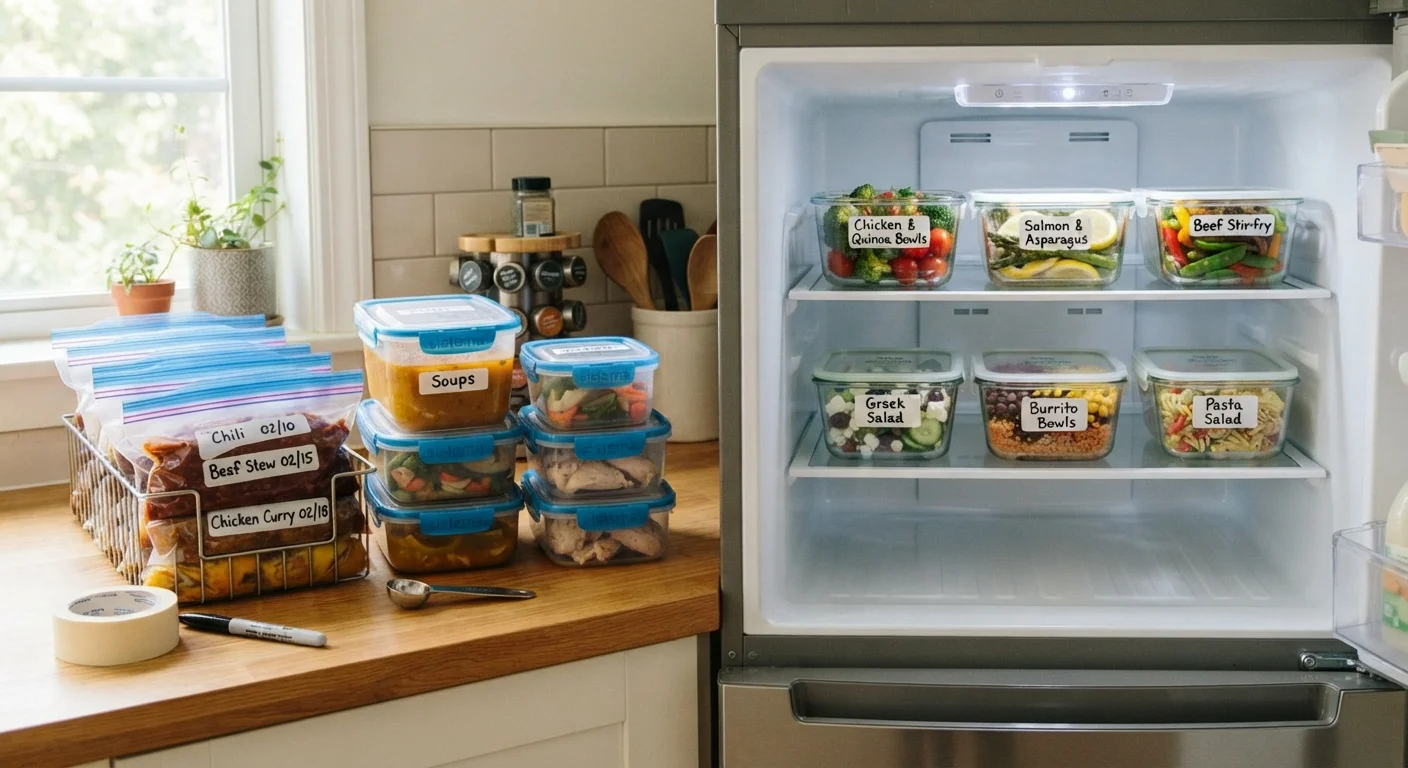
Freezer meal prep means cooking or assembling complete meals (or meal components) and storing them at 0 degrees Fahrenheit or below. The payoff is a ready supply that lasts weeks. Fridge meal prep means cooking and portioning food for the current week, stored at 40 degrees Fahrenheit or below, with the expectation that everything gets eaten within three to five days.
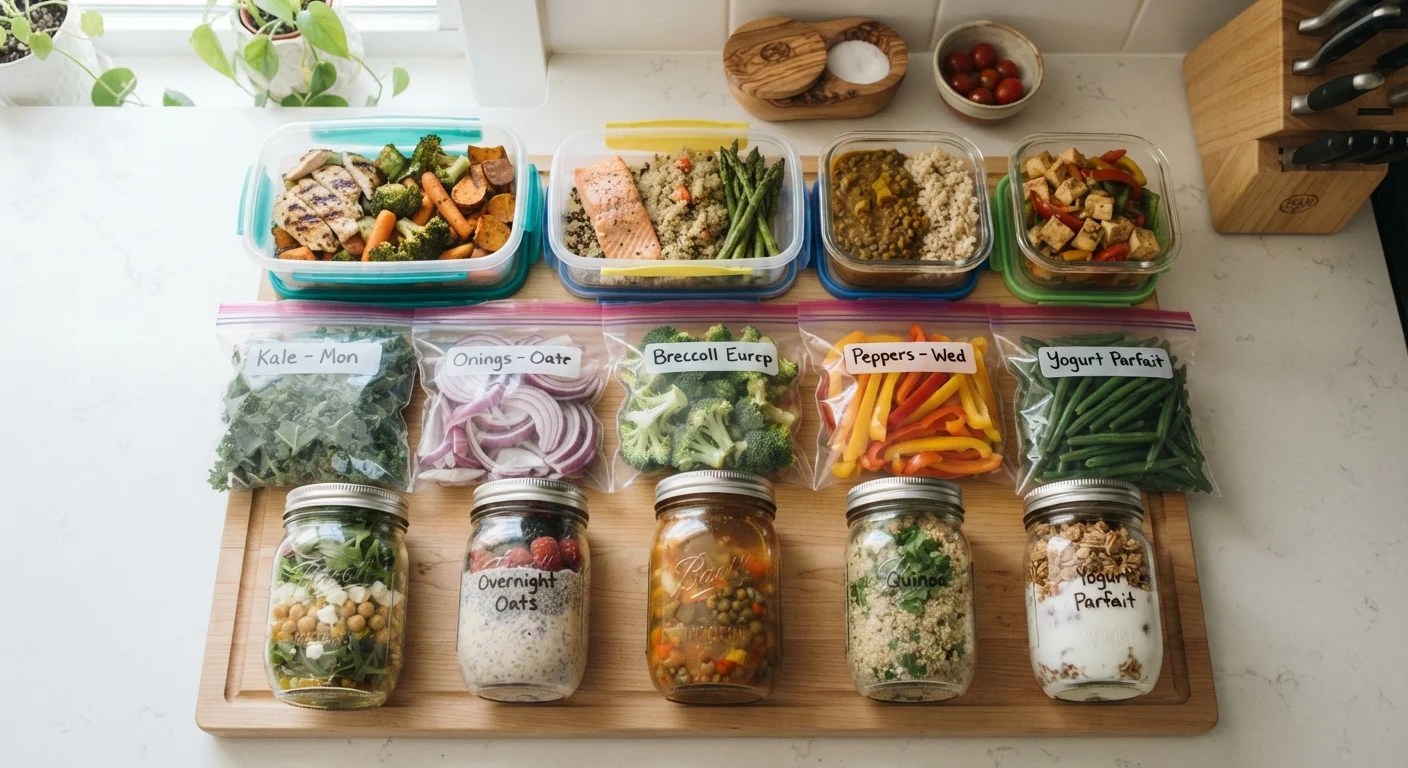
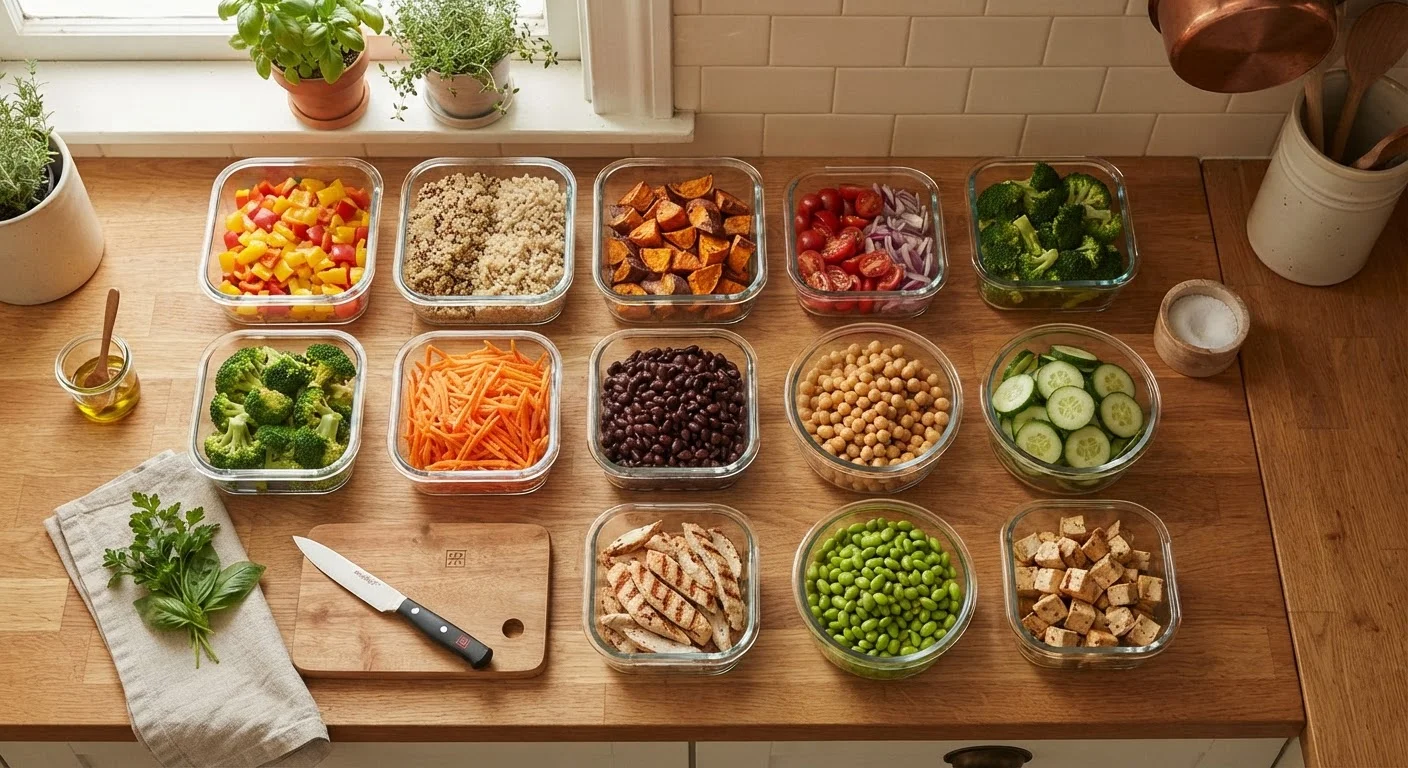
The two approaches demand different habits. Freezer prep works best in concentrated sessions: a few hours on a weekend to produce a large batch of chili, marinated chicken, or breakfast burritos that you label, date, and stack. Fridge prep fits into shorter, more frequent windows: chopping vegetables on Sunday, cooking a pot of grains, roasting a sheet of proteins, and assembling grab-and-go portions for the days ahead.
For a broader look at setting up either routine from scratch, the weekly meal prep guide for busy families covers the first steps in detail.
| Criterion | Freezer meal prep | Fridge meal prep |
|---|---|---|
| Storage duration | 2 to 3 months (best quality) | 3 to 5 days |
| Typical prep session length | 2 to 4 hours, infrequent | 30 to 90 minutes, weekly |
| Meal variety mid-week | Limited (fixed portions) | High (mix-and-match components) |
| Best food types | Soups, stews, casseroles, proteins | Grains, vegetables, salads, snacks |
| Upfront container investment | Freezer-safe bags or containers | Airtight fridge containers or jars |
| Flexibility if plans change | High (meal keeps for weeks) | Low (must eat within days) |
| Risk of food waste | Low (long shelf life) | Moderate (tight use-by window) |
Cost and food waste
Both methods cut costs by reducing the number of last-minute takeout orders and impulse grocery runs. Where they differ is in how they protect your grocery budget from spoilage.
Fridge prep creates a clear use-by window. When you know everything must be eaten by Thursday, you plan portions more precisely. The risk is overestimating what your family will eat: a full week of fridge-prepped meals can become a source of waste if schedules shift. Freezer prep removes that short deadline. Buying chicken thighs in bulk when the price drops, cooking them that day, and freezing portions can stretch a modest grocery budget further. The guide to using your freezer as a meal planning tool walks through labeling and rotation systems that prevent freezer waste.
Storage containers matter for both approaches. Airtight containers slow freezer burn and keep fridge food fresh longer. The comparison of containers, bags, and glass jars for meal prep storage lays out the practical differences across each option.
Food safety and storage timelines
The USDA recommends consuming refrigerated cooked foods within three to four days. Frozen cooked meals generally stay safe indefinitely at 0 degrees Fahrenheit, though quality (texture, flavor) tends to decline after two to three months for most dishes. Soups, stews, and casseroles tend to freeze well. Foods with high water content, such as raw salad greens, cucumbers, and dairy-based sauces, do not freeze cleanly and are better suited to fridge prep.
For a full breakdown of storage times by food type, the reference guide to how long prepped foods last in the fridge and freezer is a reliable starting point.
3 to 4 days
Safe fridge storage for cooked meals
The USDA recommends consuming refrigerated cooked foods within three to four days to reduce foodborne illness risk.
0 degrees F
Safe freezer temperature for stored food
The USDA states that food stored continuously at 0 degrees Fahrenheit is safe indefinitely, though quality declines over time.
2 to 3 months
Optimal freezer quality window for cooked dishes
Most cooked casseroles, soups, and proteins maintain their best texture and flavor within this window, according to USDA guidelines.
When to combine both strategies
Most families find that neither method alone covers every situation. A practical hybrid looks like this: prep fresh components (grains, roasted vegetables, hard-boiled eggs) for the first half of the week in the fridge, while keeping two or three frozen meals in reserve for the nights when the week goes sideways.
Batch cooking one protein in a large quantity and splitting it between the fridge (for immediate use) and the freezer (in labeled portions) is a time-efficient way to get mileage from a single cooking session. If the idea of managing both feels complicated, the first meal prep day readiness checklist helps you organize your kitchen and schedule before committing to either approach.
Anyone skeptical that meal prep is worth the effort can also find reassurance in the breakdown of common meal prep myths, which addresses the most frequent reasons families put it off.