
Why your storage choice actually matters
Storage containers are not interchangeable. The wrong choice can mean soggy food, stained lids, wasted freezer space, or containers that warp the first time you microwave them. For families doing weekly meal prep, those small frustrations add up fast and can quietly push people away from the habit.
The three most common options are plastic containers, zip-lock style bags, and glass jars or glass containers. Each has a different cost profile, weight, durability, and performance across fridge, freezer, and microwave use. Understanding those differences helps you spend less money on storage and lose fewer meals to spoilage or inconvenience. See where to start with weekly meal prep if you are still building your routine from scratch.
Plastic containers: affordable and stackable
Plastic containers are the most affordable entry point. A set of mixed-size containers with locking lids typically costs a fraction of comparable glass sets, which matters when you need eight or ten containers to cover a full week of family lunches and dinners.
The drawbacks are real. Plastic absorbs odors and stains over time, particularly from tomato-based dishes or curries. Most standard plastic containers are not oven-safe, and some are not rated for microwave use. Look for containers labeled microwave-safe if you plan to reheat directly in them, and check that lids vent steam rather than seal airtight during heating.
Stacking efficiency is a genuine strength. Uniform rectangular containers nest cleanly and make the most of fridge and pantry shelving. For families storing large grain batches, portioned proteins, or chopped vegetables across five days, plastic remains the most practical volume option.
| Plastic containers | Glass jars/containers | Zip bags | |
|---|---|---|---|
| Upfront cost | Low | Medium to high | Low |
| Durability over time | Moderate (stains, warps) | High (chip/break risk) | Low (single-use standard) |
| Microwave-safe | Sometimes (check label) | Usually yes (tempered) | No |
| Freezer performance | Good | Good (with care) | Excellent (flat storage) |
| Odor and stain resistance | Low | High | Medium |
| Space efficiency in fridge | High (stackable) | Moderate | High (flat-stored) |
| Weight | Light | Heavy | Very light |
Glass jars and containers: durable and odor-free
Glass does not absorb flavors or stains, which means a jar that held spicy chili is just as neutral after washing as one that held plain rice. That property is worth a lot when you are cycling through diverse recipes each week.
Standard wide-mouth mason jars are inexpensive, widely available, and genuinely multi-purpose. They work well for overnight oats, layered salads, soups, and dry pantry storage. Straight-sided glass containers with snap or screw lids handle flat portions like grain bowls or roasted vegetables. Most tempered glass containers are oven-safe and microwave-safe, which reduces the number of dishes used during a meal.
The tradeoffs are weight and breakage risk. Glass is heavier than plastic, which matters if children are packing their own school lunches. It is also more expensive upfront. For families juggling freezer and fridge meal prep strategies, note that glass can crack if moved directly from freezer to a hot environment: always allow it to come to room temperature first.
Zip bags: the flat-storage specialists
Zip-lock style bags have one distinct advantage: they conform to their contents and can be stored flat, which means a freezer full of bags takes up far less space than the same volume in rigid containers. For batch-cooked soups, marinated proteins, or blanched vegetables destined for the freezer, bags are often the most space-efficient choice.
They are not designed for repeated reuse. Standard zip bags degrade after a few wash cycles, and the seals weaken. Reusable silicone zip bags exist and hold up much better over time, though they cost more. Either way, bags are poor choices for anything with significant liquid if the bag will be tipped or jostled.
For food safety, always press out excess air before sealing a bag for freezer storage, and lay bags flat until fully frozen so they stack efficiently. Check how long prepped foods safely last in the fridge and freezer to pair the right container with the right storage window.
Getting more life from zip bags
Rinse standard zip bags with cool water immediately after use and air-dry them before reusing for non-meat items. Bags that held raw proteins should be discarded after one use. Silicone zip bags handle repeated washing far better than plastic film versions and are worth the higher cost if you use bags frequently.
Matching container type to food and situation
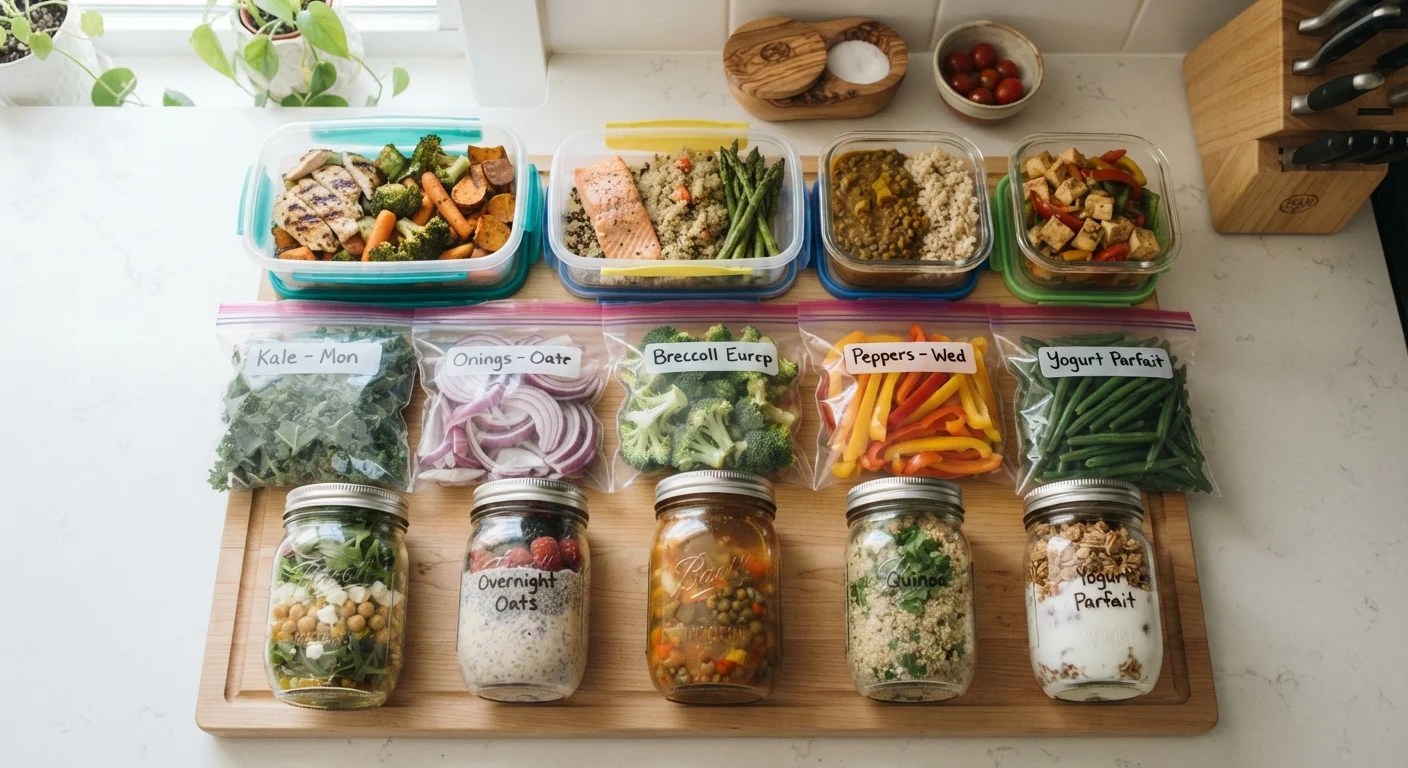
A practical storage system for most families combines all three types. Use plastic containers for the bulk of daily fridge portions where staining is unlikely. Reserve glass jars for soups, overnight oats, and any dish you will reheat directly in the container. Use zip bags for freezer batches and for storing prepped produce flat in the fridge crisper.
Container size also matters. Overfilling leads to spills and makes lids fail. Under-filling means excess air exposure, which speeds up oxidation in cut fruit and cooked grains. Match container volume to portion size as closely as practical. The food storage myths that cost families money piece covers how air exposure and temperature habits affect how long food stays usable, which is worth reading alongside this guide.
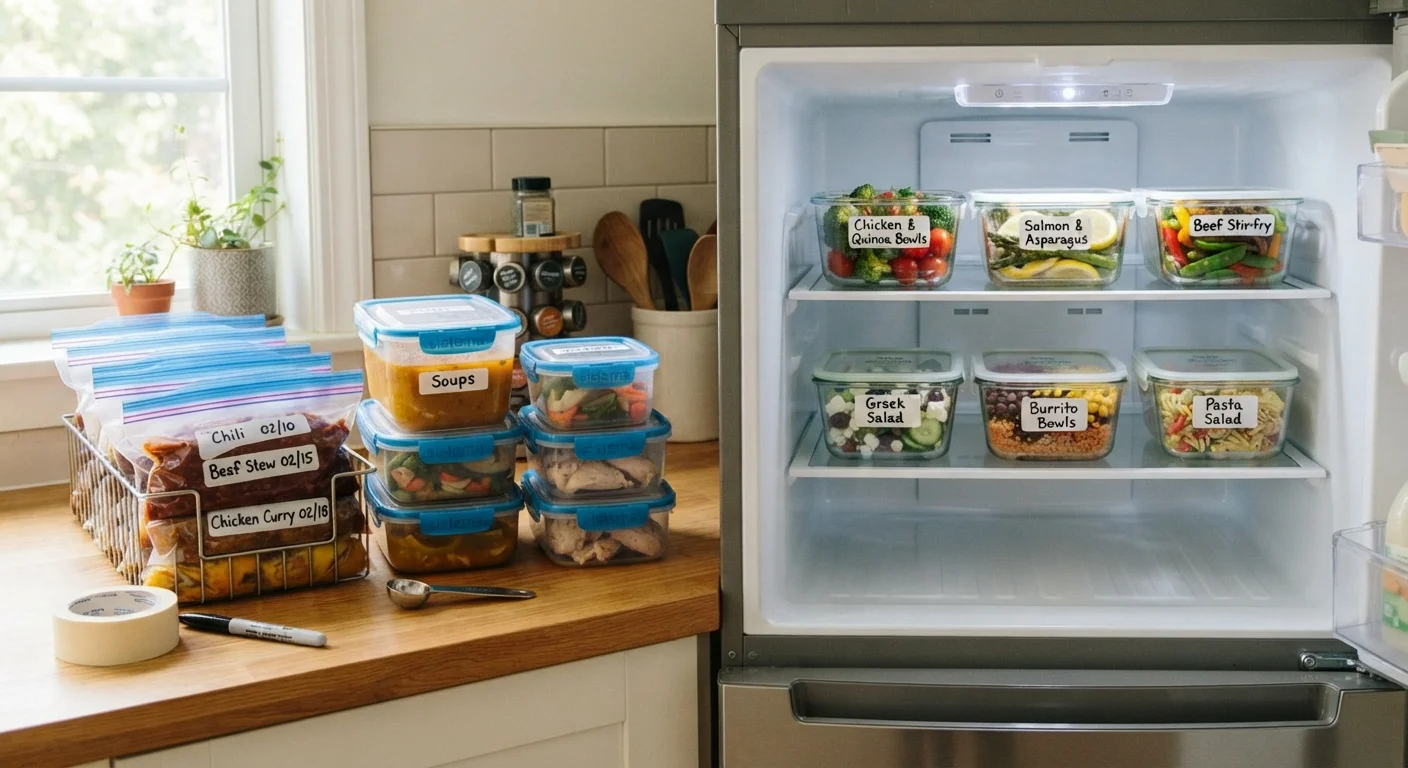
Whatever combination you choose, label containers with the prep date. A piece of masking tape and a marker is enough. It removes guesswork and reduces waste, two things that matter when the goal is a cheaper, more reliable weekly routine.