
Why these myths stick around
Most families that have never tried meal prep carry a mental image of someone spending six hours in the kitchen surrounded by industrial-sized pots. That image is wrong, but it persists because the loudest voices about meal prep online tend to be people who treat it as a hobby rather than a practical tool. The result is that genuine time savings get buried under intimidating content.
The myths below come up repeatedly when families talk about why they have not started. Each one has a straightforward correction, and most involve a simple shift in expectation rather than any new skill.
If you want a structured entry point after reading, the beginner's guide to weekly meal prep walks through the first steps without assuming any prior experience.
The myths and what is actually true
Work through each of these before deciding whether meal prep fits your household. The gap between the myth and the reality is almost always smaller than it looks.
Myth
Meal prep takes all day, and most families simply do not have that kind of time.
Fact
A focused prep session for a family of four typically takes 60 to 90 minutes when planned in advance.
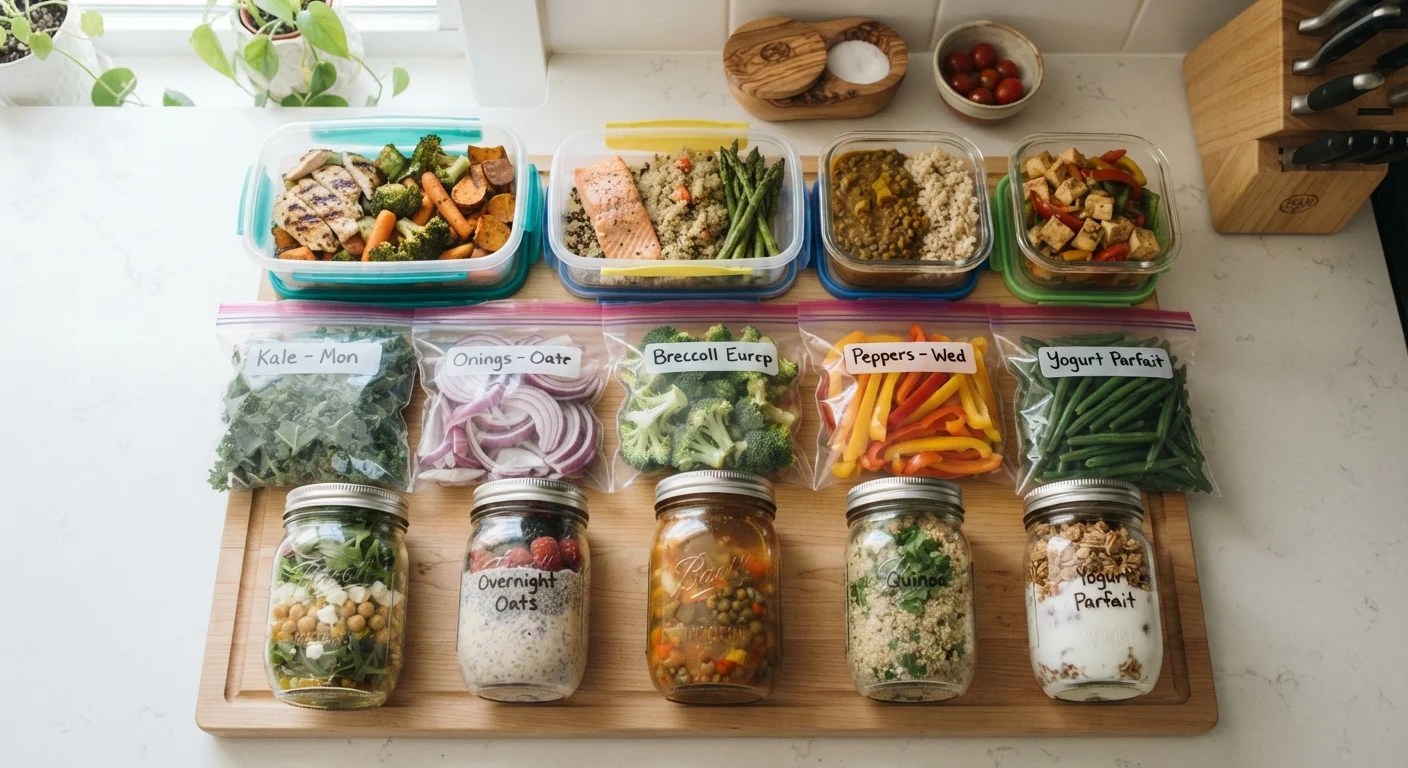
The all-day version exists, but it is not the baseline. Cooking a pot of rice, roasting a sheet pan of vegetables, and portioning a slow-cooker protein can all happen in parallel. When you overlap tasks instead of doing them in sequence, total active time drops considerably. A written list of what you plan to make before you start removes the decision-making that eats up most of the time.
If 90 minutes still feels like a lot, a pre-session checklist can cut setup and cleanup time so the cooking itself moves faster.
Myth
My family will not eat the same food multiple days in a row.
Fact
Prepping components rather than full dishes gives each person flexibility to combine ingredients differently each day.
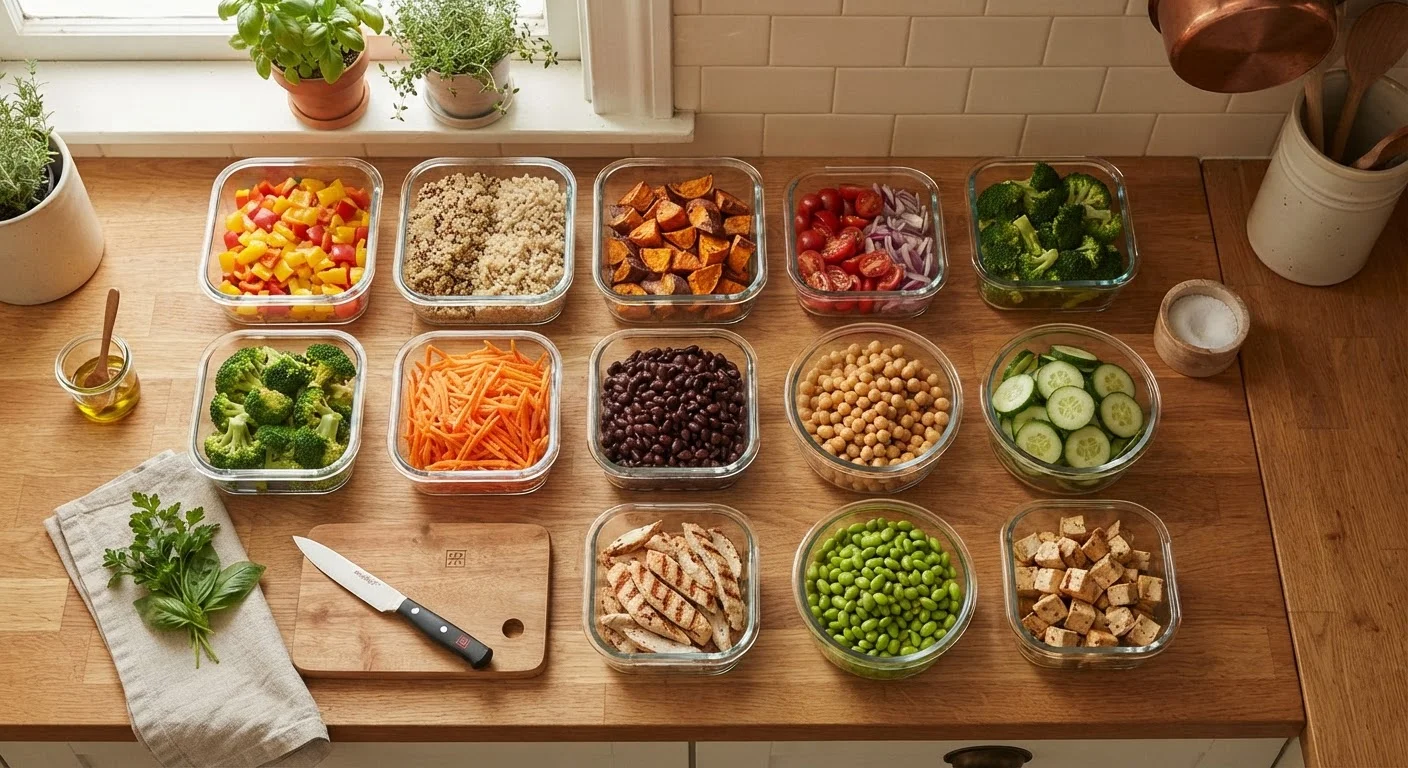
There is a difference between portioning a single casserole into five identical containers and prepping building blocks. Cooked chicken can go into a wrap on Monday, a grain bowl on Tuesday, and a simple soup on Wednesday. The protein is the same; the meal is not. Families that frame prep as ingredient prep rather than meal duplication rarely run into the repetition problem.
It also helps that some foods genuinely improve overnight. Stews, braises, and soups develop more depth after a day in the fridge, which the science of why leftovers taste better the next day covers in detail.
Myth
Meal prep is expensive because you need special containers, tools, and fancy ingredients.
Fact
Basic equipment and inexpensive pantry staples are enough to run a practical prep routine.
A few airtight containers, a sheet pan, one large pot, and a cutting board cover most prep tasks. Ingredients like dried beans, rice, frozen vegetables, and whole chicken thighs cost less per serving than almost any convenience food. The upfront container cost, if any, pays back quickly when less food gets thrown out each week.
Buying in slightly larger quantities of items you already use regularly is the main financial lever. The meal prep money-saving breakdown shows how the math works across a typical grocery run.
Myth
Prepped food goes bad before the week is over.
Fact
Most cooked proteins and grains stay safe and palatable for four to five days when stored correctly in the refrigerator.
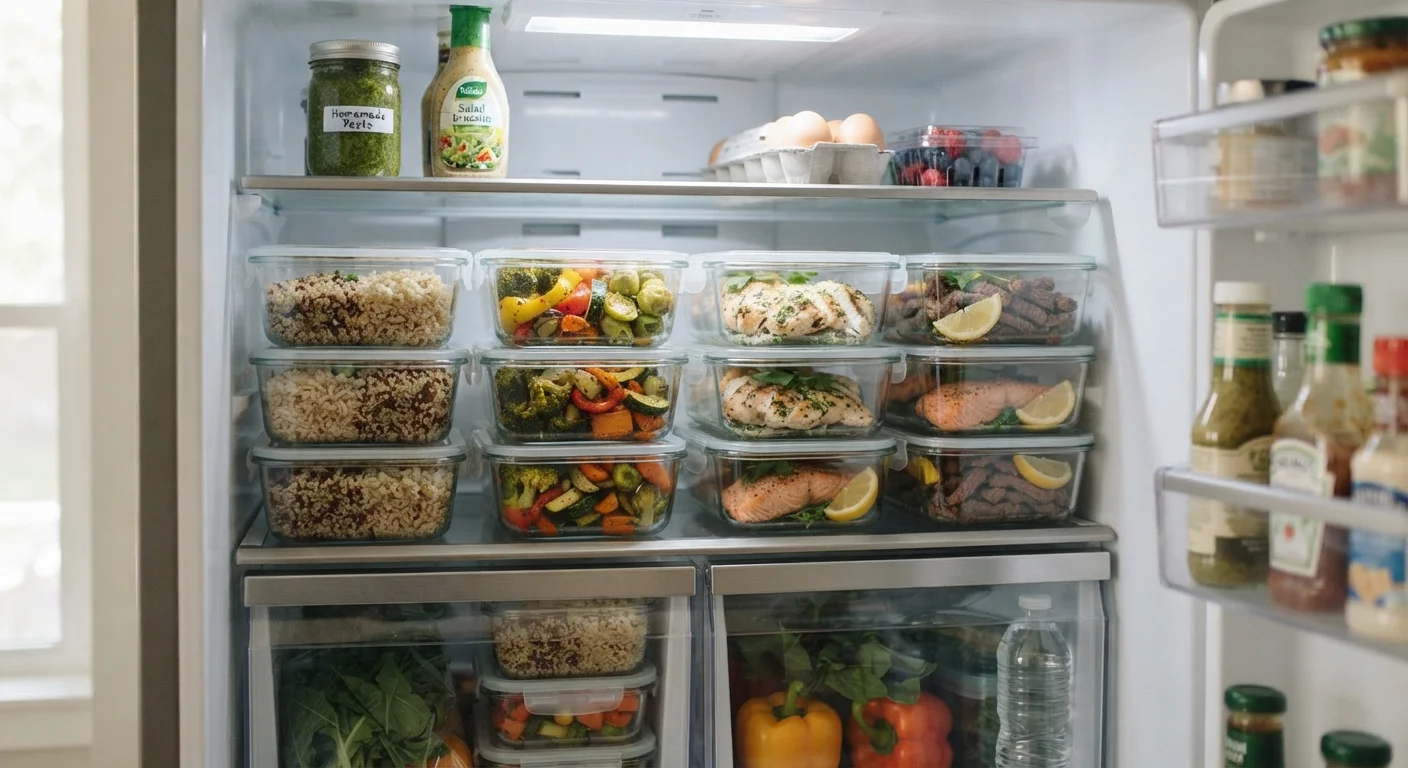
Spoilage problems usually trace back to storage errors rather than the concept of meal prep itself. Food cooled properly and sealed in airtight containers holds up well through a standard work week. Items that do not last as long, such as dressed salads or cut fruit, can be prepped partially and finished fresh in under two minutes.
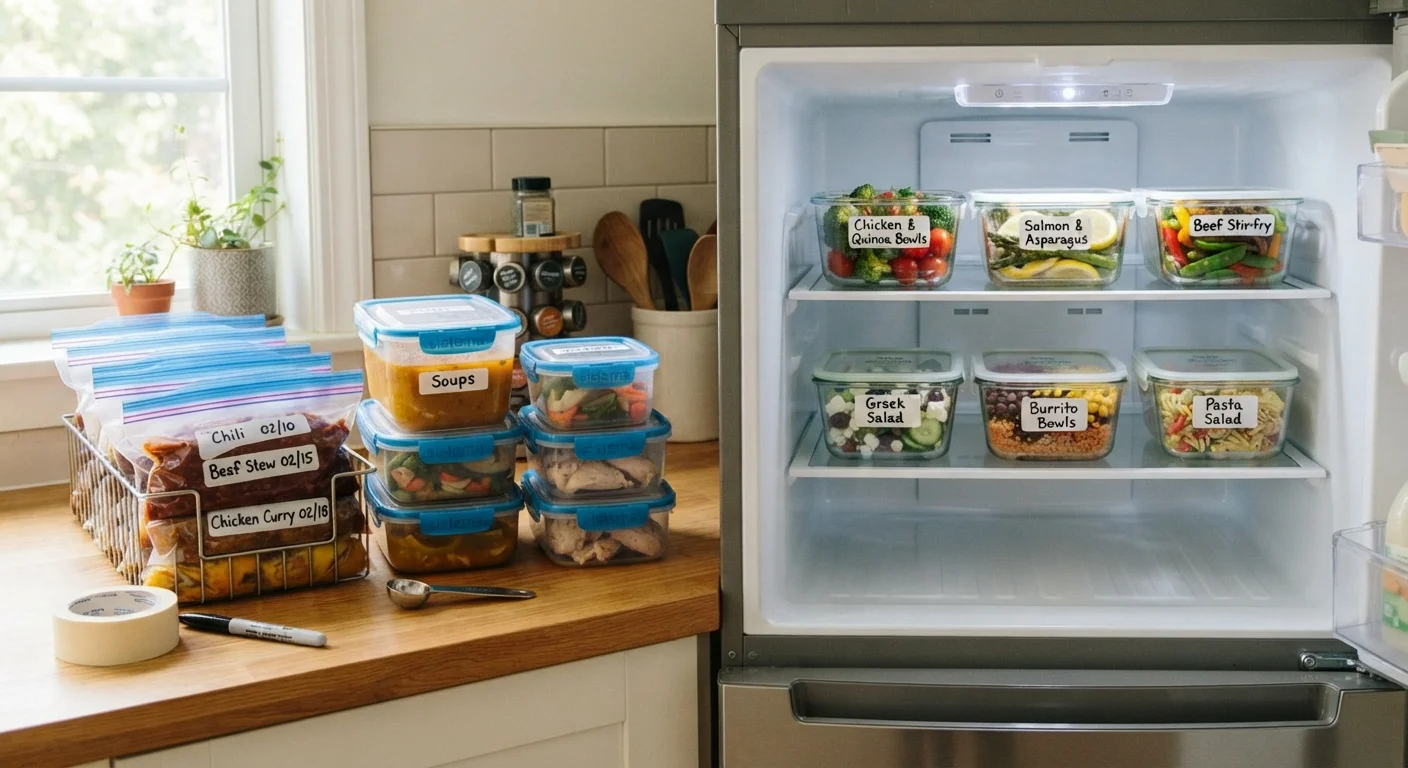
Many food storage assumptions are also simply wrong. The food storage myths that cost money article separates the facts from common fridge and freezer misconceptions. If longer storage is the goal, freezer prep versus fridge prep compares both approaches so you can choose what fits your week.
Myth
You need to follow a strict plan or the whole system falls apart.
Fact
A loose framework with two or three anchor meals is enough structure to get real benefits without rigidity.
Rigid plans fail because life is not rigid. A more durable approach is to prep flexible components and decide each day how to use them. Knowing that you have cooked lentils and roasted sweet potato in the fridge already narrows the weeknight decision from 'what do we eat' to 'how do we put this together.' That smaller decision takes far less energy and time. For fast dinner ideas that work well with prepped components, quick recipe ideas and core cooking tips are good reference points.
Getting started without overcommitting
The most common first-session mistake is trying to prep every meal for seven days at once. That approach burns out most beginners within two weeks. A more durable habit starts with two or three components: a cooked grain, a roasted vegetable, and a protein. Those three items combine into several different plates without anyone eating the same meal twice.
Storage matters more than most people expect. Poorly sealed containers cause texture and flavor problems that get blamed on meal prep itself. The right storage container guide covers the practical tradeoffs so food stays at its best through day four or five.
If you want to go further, the Sunday batch-cooking method is a well-tested structure that scales up gradually. And if the financial side interests you, how meal prepping saves money at the grocery store explains the budget logic in concrete terms.