
Why storage times matter for meal prep
Meal prepping saves time and money only when the food you prepare stays safe to eat. Cook a large batch on Sunday, and by Thursday you need to know whether that container of shredded chicken is still good or whether it crossed a line two days ago. Getting those windows right protects your family and protects the grocery budget you worked to stretch. See how meal prepping saves money at the grocery store for the broader financial case.
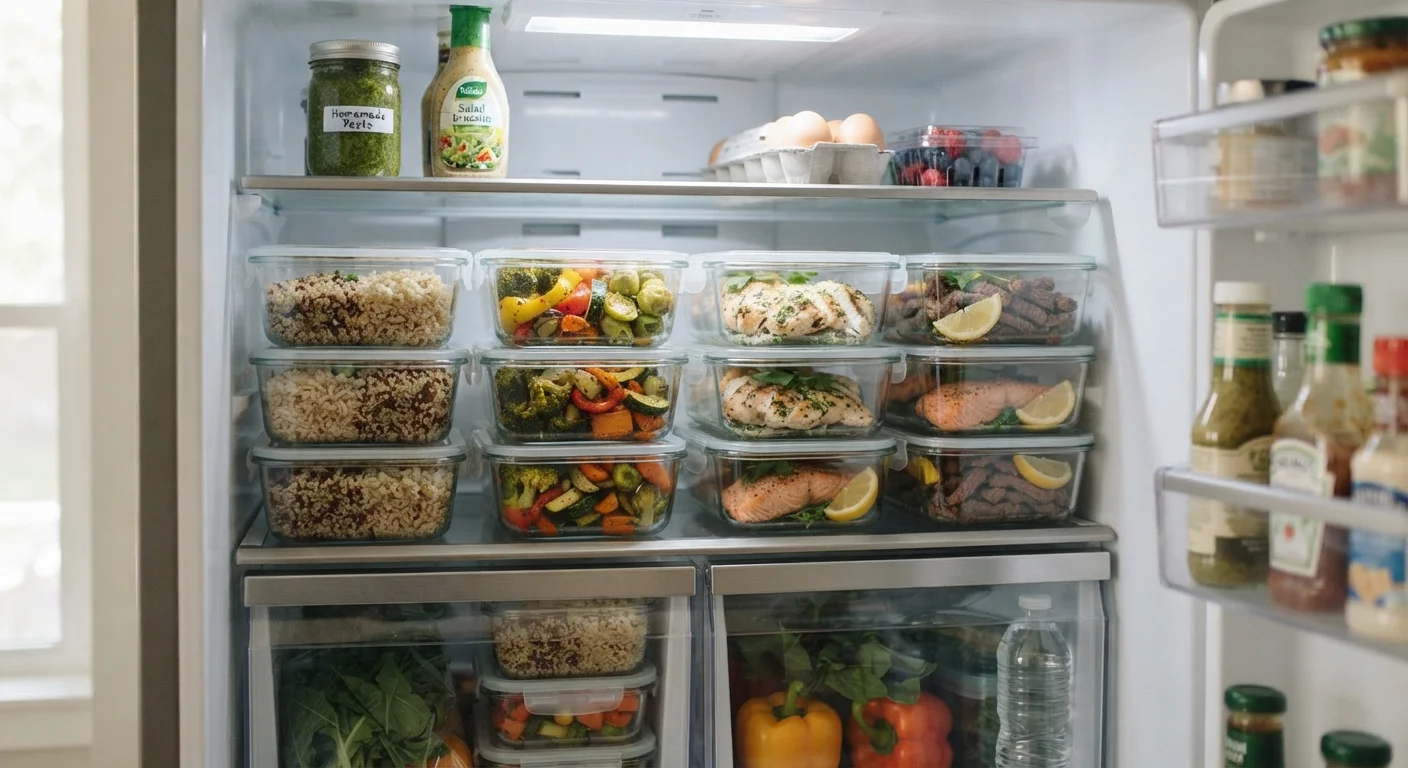
The timelines below are drawn from USDA Food Safety and Inspection Service guidelines. They assume your refrigerator holds at or below 40 degrees F and your freezer holds at or below 0 degrees F. A refrigerator thermometer is a cheap way to confirm yours meets those marks.
| Cooked grains and legumes (fridge) | 3 to 5 days (USDA Food Safety and Inspection Service) |
| Cooked poultry and meat (fridge) | 3 to 4 days (USDA Food Safety and Inspection Service) |
| Cooked seafood (fridge) | 3 to 4 days (USDA Food Safety and Inspection Service) |
| Roasted vegetables (fridge) | 3 to 5 days (USDA Food Safety and Inspection Service) |
| Soups and stews (freezer) | 4 to 6 months (USDA Food Safety and Inspection Service) |
| Cooked proteins (freezer quality window) | 2 to 3 months (USDA Food Safety and Inspection Service) |
| Safe fridge temperature | At or below 40 degrees F (USDA Food Safety and Inspection Service) |
| Safe freezer temperature | At or below 0 degrees F (USDA Food Safety and Inspection Service) |
Fridge and freezer times by food type
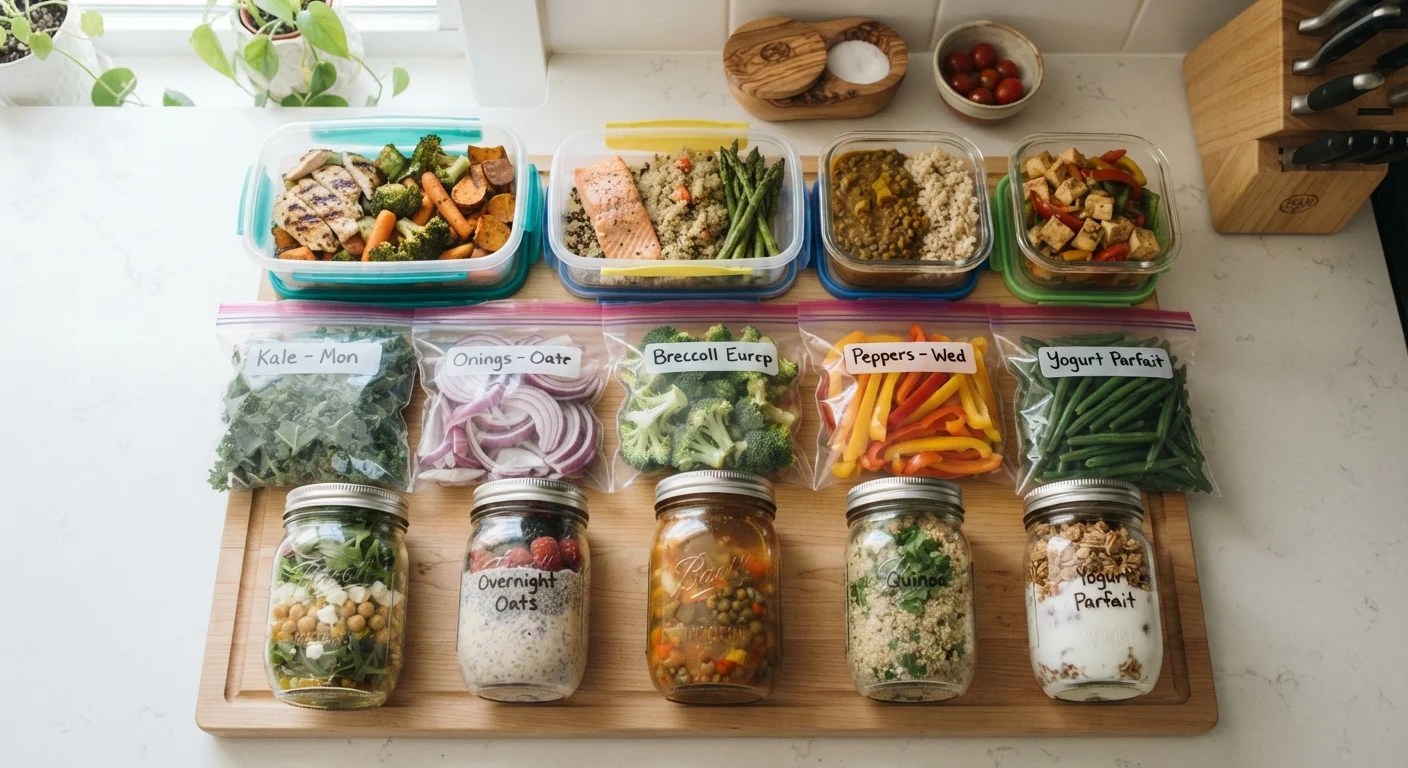
Cooked grains and legumes (rice, quinoa, farro, lentils, beans): 3 to 5 days in the fridge. Freeze for up to 3 months. Spread cooked grains on a sheet pan to cool quickly before sealing; trapped steam speeds spoilage.
Cooked proteins: Chicken, turkey, and pork keep 3 to 4 days refrigerated. Ground beef and ground turkey are on the shorter end at 3 to 4 days as well. Whole cuts of beef and pork last 3 to 5 days. All cooked meats freeze well for 2 to 3 months before quality noticeably drops, though they remain safe beyond that window when kept frozen.
Cooked seafood: 3 to 4 days in the fridge, 2 to 3 months in the freezer. Fish loses texture faster than meat after freezing, so label containers with dates.
Roasted or steamed vegetables: 3 to 5 days refrigerated. Blanch vegetables before freezing to preserve color and texture; frozen blanched vegetables hold quality for 8 to 12 months.
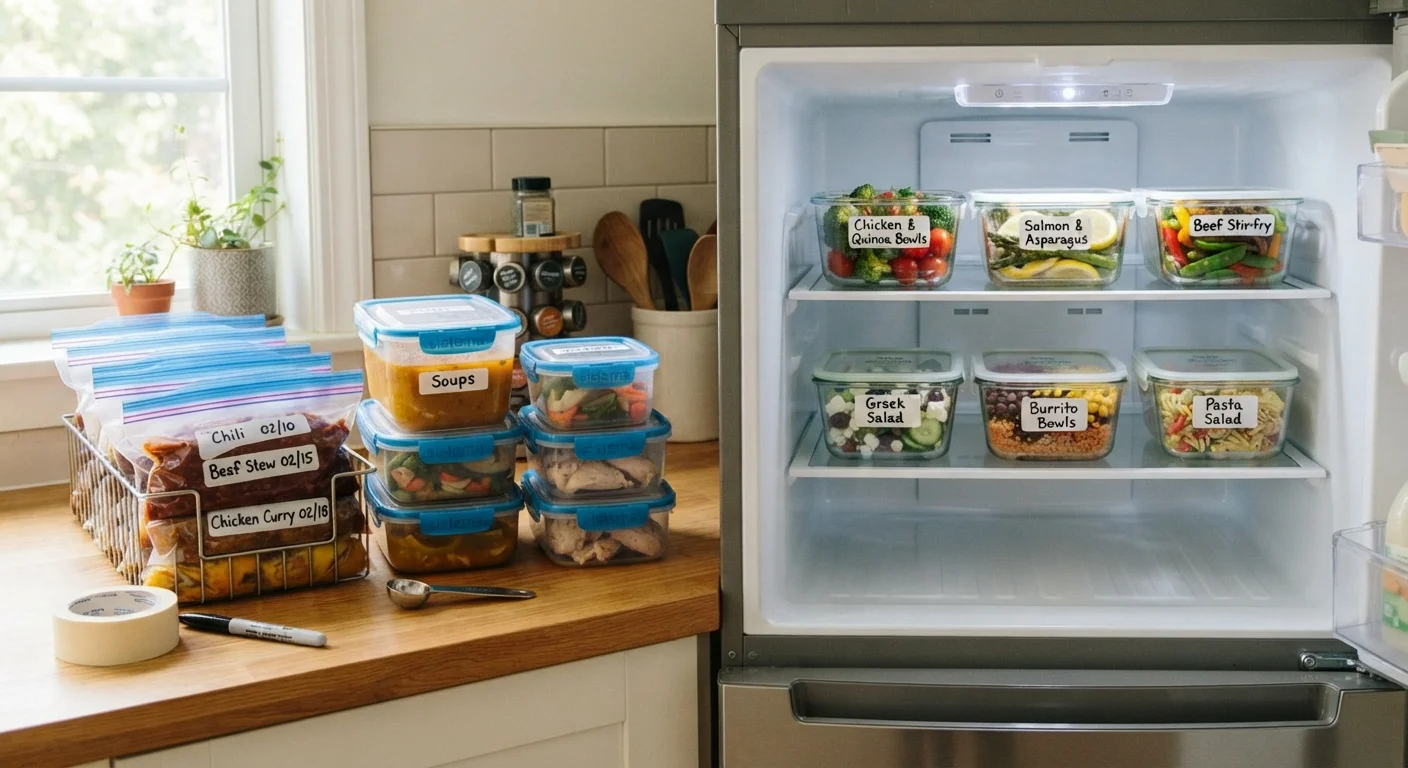
Soups, stews, and chilis: 3 to 4 days in the fridge, 4 to 6 months in the freezer. These are among the most reliable freezer candidates because liquid buffers against freezer burn.
Assembled grain bowls or mixed dishes: 3 to 4 days refrigerated. These are harder to freeze intact because dressings and fresh toppings degrade. Store components separately if you plan to freeze.
Hard-boiled eggs: 1 week in the shell in the fridge. Do not freeze hard-boiled eggs; the whites turn rubbery. Peeled eggs in water keep 5 days.
Leafy salad greens (undressed, washed, dried): 3 to 5 days stored with a paper towel to absorb moisture. Do not freeze.
Freezer storage: quality vs. safety
Food kept continuously frozen at 0 degrees F is safe indefinitely from a food-safety standpoint. The time limits listed for frozen foods address quality, not safety. Proteins frozen beyond 3 months may taste fine or may be dry and fibrous depending on how well they were sealed. A vacuum seal or a freezer-specific zip bag with excess air pressed out extends quality noticeably compared to a loosely sealed container.
Choosing the right meal prep storage container covers how different materials handle the freezer environment. Glass jars, for example, need headspace left at the top or they crack as liquids expand.
Label every container with the food name and date. A roll of freezer tape and a permanent marker cost almost nothing and remove all guesswork when you are reaching into a full freezer at 6 p.m. on a Tuesday.
Signs food has gone bad and what to do
When in doubt, throw it out. That said, some signs are clear. Sour or off odors, visible mold, slimy texture on proteins, and discoloration beyond normal browning are all indicators that food should not be eaten. Reheating does not make spoiled food safe; cooking kills some bacteria but does not neutralize the toxins certain bacteria have already produced.
For a fuller look at what refrigerator and freezer rules are actually based on versus common misconceptions, see food storage myths that cost families money.
If you are new to batch cooking and want a practical starting point, the first meal prep day readiness checklist walks through setup before you cook a single thing. Pairing that preparation with a clear understanding of storage windows means less waste and more confidence every week.
Danger zone
The temperature range between 40 degrees F and 140 degrees F in which bacteria multiply rapidly. Food left in this range for more than 2 hours total should be discarded, per USDA guidelines.
Freezer burn
Dry, discolored patches on frozen food caused by moisture loss and air exposure. Freezer-burned food is safe to eat but has degraded texture and flavor in the affected areas.
Blanching
Briefly boiling vegetables and then plunging them into ice water. This step stops enzyme activity that causes color and texture loss during freezer storage.
Vacuum sealing
Removing air from a storage bag or container before sealing. Reducing air contact slows both freezer burn and oxidation, extending the quality window of frozen foods.