
Why sheet pan brownies work for crowds and budgets
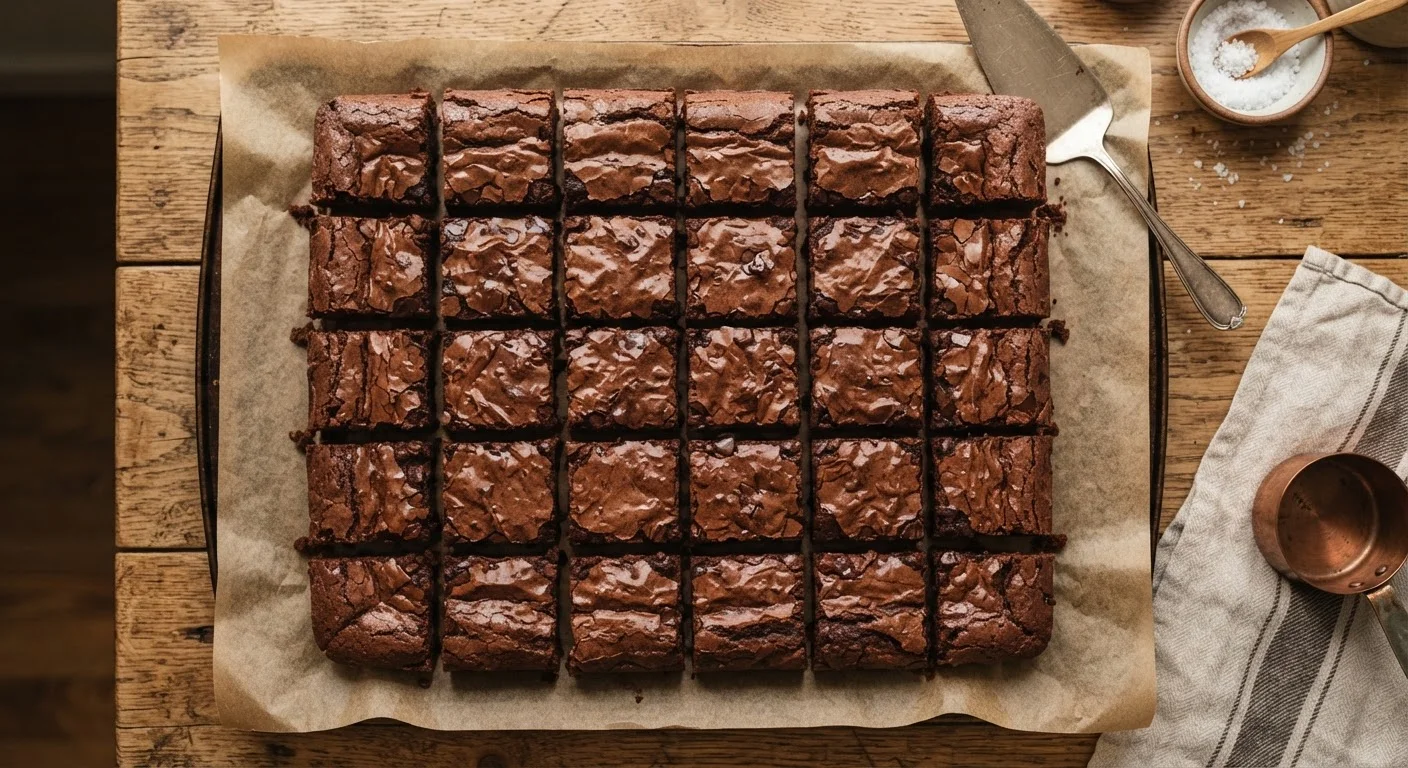
A standard brownie recipe designed for a 9x13 pan produces around 24 squares and uses roughly the same core ingredients as a half-sheet batch: butter, cocoa, sugar, eggs, and flour. Scaling up to an 18x13 pan adds only marginally more of each ingredient, yet the yield jumps to 32 or even 48 pieces. That math alone makes sheet pan brownies one of the most efficient desserts for feeding a group without a large grocery spend.
The approach also avoids the need for expensive block chocolate. Unsweetened cocoa powder, which costs a fraction of baking chocolate per ounce, delivers genuine chocolate intensity when it is properly combined with fat. For more ideas that rely on what is already in your pantry, see pantry dessert strategies that skip a special grocery run entirely.
Sheet pan baking also produces a consistent texture across the whole slab because the thin, even layer of batter loses moisture at roughly the same rate throughout. This is different from a taller batch in a smaller pan, where the center and edges often set at different speeds.
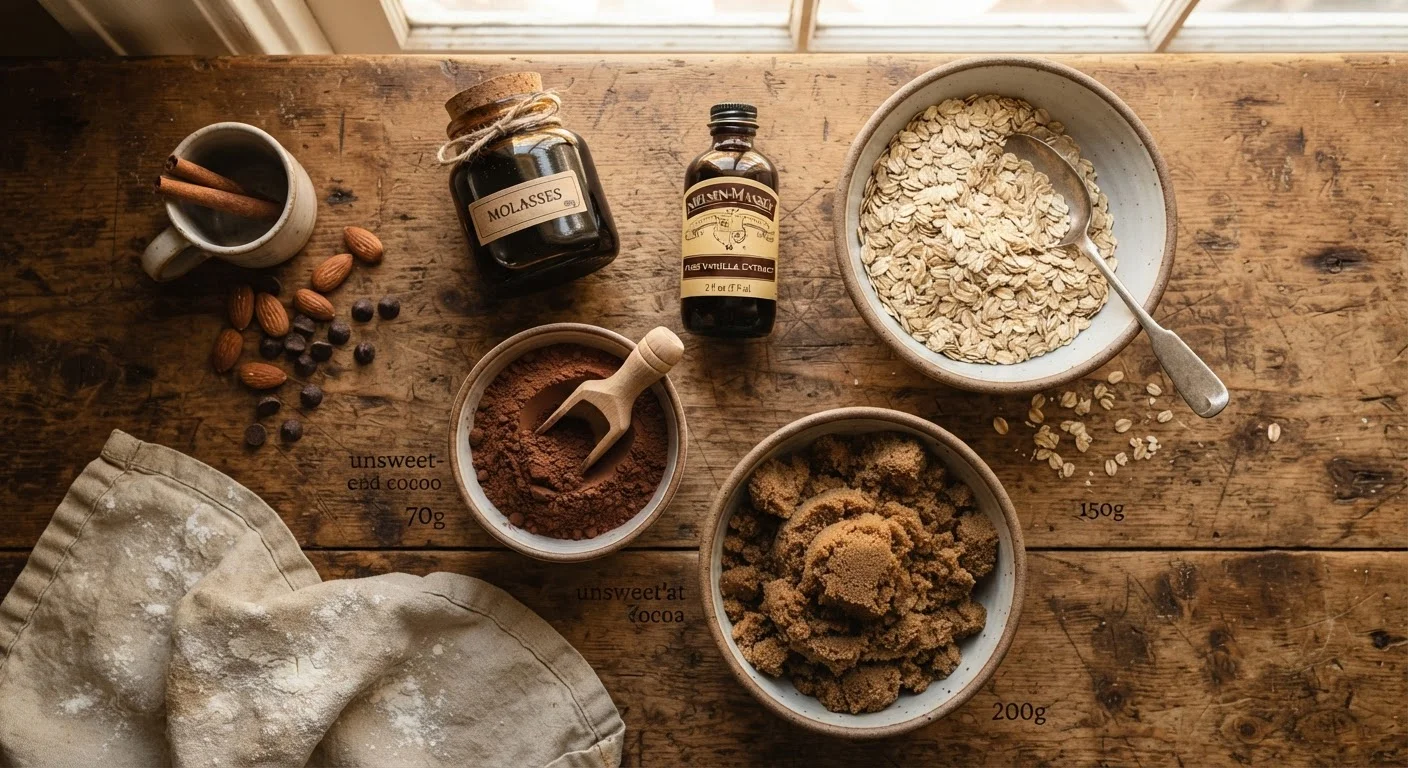
What you will need
Getting the ratios right for a fudgy result
The fat-to-flour ratio controls whether brownies come out fudgy or cakey. Fudgy brownies have more fat and sugar relative to flour. For a half-sheet pan, a ratio of 1 cup of butter and 3 cups of sugar to 2 cups of flour produces a reliably dense, moist crumb. Increasing the flour beyond that pushes the texture toward cake, which is a different product worth pursuing separately.
Eggs also matter more than most recipes acknowledge. Six eggs for a half-sheet batch gives structure without drying the crumb. Adding an extra yolk (without the white) from a seventh egg deepens richness at almost no additional cost, since the yolk is where most of the fat lives. If you are interested in how sugar reduction affects structure and moisture in baked goods, cutting sugar in baked goods covers the trade-offs clearly.
Half-sheet pan (18x13 inches)
The main baking vessel that gives you the wide, shallow depth needed for even fudgy brownies at crowd scale.
Parchment paper
Lines the pan so the slab lifts out cleanly and cuts without sticking.
Digital kitchen scale
Weighing flour and sugar gives more consistent results than volume measurements, especially at larger quantities.
Offset spatula
Spreads batter evenly to the corners of a large pan, which is harder to do with a spoon.
Common problems and how to avoid them
Greasy brownies usually mean the butter and eggs were not fully emulsified. Whisking the eggs in one at a time, rather than all at once, gives the fat something to bind to gradually. If the finished slab looks oily on top after baking, the oven temperature was likely too high and the fat separated before the batter set.
A cracked or dry top almost always signals overbaking. The crinkled, paper-thin top layer that brownies are known for forms from the sugar and eggs; it is different from a dry, chalky surface, which means the interior lost too much moisture. Pulling the pan 2 to 3 minutes early and letting carryover heat finish the job is a reliable fix.
If you are troubleshooting other baked goods at the same time, the science behind cookies that spread too thin shares some root causes with greasy brownies, particularly around fat temperature and mixing order. And if you want something different from the same sheet pan format on a weeknight, sheet pan dinners apply the same one-pan logic to savory meals with minimal cleanup.