
What actually causes cookies to spread
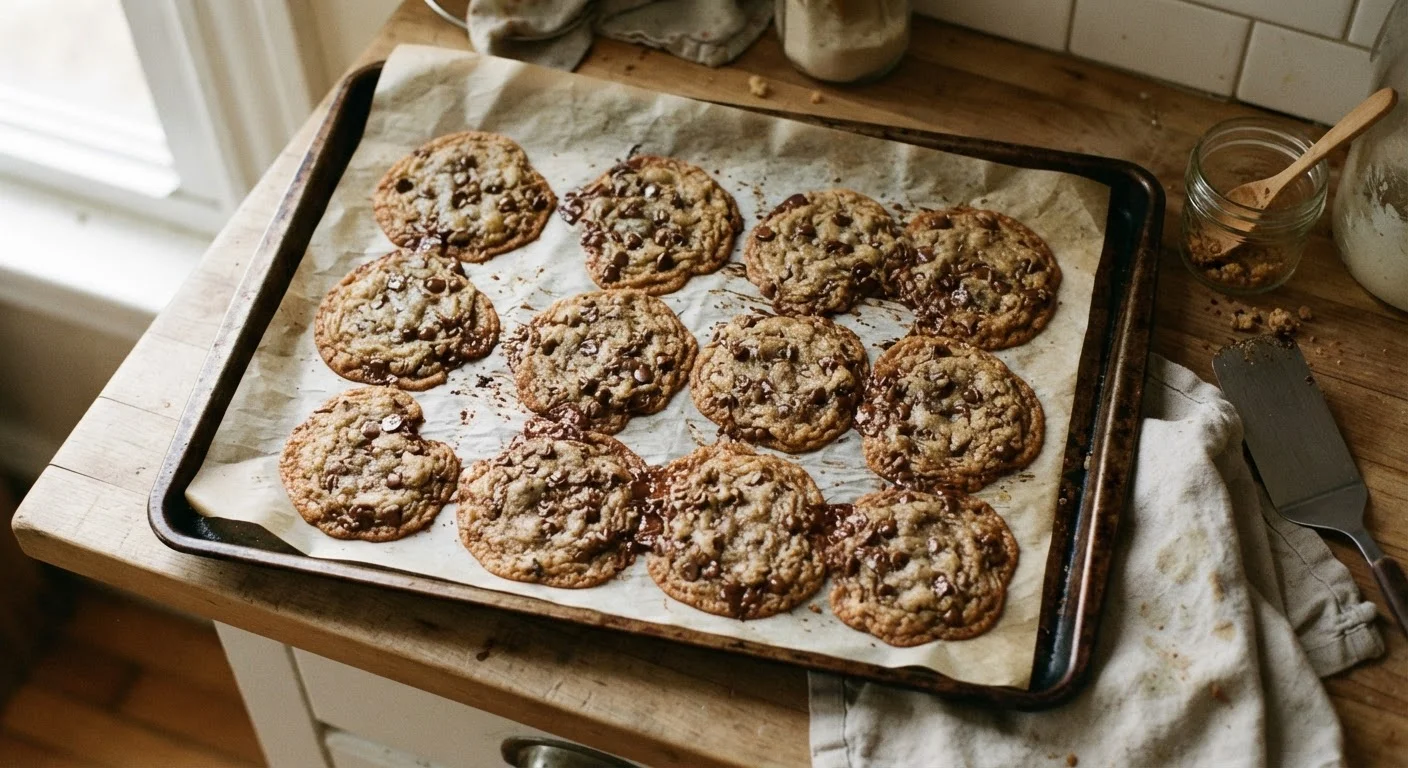
Cookie spreading is a fat-and-structure problem. When the fat in your dough melts faster than the flour-and-egg network can set around it, the whole batch flows outward into a thin, greasy disc. Butter, flour, sugar ratios, dough temperature, and oven environment all interact, so flat cookies usually have more than one contributing factor at once.
The good news is that every one of these factors costs nothing to fix. No specialty ingredients are needed. Understanding what is happening at the science level makes the corrections obvious, and your grocery bill stays exactly the same. If you are also trying to rework the sweetness balance in your bakes, see our article on baking with less sugar without losing flavor, which covers how sugar reductions change dough structure as well.
Using butter that is too warm or fully melted before mixing.
Why it happens: Many recipes say 'softened butter,' and cooks assume the warmer the better. Butter softened at room temperature above 70 degrees Fahrenheit, or melted in a microwave, loses the air pockets that creamed butter holds.
Measuring flour by volume inaccurately, usually under-measuring.
Why it happens: Scooping directly with a measuring cup packs flour in and can give you 20 percent or more than the recipe intends. Paradoxically, some cooks are so used to this error correcting itself that when they switch to spoon-and-level method the dough feels looser and they add too little.
Placing dough balls on a hot or warm baking sheet.
Why it happens: When baking multiple trays back to back, it is tempting to reload the same sheet straight from the oven. The residual heat begins melting the fat in the dough immediately, before the cookies even enter the oven.
Using expired or incorrect amounts of baking soda or baking powder.
Why it happens: Leavening agents lose potency over time, and many home bakers keep a single container for years. Without enough lift, cookies spread outward instead of puffing upward during baking.
Skipping the dough chilling step when the recipe calls for it.
Why it happens: Chilling takes time and it is easy to assume it is optional or only affects texture. In practice, it is often the step that determines whether cookies spread or hold their shape.
Technique adjustments that make a real difference
Once you have identified which mistake (or combination of mistakes) is flattening your cookies, the fixes are straightforward and repeatable.
Measuring flour by spooning it into a measuring cup and leveling it off, rather than scooping directly with the cup, is one of the highest-return habit changes in home baking. Scooping compacts the flour and can add 20 percent or more extra volume to the cup, which sounds like it would help but often creates a crumbly, stiff dough rather than fixing spreading. The correct fix for flat cookies is accurate measurement, not extra flour.
Chilling the dough for 30 to 60 minutes before baking is free and works reliably. Cold fat melts more slowly in the oven, giving the flour and eggs time to set a structure that holds the cookie's height. This technique also concentrates flavor as starches hydrate further, so you get a better-tasting cookie alongside a thicker one.
Do not add extra flour to fix spreading
It feels logical to add more flour when cookies are too flat, but this usually creates a crumbly, dry texture without solving the root cause. Extra flour changes the flavor balance and can make cookies taste chalky. Identify the actual cause first, whether it is butter temperature, dough warmth, or leavening, and address that directly.
For beginners who want a broader foundation in affordable baking, the practical baking starting point guide covers essential techniques alongside low-cost ingredient choices that build real consistency.
Getting the most from budget pantry staples
Avoiding flat cookies does not require expensive upgrades. The staples most families already keep on hand, flour, eggs, butter, baking soda, and granulated sugar, perform perfectly when handled correctly. The cost of a batch of cookies stays low regardless of how carefully you control temperature and measure ingredients.
Eggs are worth particular attention here. A whole egg adds both fat (from the yolk) and protein (from the white). A recipe that calls for one egg and gets an extra yolk instead will produce a richer, chewier cookie that resists spreading. That swap costs nothing if you are already buying a dozen eggs for other meals. Explore affordable ingredients that punch above their weight in baking for a full rundown of the staples that deliver outsized results. The cooking tips hub also has practical technique guides that apply across sweet and savory recipes alike.