
Start with serving size, not calories
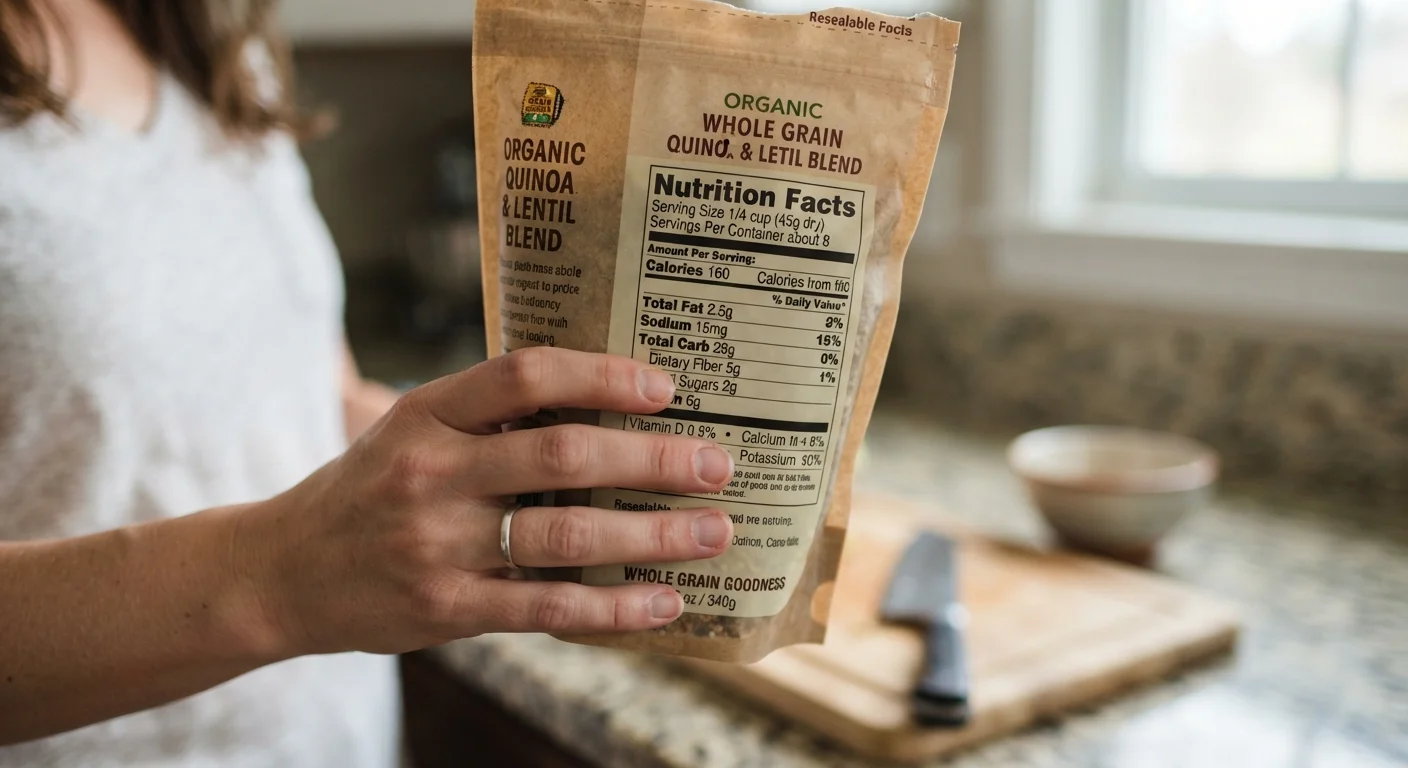
Every number on a nutrition label is tied to the serving size printed at the top. If the label says one serving is half a cup but you pour a full cup into a bowl, every figure on the panel doubles. This one detail catches most people off guard.
Serving size is defined by the FDA based on typical consumption amounts, not by what a manufacturer considers ideal. Sometimes it lines up with how a real person eats; sometimes it does not. Checking the number of servings per container alongside the serving size takes about five seconds and prevents most misreads.
Once you know the serving size, the calorie count and every nutrient figure become accurate for what you are actually eating. For families managing a tight grocery budget, comparing products by calories or nutrients per serving is also a straightforward way to judge value alongside price.
How to use percent Daily Value
The %DV column on the right side of the label is the fastest reading tool available. The FDA's general rule is simple: 5% or less means the food is low in that nutrient, and 20% or more means it is high. These thresholds apply whether you want more of something or less.
For nutrients most families aim to limit, such as sodium, saturated fat, and added sugars, a %DV below 10% per serving is a reasonable target when choosing between products. For nutrients worth getting more of, including fiber, calcium, iron, potassium, and vitamin D, a higher %DV is a positive sign.
A quick label scan takes under 30 seconds
Train yourself to check three things in order: serving size, %DV for sodium and added sugars, and %DV for fiber. That three-step scan covers most of what matters for everyday grocery decisions. Over time it becomes automatic, even with children in tow.
The %DV is based on a 2,000-calorie daily diet. Someone eating significantly more or fewer calories will have different actual needs, but the column still works as a relative comparison tool between products, even if the absolute numbers shift.
The nutrients that matter most for everyday families
Not every line on the label needs equal attention. For most households eating a standard American diet, three nutrients are worth watching on the limit side: sodium, saturated fat, and added sugars. Sodium appears in concentrated amounts in canned soups, deli meats, and packaged seasonings. Saturated fat is common in full-fat dairy products and some processed snacks. Added sugars show up widely in beverages, cereals, flavored yogurts, and condiments.
On the increase side, fiber is the nutrient most families fall short on. Whole grains, beans, vegetables, and fruit all contribute. Protein keeps people full between meals and matters especially for growing children. Vitamin D, calcium, and iron are flagged on labels because gaps in these are common across the U.S. population.
If navigating added sugar feels like a separate project, the article on reducing added sugar in family meals covers practical ways to cut back without resistance at the table.
70%+
Packaged foods containing added sugars
An analysis published in the journal BMJ Open found added sugars in more than 70% of U.S. packaged food and beverage products.
3,400 mg
Average daily sodium intake for U.S. adults
The CDC reports that the average American adult consumes around 3,400 mg of sodium per day, well above the 2,300 mg limit recommended by federal dietary guidelines.
95%
Americans falling short on daily fiber
According to the American Journal of Lifestyle Medicine, approximately 95% of Americans do not meet the recommended daily fiber intake.
Reading the ingredients list
The ingredients list sits below the nutrition facts panel and runs in descending order by weight. The first ingredient is the most abundant. In a loaf of whole wheat bread, whole wheat flour should appear at or near the top. If enriched white flour appears first, the product contains more of that than anything else, regardless of what the front of the package says.
Long ingredients lists are not automatically a problem, but they sometimes signal heavy processing. A shorter list with recognizable components is a useful general guide. Watch for added sugars listed under different names: corn syrup, dextrose, maltose, evaporated cane juice, and fruit juice concentrate all count as added sugars even though they are not labeled 'sugar.'
Families building a weekly meal plan around store sales can use the ingredients list to compare store-brand and name-brand versions of the same product, since the formulations are sometimes nearly identical despite the price gap.
This article is for general informational purposes only and is not medical or dietary advice. Consult a qualified healthcare professional or registered dietitian for guidance specific to your family's health needs.